Introduction
When selecting access covers for municipal infrastructure, industrial sites, or commercial developments, engineers and procurement professionals face a critical decision: composite manhole cover vs cast iron. Both materials serve the same fundamental purpose — providing safe, secure access to underground utilities — but they differ dramatically in performance, cost, and lifecycle value.
This comprehensive guide examines these two material options across every relevant metric: weight, strength, durability, cost, installation, and environmental impact. Whether you are specifying covers for a new development, upgrading existing infrastructure, or sourcing for a large-scale project, this comparison will help you make an informed, data-driven decision.
By the end of this article, you will understand why composite covers have become the preferred choice for many applications and where traditional cast iron remains the better option.
What Is a Composite Manhole Cover?
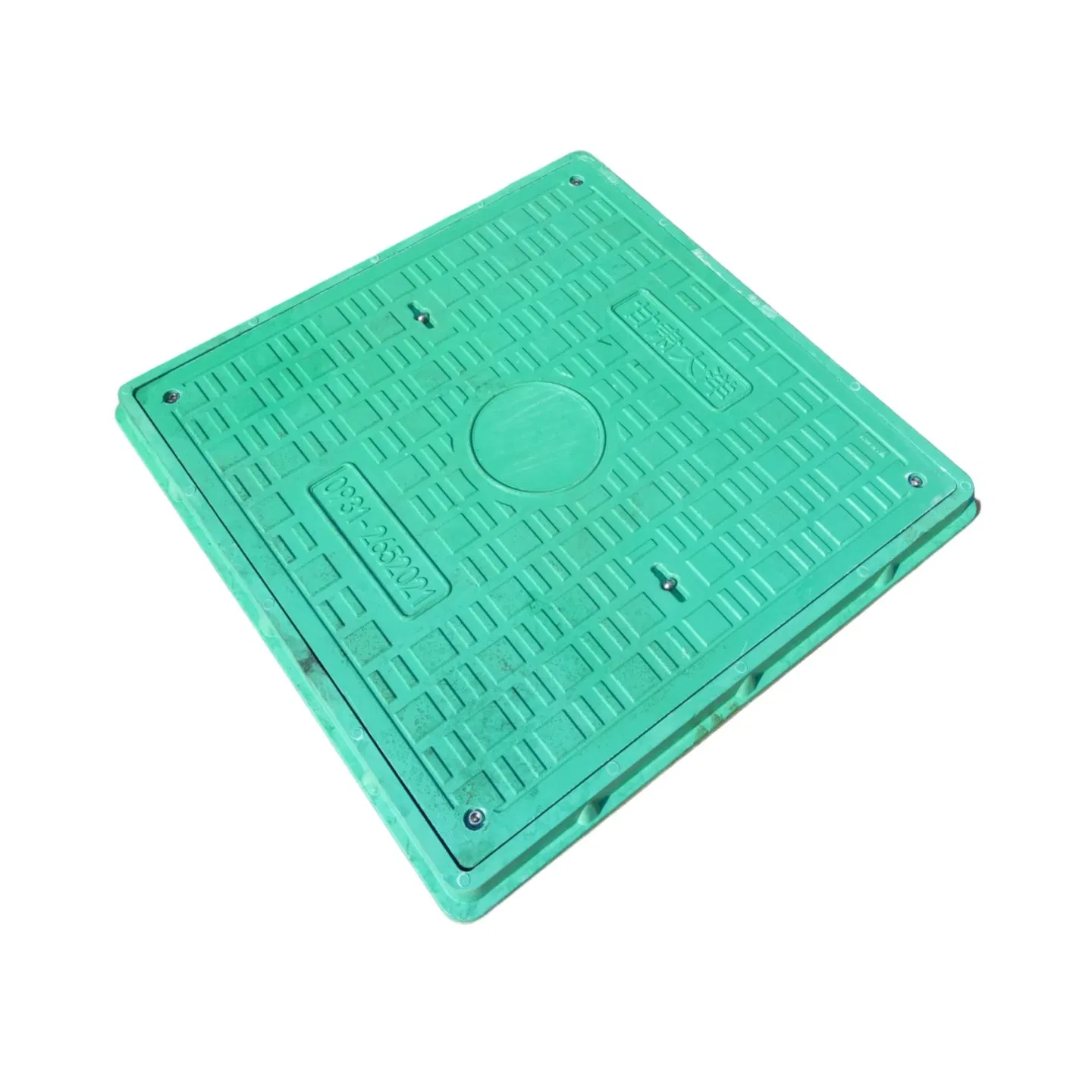
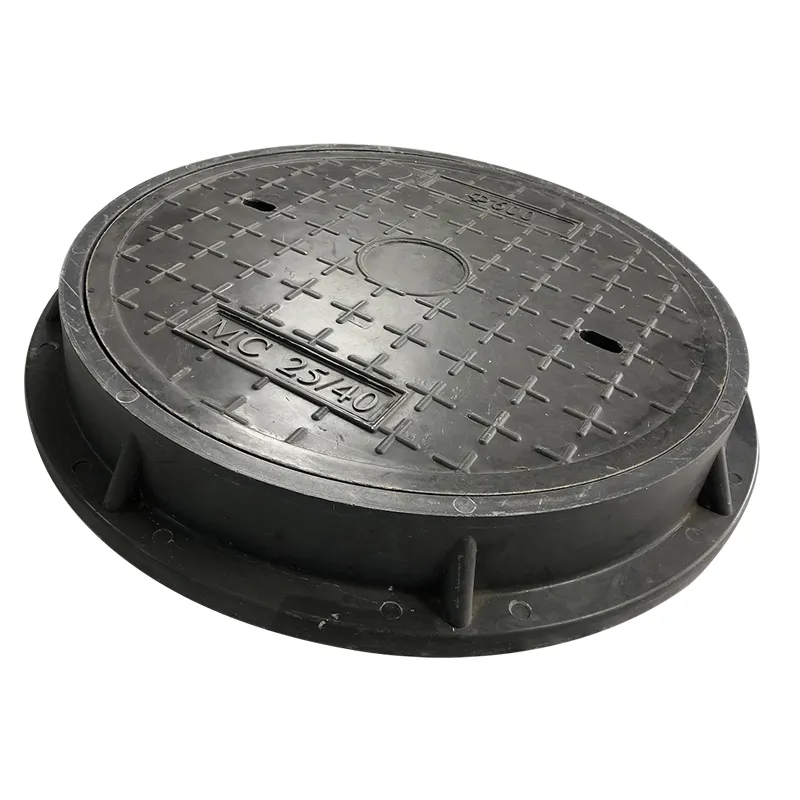
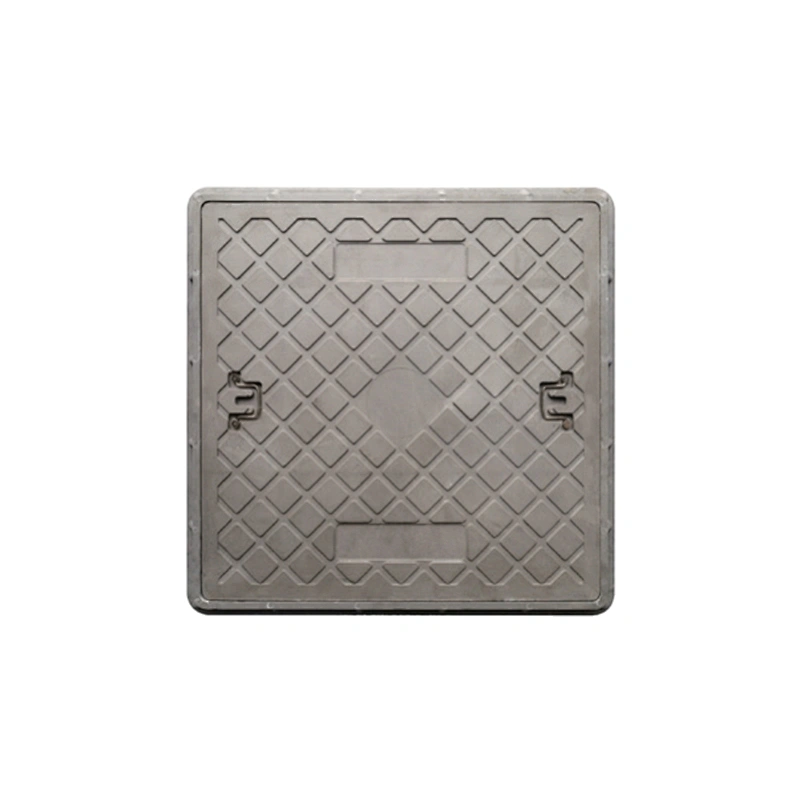
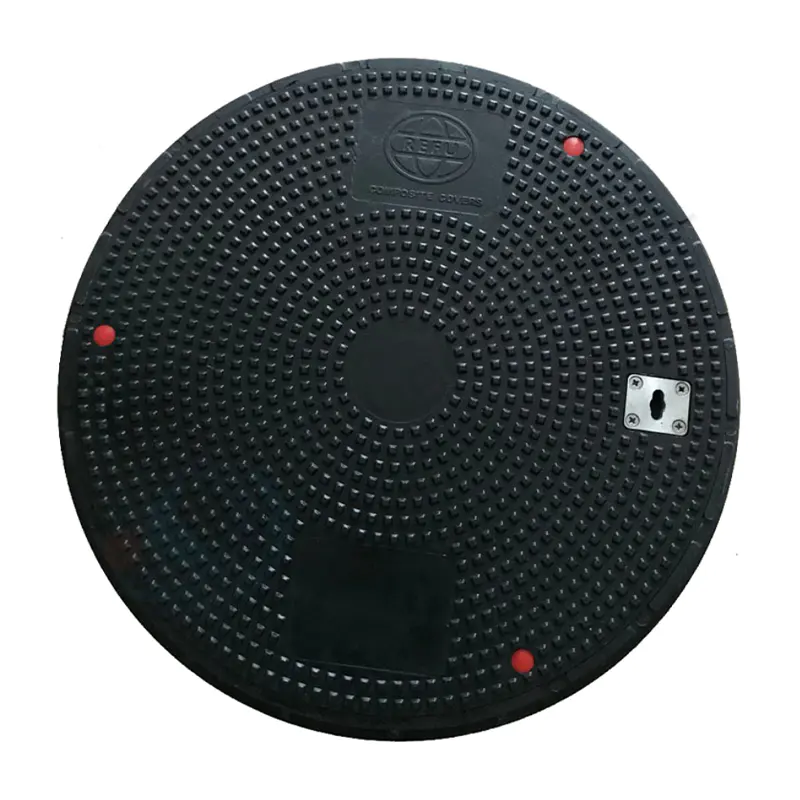
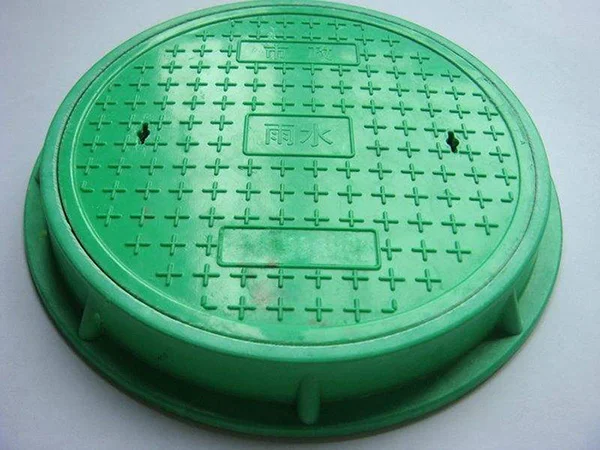
A composite manhole cover is an access cover manufactured from fiber-reinforced polymer (FRP) or sheet molding compound (SMC) — a blend of thermosetting resins, glass fibers, and mineral fillers. Unlike traditional cast iron covers, composite covers are produced through compression molding, which creates a dense, uniform structure with excellent mechanical properties.
What Are Composite Manhole Covers Made Of?
Composite manhole covers typically consist of:
- Thermosetting resin (polyester or vinyl ester) — the binding matrix that provides chemical resistance and dimensional stability
- Glass fiber reinforcement — chopped or continuous strands that deliver tensile strength and impact resistance
- Mineral fillers — calcium carbonate or alumina trihydrate that enhance compressive strength and fire retardancy
- UV stabilizers and pigments — for weather resistance and color consistency throughout the product life
The compression molding process applies high pressure (typically 100–150 kg/cm²) and heat (140–160°C) to cure the material into a finished cover. This creates a product that is homogenous, non-porous, and dimensionally precise, with none of the casting defects found in traditional iron foundry production.
Key Material Properties
Composite manhole covers offer several inherent advantages derived from their material composition:
- Density of approximately 1.8–2.0 g/cm³ vs 7.2 g/cm³ for cast iron
- Tensile strength of 80–160 MPa depending on fiber content and orientation
- Near-zero moisture absorption (less than 0.5% by weight)
- Excellent electrical insulation properties
- Complete resistance to electrochemical corrosion
Composite Manhole Cover vs Cast Iron: Weight Comparison
Weight is one of the most significant differentiators in the composite manhole cover vs cast iron comparison. A standard 600mm x 600mm cast iron cover for D400 load rating weighs approximately 80–90 kg. An equivalent composite cover with the same load rating weighs just 25–35 kg — a reduction of 60–70%.
Why Composite Manhole Covers Are Considered Lightweight
The dramatic weight difference stems from material density. Cast iron has a density of roughly 7,200 kg/m³, while composite materials average 1,800–2,000 kg/m³. Since load rating is determined by structural design — specifically rib height and cross-section geometry — rather than mass alone, composite covers achieve equivalent or superior load capacity with far less material weight.
How Does Composite Manhole Cover Weight Affect Installation?
The composite manhole cover weight advantage translates directly into practical benefits:
- Manual handling: A 30 kg cover can be lifted and positioned by one or two workers without mechanical equipment
- Reduced installation cost: Lower transport expense, no need for cranes or hoists on-site
- Worker safety: Reduced risk of back injuries and crush accidents during handling
- Faster installation: Typical installation time for a composite cover is 5–10 minutes versus 20–30 minutes for cast iron
Weight Comparison by Load Rating
| Load Rating | Cast Iron Weight (600mm sq) | Composite Weight (600mm sq) | Weight Savings |
|---|---|---|---|
| B125 (pedestrian/cycle) | 45–55 kg | 15–18 kg | 65–67% |
| C250 (footways/verges) | 55–70 kg | 18–25 kg | 64–67% |
| D400 (roadways/heavy traffic) | 80–90 kg | 25–35 kg | 61–69% |
| E600 (high-load zones) | 100–130 kg | 35–50 kg | 60–65% |
For projects spanning hundreds or thousands of covers, the cumulative weight savings reduce shipping costs by up to 60% and significantly lower the total installed cost.
Strength and Load Rating Comparison
A common concern when evaluating composite versus cast iron covers is whether FRP materials can match the load-bearing capacity of traditional iron. The answer is yes — properly engineered composite covers meet and in some cases exceed the load ratings specified in international standards.
Composite Manhole Cover Load Rating Classification
The composite manhole cover load rating system follows the European standard EN 124, which classifies covers into groups by their load-bearing capacity:
- A15 — 15 kN (pedestrian areas, gardens)
- B125 — 125 kN (footways, pedestrian zones, cycle paths)
- C250 — 250 kN (footways, verges, car parks)
- D400 — 400 kN (roadways, highways, heavy traffic)
- E600 — 600 kN (industrial zones, airports, docks)
- F900 — 900 kN (aircraft runways, heavy industrial sites)
Do Composite Manhole Covers Meet EN 124 Standards?
Yes, composite covers are fully certifiable to EN 124 load rating standards. Our products undergo third-party testing at accredited laboratories to verify load capacity, deflection, and permanency of deformation. Composite covers achieve the same classification ratings as cast iron, meaning a D400-rated composite cover is legally and functionally equivalent to a D400-rated cast iron cover for roadway installation.
Is a Composite Manhole Cover Stronger Than Cast Iron?
While cast iron typically has higher absolute compressive strength, composites offer superior performance in several areas:
- Impact resistance: Composite covers absorb impact energy through fiber deformation rather than brittle fracture
- Fatigue resistance: Composite materials do not develop micro-cracks under cyclic loading like cast iron does
- Deflection recovery: Composite covers return to shape after load removal, while cast iron can take permanent set
The maximum load capacity of composite manhole covers — particularly D400 and E600 rated products — is verified through rigorous testing that confirms they are strong enough for heavy traffic including trucks, buses, and industrial vehicles.
Composite vs Cast Iron Manhole Cover Load Rating Comparison
| Load Rating Class | Cast Iron | Composite | Both Meet EN 124? |
|---|---|---|---|
| D400 (400 kN) | ✓ Standard | ✓ Certified | Yes |
| E600 (600 kN) | ✓ Heavy-duty | ✓ Available | Yes |
| F900 (900 kN) | ✓ Ultra-heavy | ✓ Special order | Yes |
When selecting a load rating, consider the traffic type: parking lots typically require C250, while public roadways need D400. Composite covers are available across all common classifications.
Composite vs Cast Iron: Full Comparison Table
The following table provides a side-by-side comparison of composite versus cast iron manhole covers across all key performance metrics, making it easy to evaluate this material choice for your specific application.
| Metric | Composite Manhole Cover | Cast Iron Manhole Cover |
|---|---|---|
| Material Density | 1.8–2.0 g/cm³ | 7.2 g/cm³ |
| Weight (D400, 600×600) | 25–35 kg | 80–90 kg |
| Weight Savings | — | 60–70% lighter |
| Tensile Strength | 80–160 MPa | 150–250 MPa |
| Compressive Strength | 200–300 MPa | 500–800 MPa |
| Impact Resistance | Excellent (flexible) | Good (brittle) |
| Corrosion Resistance | Excellent (zero rust) | Poor (rusts over time) |
| Chemical Resistance | Excellent | Moderate |
| Scrap Value | Zero (theft-proof) | High (theft target) |
| Electrical Conductivity | Non-conductive | Conductive |
| Service Life | 20–30 years | 10–15 years |
| Installation Time | 5–10 min per cover | 20–30 min per cover |
| On-site Handling | Manual (1–2 workers) | Mechanical lift required |
| Transport Cost | Low (lightweight) | High (heavy) |
| Noise Dampening | Excellent (no clatter) | Poor (metal-on-metal noise) |
| Recyclability | Limited (composite waste) | 100% recyclable |
This comparison shows that while cast iron excels in absolute compressive strength and recyclability, composite covers offer significant advantages in weight, corrosion resistance, theft prevention, and service life — delivering better total cost of ownership in most modern infrastructure applications.
Cost Analysis: Composite vs Cast Iron Manhole Cover
Cost is often the deciding factor when choosing between composite and cast iron covers. While the upfront purchase price of a composite cover may be 15–25% higher than an equivalent cast iron cover, the total cost of ownership (TCO) tells a very different story.
Composite vs Cast Iron Cost Comparison
| Cost Factor | Composite | Cast Iron |
|---|---|---|
| Unit Price (D400, 600×600) | $80–120 | $60–100 |
| Shipping Cost (per 100 units) | $200–350 | $600–1,000 |
| Installation Labor (per cover) | $5–10 | $15–25 |
| Annual Maintenance Cost | Near zero | $5–15 per cover (painting/rust) |
| Replacement Frequency | Every 20–30 years | Every 10–15 years |
| Replacement Cost (lifetime) | One-time purchase | 1.5–2× initial purchase |
| Theft Loss Risk | Negligible | Significant (scrap value) |
How Much Does a Composite Manhole Cover Cost?
The composite manhole cover cost varies by size, load rating, and quantity. Typical pricing for standard sizes:
- 600mm × 600mm D400: $80–120 per unit (OEM quantities)
- 600mm round C250: $55–85 per unit
- 800mm × 600mm D400: $100–150 per unit
- Custom sizes/larger load ratings: priced on application
Are Composite Manhole Covers Cheaper Than Cast Iron?
On a pure unit-price basis, composite covers may cost 15–25% more upfront. However, when you factor in shipping (60% less weight), installation (50–70% faster labor), maintenance (near zero), theft prevention, and longer service life, composite covers deliver a 30–50% lower total cost of ownership over a 30-year period. For municipal and infrastructure budgets, this represents substantial long-term savings.
Composite vs Cast Iron TCO Summary
A typical 30-year cost projection for a 500-unit project:
Cast Iron: Initial $40,000 + shipping $4,000 + installation $10,000 + maintenance $30,000 + replacement $40,000 = $124,000
Composite: Initial $50,000 + shipping $1,500 + installation $3,500 + maintenance $500 + no replacement = $55,500
The lifecycle cost comparison clearly favors composite when evaluated over the full product lifecycle.
Lifespan and Durability: Which Lasts Longer?
Service life is a critical factor in this material decision, particularly for infrastructure projects where long-term reliability and reduced maintenance are priorities.
How Long Do Composite Manhole Covers Last Compared to Cast Iron?
Composite covers have a typical service life of 20–30 years, while cast iron covers typically require replacement after 10–15 years in most environments. The difference is primarily driven by corrosion.
Cast iron is susceptible to rust, particularly in:
- Coastal/saltwater environments where chloride attack accelerates corrosion
- Industrial areas with acidic or chemical-laden runoff
- Regions with freeze-thaw cycles where water infiltration causes spalling
- Sewage and wastewater applications where hydrogen sulfide creates corrosive conditions
Composite covers are inherently resistant to all forms of corrosion. The polymer matrix does not oxidize, and the glass fiber reinforcement is chemically stable. This makes them ideal for demanding environments where cast iron would fail prematurely.
Environmental Factors Affecting Lifespan
| Environment | Composite Lifespan | Cast Iron Lifespan |
|---|---|---|
| Standard urban roadway | 25–30 years | 12–15 years |
| Coastal/marine | 20–25 years | 6–8 years |
| Industrial/chemical | 20–30 years | 5–10 years |
| Sewage/wastewater | 20–25 years | 8–12 years |
| Freeze-thaw climate | 25–30 years | 10–12 years |
The conclusion is clear: when evaluating which material lasts longer, composite is the superior choice in virtually all environmental conditions.
Environmental Impact Comparison
Sustainability has become an increasingly important factor in infrastructure material selection. When evaluating the composite manhole cover vs cast iron environmental profile, several dimensions must be considered: carbon emissions during production, energy consumption in manufacturing, transportation pollution, service-life environmental burden, and end-of-life recyclability.
Carbon Emissions in Production
The manufacturing of cast iron manhole covers begins with iron ore mining, coke production for blast furnaces, and high-temperature smelting. According to industry lifecycle assessment data, producing one tonne of cast iron generates approximately 1.8–2.5 tonnes of CO₂, depending on the energy source and furnace efficiency. The iron foundry process requires sustained temperatures of 1,300–1,500°C, making it one of the most energy-intensive industrial processes.
In contrast, composite manhole cover production uses compression molding at 140–160°C — approximately one-tenth the temperature required for iron casting. The carbon footprint of producing one tonne of FRP composite material is roughly 0.6–1.2 tonnes of CO₂, representing a 50–70% reduction in manufacturing emissions. Furthermore, because composite covers weigh 60–70% less than their cast iron equivalents, the emissions per finished cover unit are even more favorable — a single composite D400 cover has approximately one-third the cradle-to-gate carbon footprint of an equivalent cast iron cover.
Energy Consumption During Manufacturing
The specific energy consumption (SEC) of cast iron production ranges from 20–30 GJ per tonne of finished product, encompassing coke production, melting, casting, shakeout, and finishing operations. The energy is predominantly derived from fossil fuels, with coke (metallurgical coal) as the primary energy source in blast furnaces.
Composite cover manufacturing requires 5–10 GJ per tonne, with electrical energy used for compression molding and natural gas for resin curing. While the resin itself is petroleum-derived, the total embedded energy in a composite cover is 60–75% lower than in a cast iron cover when normalized by weight, and approximately 85–90% lower per finished product when the weight advantage is factored in.
Transportation Emissions
The weight differential creates a significant gap in transportation-related emissions. A standard shipping container (20-foot) can hold approximately 200–250 composite covers (D400, 600×600) versus only 60–80 cast iron covers of the same rating. This means:
- Fewer shipments: 3–4× more covers per container, reducing the number of trips required
- Lower fuel consumption: Lighter payloads reduce fuel burn by 50–60% per cover delivered
- Reduced road wear: Lighter truck loads cause less damage to road infrastructure during distribution
For a typical 1,000-unit municipal project, composite covers generate approximately 65–75% less transport-related CO₂ emissions compared to cast iron covers — a reduction of roughly 12–18 tonnes of CO₂ depending on shipping distance and mode.
In-Service Environmental Impact
During their service life, the environmental profiles of the two materials diverge further:
- Maintenance burden: Cast iron covers require regular anti-rust painting every 2–3 years, involving solvent-based coatings that release VOCs. Composite covers require no such maintenance, eliminating this recurring environmental cost.
- Replacement frequency: Because composite covers last 20–30 years versus 10–15 years for cast iron, the material consumption and manufacturing emissions per decade of service are halved. One composite cover delivers the same service life as two cast iron covers, effectively cutting the per-decade carbon footprint by 50%.
- Theft and replacement: Cast iron covers are frequently stolen for scrap value (estimated at 1–3% annual theft rate in urban areas), necessitating premature replacement with all associated manufacturing and transport emissions. Composite covers have zero scrap value, eliminating this source of unnecessary environmental burden.
Recyclability and End-of-Life Considerations
Cast iron holds a clear advantage in recyclability. Iron and steel are among the most recycled materials globally, with approximately 95% of scrap iron being collected and remelted. A cast iron cover at end-of-life retains significant scrap value (typically 30–50% of the raw material cost), and recycled iron requires 60–70% less energy than primary production.
Composite materials present a more complex end-of-life picture. Thermoset FRP composites cannot be remelted like thermoplastics or metals. However, several end-of-life pathways exist:
- Granulation and filler use: Composite covers can be ground into fine particles and used as filler in new composite products, concrete, or asphalt — diverting waste from landfills
- Energy recovery: The calorific value of FRP materials (15–25 MJ/kg) can be recovered through controlled incineration in cement kilns, replacing fossil fuel
- Pyrolysis and fiber recovery: Emerging technologies can recover glass fibers from thermoset matrices through thermal decomposition, though these processes are not yet widespread at industrial scale
- Extended first-life: The 20–30 year service life of composite covers — double that of cast iron — means replacement happens half as often, effectively halving the end-of-life waste generation rate
Comparative Environmental Scorecard
| Environmental Metric | Composite Manhole Cover | Cast Iron Manhole Cover |
|---|---|---|
| Production CO₂ per tonne | 0.6–1.2 tonnes | 1.8–2.5 tonnes |
| Production CO₂ per D400 cover | 18–36 kg | 144–225 kg |
| Manufacturing energy (GJ/tonne) | 5–10 GJ | 20–30 GJ |
| Covers per shipping container | 200–250 units | 60–80 units |
| Transport CO₂ per 1,000 units (1,000 km) | 3–5 tonnes | 10–16 tonnes |
| In-service VOC emissions | None | Recurring (painting) |
| Service life per unit | 20–30 years | 10–15 years |
| Per-decade carbon footprint | Base (reference) | 2–3× higher |
| End-of-life recyclability | Limited (filler/energy recovery) | 95% recyclable (scrap iron) |
| Scrap value at end-of-life | Negligible | 30–50% of material cost |
Summary: Which Is More Environmentally Sustainable?
The answer depends on which phase of the lifecycle is prioritized. If immediate carbon reduction and manufacturing efficiency are the primary sustainability goals, composite covers are clearly superior — they produce 50–70% less CO₂ per cover, consume 60–75% less energy in manufacturing, and generate 65–75% less transport emissions. The longer service life further amplifies these advantages over the project lifecycle.
If circular economy and material recyclability are the overriding concerns, cast iron retains an advantage due to its well-established scrap recycling infrastructure. However, as composite recycling technologies mature and regulations increasingly favor lightweight, low-emission materials, the environmental balance is shifting steadily toward composites for most infrastructure applications.
For procurement teams subject to carbon accounting and sustainability reporting requirements, composite covers offer measurable, documented reductions in Scope 1–3 emissions — an increasingly important consideration in public infrastructure tenders and green building certification programs such as LEED and BREEAM.
Installation and Maintenance Comparison
The question of which material is easier to install has a clear answer — composite covers are significantly faster and cheaper to install.
Installation Process Comparison
Composite manhole covers:
- Light enough for one or two workers to carry and position manually
- No special lifting equipment required
- Can be installed directly into a frame with minimal adjustment
- Self-lubricating sealing edges reduce friction and simplify fitment
- Typical installation time: 5–10 minutes per cover
Cast iron manhole covers:
- Often require cranes, hoists, or mechanized lifting equipment
- Heavier frames require reinforced bedding
- Metal-to-metal contact requires precision alignment and grouting
- Risk of damage during installation due to brittle nature of iron
- Typical installation time: 20–30 minutes per cover
How Does Composite Manhole Cover Weight Affect Installation?
The composite manhole cover weight directly impacts installation cost and safety. A 30 kg composite cover can be handled manually, eliminating crane rental costs and reducing the crew size from four workers to two. For a project with 500 covers, this translates to labor savings of $6,000–10,000 and schedule compression of 40–50%.
Maintenance Requirements
Composite covers require virtually no maintenance over their service life. They do not need:
- Anti-rust painting or coating
- Periodic tightening of bolts or fasteners
- Seal replacement (integrated EPDM seals last the life of the cover)
Cast iron covers typically require re-painting every 2–3 years to prevent rust, plus periodic inspection for cracks and structural weakening.
Composite Manhole Cover vs Cast Iron: Pros and Cons
Every infrastructure decision involves trade-offs. Here is an objective summary of the advantages and disadvantages of each option.
Composite Manhole Cover Pros
- Lightweight — 60–70% lighter, reducing transport and installation costs
- Anti-theft — Zero scrap value eliminates the secondary scrap metal market incentive
- Corrosion-proof — No rust, no spalling, no chemical degradation
- Long service life — 20–30 years with virtually no maintenance
- Noise-reducing — Polymer construction eliminates the clatter and vibration of metal covers
- Non-conductive — Safe for electrical utility applications and lightning-prone areas
- Color options — Can be molded in custom colors for branding or identification
Composite Manhole Cover Cons
- Higher unit price — 15–25% more expensive upfront than cast iron
- Limited recyclability — Thermoset composites cannot be remelted like metals
- Lower absolute compressive strength — Though still sufficient for all EN 124 classifications
- Less impact damage visibility — Cracks may be less obvious than in cast iron
Cast Iron Manhole Cover Pros
- High absolute strength — Excellent compressive and tensile properties
- 100% recyclable — Scrap value offsets some end-of-life costs
- Lower upfront cost — Typically 15–25% cheaper per unit
- Proven track record — Centuries of use in municipal infrastructure
- Wide availability — Multiple foundries and suppliers globally
Cast Iron Manhole Cover Cons
- Extremely heavy — Requires mechanized handling, increases injury risk
- Susceptible to rust — Requires regular painting and maintenance
- High theft value — Primary target for scrap metal thieves, creating open-hole hazards
- Shorter service life — Typically 10–15 years before replacement is needed
- Noisy in use — Metal-on-metal contact creates noise and vibration
- Conductive — Safety risk in electrical utility applications
- High shipping cost — Weight drives up logistics expenses significantly
When weighing the pros and cons of each material, composite covers offer more advantages for most modern applications, while cast iron retains relevance where absolute material strength and recyclability are top priorities.
Which Is Better? Composite or Cast Iron Manhole Cover?
The question of which material is better depends entirely on the application context. There is no universal answer, but there are clear recommendations based on project requirements.
When to Choose Composite Manhole Covers
Composite covers are the better choice when:
- Weight reduction is a priority (rooftops, pedestrian areas, lightweight structures)
- Theft is a concern (urban areas, remote locations, high-crime zones)
- Corrosion resistance is required (coastal, industrial, wastewater environments)
- Noise reduction matters (residential zones, hospitals, schools)
- Lower total cost of ownership is the goal (most municipal infrastructure)
- Worker safety and ergonomics are priorities
- Electrical insulation is needed (power utility vaults, telecom chambers)
When to Choose Cast Iron Manhole Covers
Cast iron remains the better option when:
- Absolute maximum compressive strength is required (F900-rated aircraft runways)
- The project specifies cast iron by regulation or historical precedent
- End-of-life recyclability is mandated by sustainability policies
- Cover is in a location where impact damage is extreme and frequent
- Budget is extremely constrained and cannot accommodate the higher upfront cost
Where Are Composite Manhole Covers Used?
Composite covers are widely used across diverse applications:
- Municipal roadways and highways (D400 rated)
- Pedestrian zones, parks, and footpaths
- Parking lots and parking garages
- Airports and seaports
- Industrial facilities and chemical plants
- Water and wastewater treatment plants
- Telecommunications and electrical utility vaults
- Residential developments and private roads
Why Choose Composite Manhole Cover Over Cast Iron?
The primary reasons to choose a composite cover over cast iron are: 60–70% weight savings, zero scrap value (theft-proof), corrosion-free performance, double the service life, lower installed cost, and reduced lifetime maintenance. For most modern infrastructure projects — from municipal road upgrades to industrial facility construction — composites deliver better overall value.
Conclusion
The composite manhole cover vs cast iron comparison reveals that while cast iron remains a viable, time-tested material, composite covers offer superior performance across most metrics that matter for modern infrastructure: weight, corrosion resistance, theft prevention, installation speed, maintenance cost, and service life.
For procurement professionals and engineers evaluating their options, the key takeaways are:
- Composite covers are 60–70% lighter — reducing transport, handling, and installation costs significantly
- Composite covers last 20–30 years — approximately double the service life of cast iron in most environments
- Composite covers eliminate theft risk — zero scrap value means they never become targets for metal thieves
- Composite covers meet all EN 124 load ratings — from A15 pedestrian covers to E600 industrial-grade covers
- Total cost of ownership is 30–50% lower — despite a higher unit price, the lifecycle savings are substantial
- Environmental footprint is significantly smaller — 50–70% less CO₂ per cover, 60–75% less manufacturing energy, and 65–75% lower transport emissions
Ready to learn more? Contact our team for specifications, pricing, and samples, or browse our full range of certified composite manhole covers available for global shipment.