Introduction
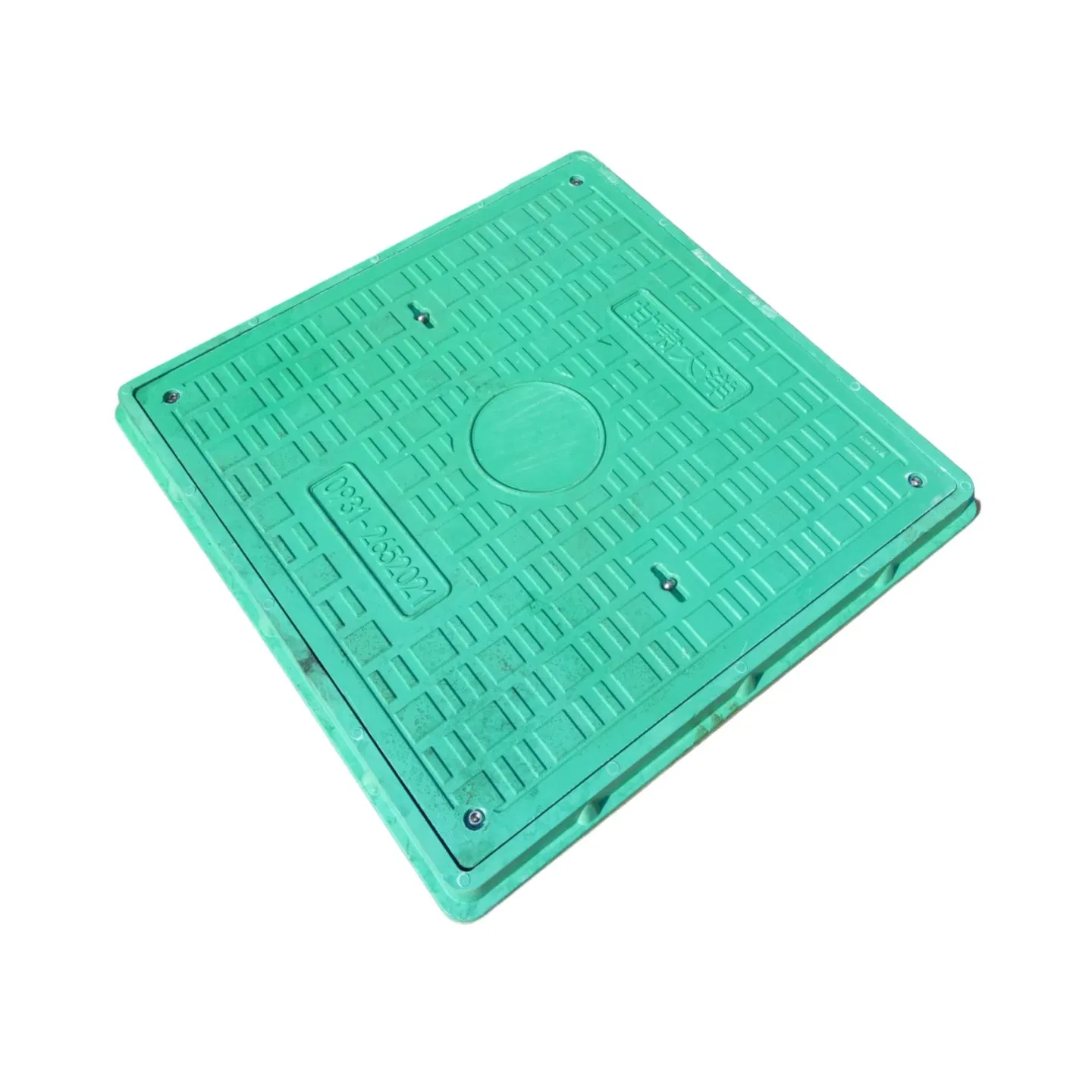
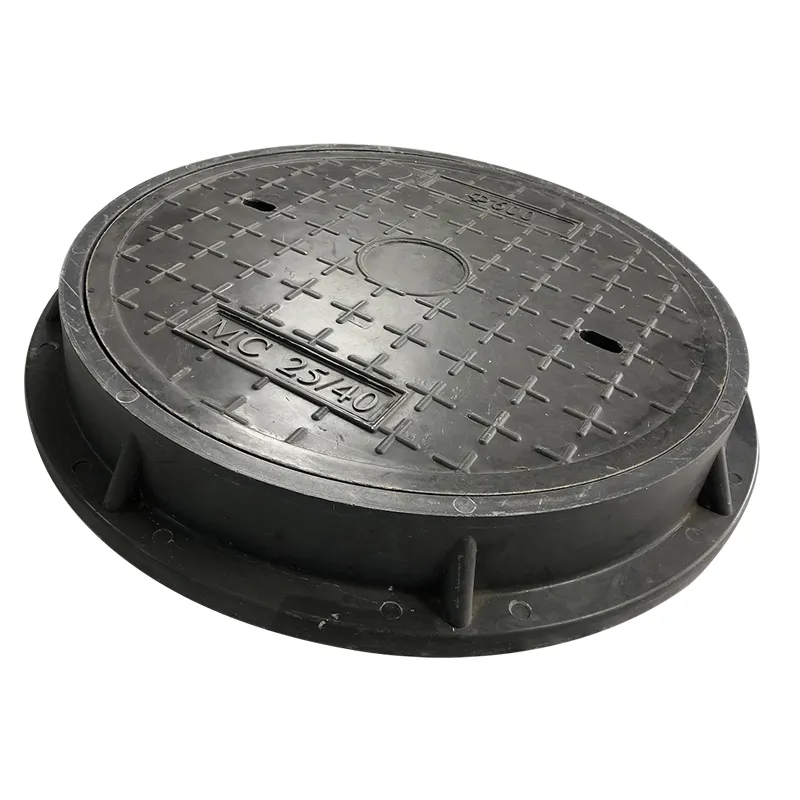
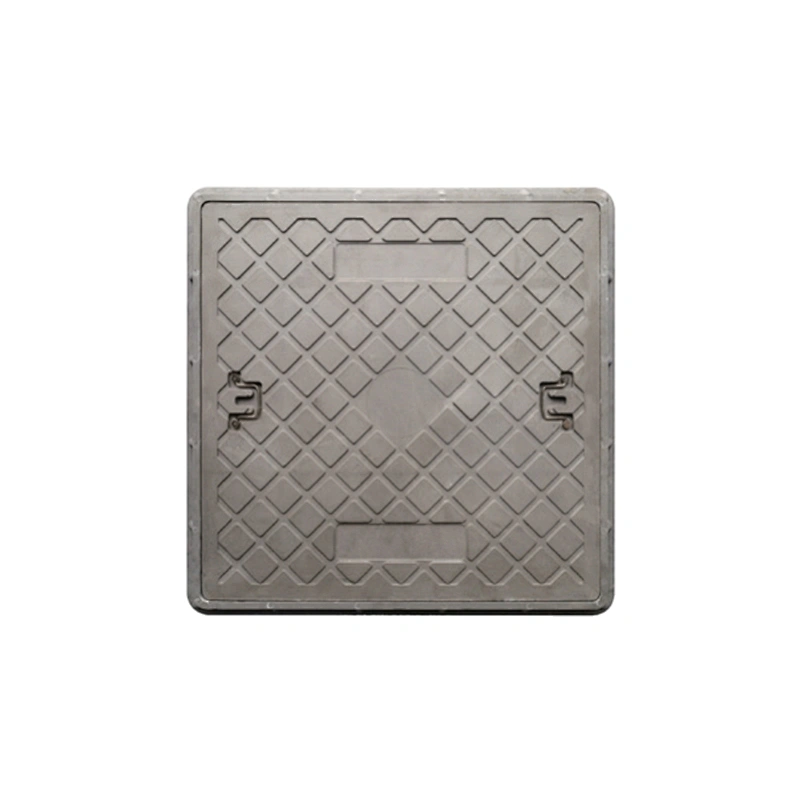
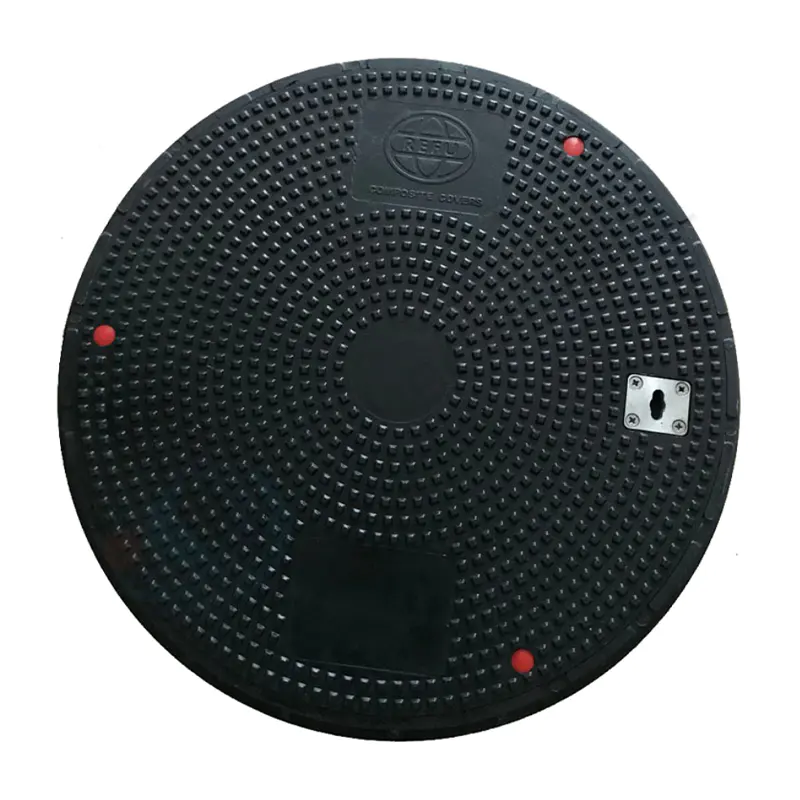
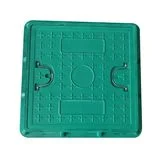
When specifying access covers for infrastructure projects, understanding the composite manhole cover load rating is critical to ensuring safety, compliance, and long-term performance. Unlike traditional cast iron covers, composite alternatives — made from fiber-reinforced polymer (FRP) or sheet molding compound (SMC) — offer excellent load-bearing capacity while being significantly lighter and corrosion-resistant.
The European standard EN124 governs load ratings for manhole covers across six classes: A15, B125, C250, D400, E600, and F900. Each class defines the maximum static load a cover can withstand, measured in kilonewtons (kN). This guide explains every EN124 class, compares composite vs cast iron load ratings, and helps you select the correct composite manhole cover load rating for your specific application — from pedestrian walkways to airport runways.
Understanding Composite Manhole Cover Load Rating Classes & EN124
The EN124 Standard — A15 to F900
The EN124 standard, formally titled "Gully tops and manhole tops for vehicular and pedestrian areas," is the internationally recognized benchmark for manhole cover load ratings. It classifies covers into six groups based on the maximum test load they must withstand:
| Class | Test Load (kN) | Typical Application |
|---|---|---|
| A15 | 15 kN (1.5 tonnes) | Pedestrian areas, cycle paths, gardens |
| B125 | 125 kN (12.5 tonnes) | Footways, car parks, residential driveways |
| C250 | 250 kN (25 tonnes) | Roadside gutters, slow-traffic zones |
| D400 | 400 kN (40 tonnes) | Roadways, highways, parking lots for heavy vehicles |
| E600 | 600 kN (60 tonnes) | Industrial zones, docks, heavy-load areas |
| F900 | 900 kN (90 tonnes) | Airports, military zones, extreme-load infrastructure |
All composite manhole cover load ratings are tested and certified against these same EN124 thresholds. A D400-rated composite cover must bear 400 kN — the same requirement as its cast iron counterpart.
How Composite Materials Meet EN124 Requirements
Modern composite manhole covers achieve these load ratings through advanced material engineering. FRP (fiber-reinforced polymer) and SMC (sheet molding compound) covers use high-strength glass fibers embedded in a thermosetting resin matrix. The result is a product that meets or exceeds EN124 requirements while weighing 60–75% less than cast iron. For example, a composite D400 cover typically weighs 25–35 kg compared to 80–120 kg for an equivalent cast iron cover. This weight advantage does not compromise structural integrity — composites are designed with finite element analysis (FEA) and tested under rigorous third-party certification to guarantee their composite manhole cover load rating.
EN124 Load Rating Classification Explained — A15 to F900
Each EN124 load rating class corresponds to a specific range of traffic conditions. Understanding these classifications is essential for correct specification.
A15 (15 kN / 1.5 tonnes) — The lightest class, designed exclusively for pedestrian use. A15-rated composite covers are ideal for landscaping, garden paths, and areas where only foot traffic is expected. They are not suitable for any vehicle traffic.
B125 (125 kN / 12.5 tonnes) — Suitable for pedestrian areas that may occasionally carry light vehicles. Common applications include footways, cycle paths, and private residential driveways. B125 is the minimum load rating recommended for any area accessible to cars.
C250 (250 kN / 25 tonnes) — Designed for areas with slow-moving vehicle traffic, such as roadside gutters, parking lot interiors, and service roads. Composite C250 covers offer a good balance of load capacity and lightweight installation for commercial properties.
D400 (400 kN / 40 tonnes) — The most widely specified class for roadways and highways. D400-rated composite manhole covers are suitable for all public roads, including those used by heavy trucks and buses. This class is also the standard for parking lots used by heavy commercial vehicles. The maximum load capacity of composite manhole covers in the D400 class reaches 40 tonnes, making them a drop-in replacement for cast iron in municipal road projects.
E600 (600 kN / 60 tonnes) — For industrial zones, container terminals, and loading docks where forklifts and heavy plant machinery operate. Composite E600 covers provide the same load capacity as cast iron but with easier handling during installation.
F900 (900 kN / 90 tonnes) — The highest EN124 class, reserved for airports (runways and taxiways), military installations, and ports. Composite F900 covers must withstand 90 tonnes of static load. Despite this extreme rating, composite F900 covers remain significantly lighter than their cast iron equivalents, reducing installation costs in these demanding environments.
Composite vs Cast Iron Manhole Cover Load Rating Comparison
A common question in infrastructure procurement is whether composite manhole covers can match the load-bearing performance of traditional cast iron. The short answer is yes — but with important trade-offs to consider.
| Property | Composite (FRP/SMC) | Cast Iron |
|---|---|---|
| Weight (D400) | 25–35 kg | 80–120 kg |
| Load Rating (EN124) | A15 through F900 | A15 through F900 |
| Corrosion Resistance | Excellent — no rust | Prone to rust over time |
| Installation Cost | Lower — no heavy equipment needed | Higher — crane or multiple workers |
| Theft Value | Very low (no scrap value) | High target for theft |
| Noise (traffic impact) | Quiet — absorbs vibration | Noisy — metal-on-frame clatter |
| Lifespan | 30+ years (non-corrosive) | 15–25 years (corrosion-dependent) |
In a direct composite vs cast iron manhole cover load rating comparison, both materials achieve identical EN124 classifications. A D400-rated cover is D400 regardless of material. However, composite covers offer several practical advantages: they are lighter, easier to install, resistant to corrosion, and less attractive to thieves. Cast iron remains favored in some markets due to its historical familiarity and higher impact resistance, but modern composite formulations have bridged this gap significantly. For most applications classified B125 through D400, composite covers are now the preferred choice among specifiers worldwide.
How to Choose the Right Load Rating for Composite Manhole Covers
Selecting the appropriate composite manhole cover load rating depends on three factors: traffic type, traffic speed, and frequency of heavy loads.
D400 Rating — The Standard for Roadway Applications
The D400 class is the most commonly specified composite manhole cover load rating for road infrastructure. With a 400 kN (40-tonne) test load, it covers virtually all public road scenarios, including highways, urban streets, and roundabouts. For parking lots, the choice depends on vehicle type: B125 is sufficient for car-only lots, C250 covers light commercial access, and D400 is required when heavy trucks or delivery vehicles use the lot. For industrial and port areas, step up to E600 (60 tonnes) for container handling zones or F900 (900 kN) for airport runways and military-grade infrastructure. When in doubt, selecting one class above your expected maximum load provides an added safety margin without significant cost increase — particularly beneficial given the lightweight nature of composite covers, which makes higher ratings easier to handle during installation.
SMC Manhole Cover Load Rating — Same EN124 Standard
SMC (Sheet Molding Compound) is a specific type of composite material widely used in manhole cover manufacturing. The SMC manhole cover load rating follows the exact same EN124 classification as other composite covers — from A15 through F900. There is no separate rating system for SMC. When you see an SMC cover certified to D400, it has passed the same 400 kN test as any other EN124-compliant cover. The key difference between SMC and general FRP (fiber-reinforced polymer) lies in the manufacturing process and material properties. SMC covers are compression-molded, offering excellent dimensional consistency and a smooth surface finish. Both SMC and FRP achieve identical load ratings under EN124. For specifiers asking about SMC vs FRP manhole cover load rating comparison, the answer is that they are equivalent — the choice depends more on manufacturing quality, design features, and supplier certification rather than inherent material capability. The maximum load capacity of SMC manhole covers at F900 class reaches 90 tonnes, making them suitable for the most demanding infrastructure applications.
How Composite Manhole Covers Are Load Tested
Understanding how composite manhole covers are load tested is important for procurement confidence. EN124 certification requires a standardized testing protocol:
- Static load test: A hydraulic press applies the full test load (e.g., 400 kN for D400) to the cover surface for a specified duration. The cover must show no cracks, permanent deformation exceeding 5% of the original dimension, or any structural failure. Every SMC manhole cover load rating is verified through this same test.
- Durability test: The cover undergoes 1 million load cycles at 50% of the rated load to simulate long-term traffic wear. Composite covers must maintain their structural integrity throughout this fatigue test.
- Slip resistance: The surface must meet minimum friction coefficients for pedestrian and vehicle safety.
- Seating and fit: The cover-to-frame interface is checked for uniform load transfer and movement under load.
Reputable manufacturers provide third-party EN124 test certificates for each composite manhole cover load rating class they produce. Always verify these certificates before procurement, particularly for D400 and higher classes used in critical infrastructure. The maximum load capacity of composite manhole covers is not a theoretical number — it is a tested and certified guarantee.
Conclusion
Understanding composite manhole cover load ratings is the foundation of correct specification. The EN124 standard provides a clear, universal framework — from A15 for pedestrian paths to F900 for airport runways — and composite materials meet every class without compromise. The key advantages of composite covers — lighter weight, corrosion resistance, lower installation cost, and theft deterrence — make them an increasingly popular choice across all EN124 classes.
When selecting a load rating, assess the actual traffic conditions, consider future load requirements, and always verify third-party EN124 certification. For road and highway applications, D400 is the industry-standard choice. For specialized environments such as ports, industrial zones, or airports, consult with manufacturers who can supply certified E600 or F900-rated composite covers.
Need help selecting the right load rating for your project? Contact our engineering team for expert guidance, or browse our full range of EN124-certified composite manhole covers.