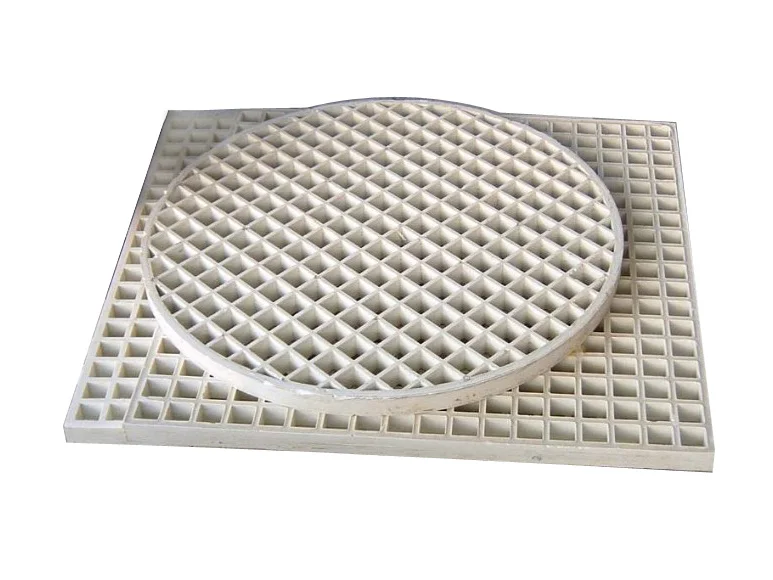
Introduction — Composite Manhole Cover Weight Guide
When sourcing access covers for infrastructure projects, one specification often determines logistics, installation costs, and long-term performance: composite manhole cover weight. Unlike traditional cast iron covers that can weigh over 100 kg per unit, composite (FRP/SMC) manhole covers weigh 60–70% less while delivering equivalent or superior load-bearing performance. This complete guide provides a detailed composite manhole cover weight chart by size and load rating, compares composite vs cast iron weights, and explains how these weight differences affect shipping costs, installation ease, and overall project economics.
What Is a Composite Manhole Cover?
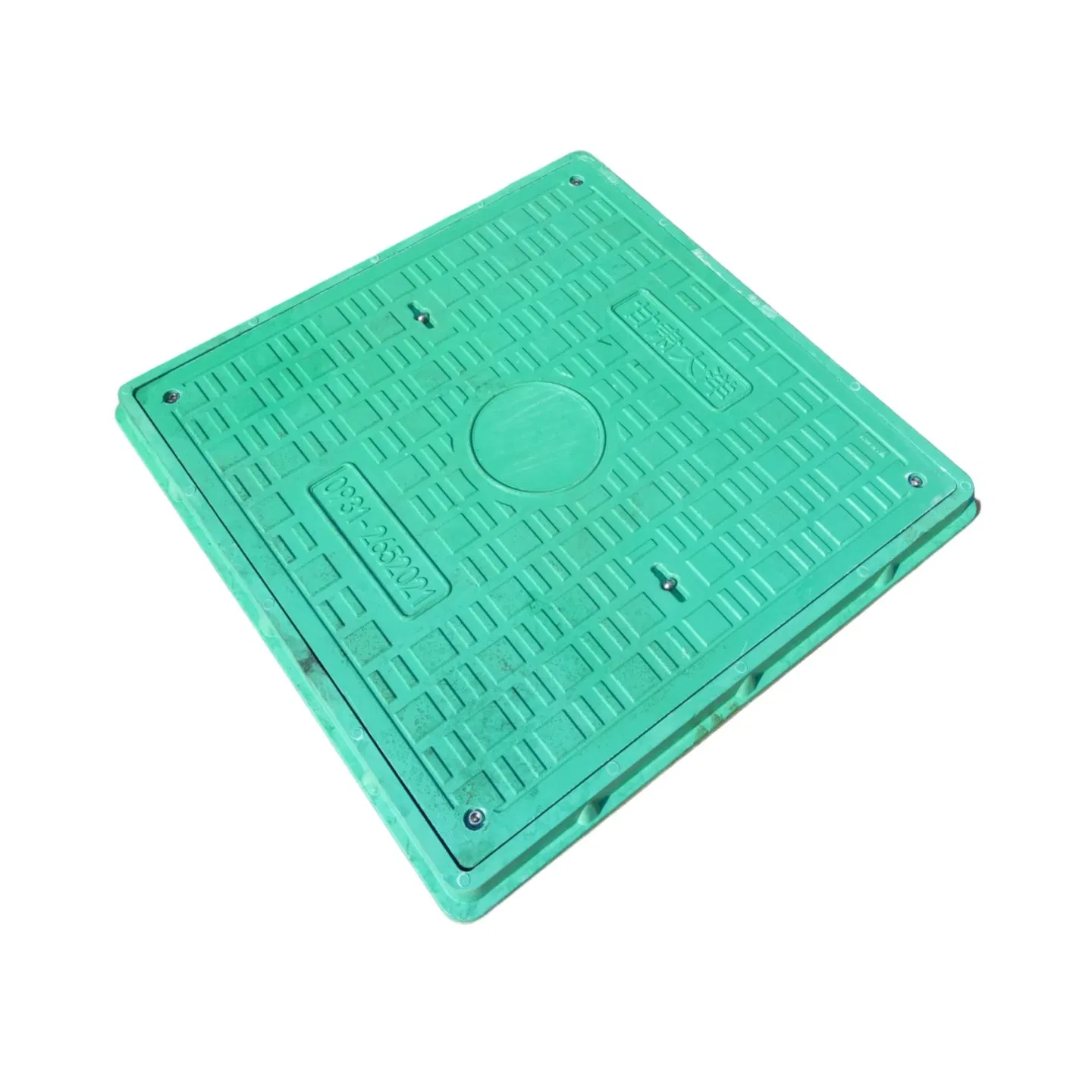
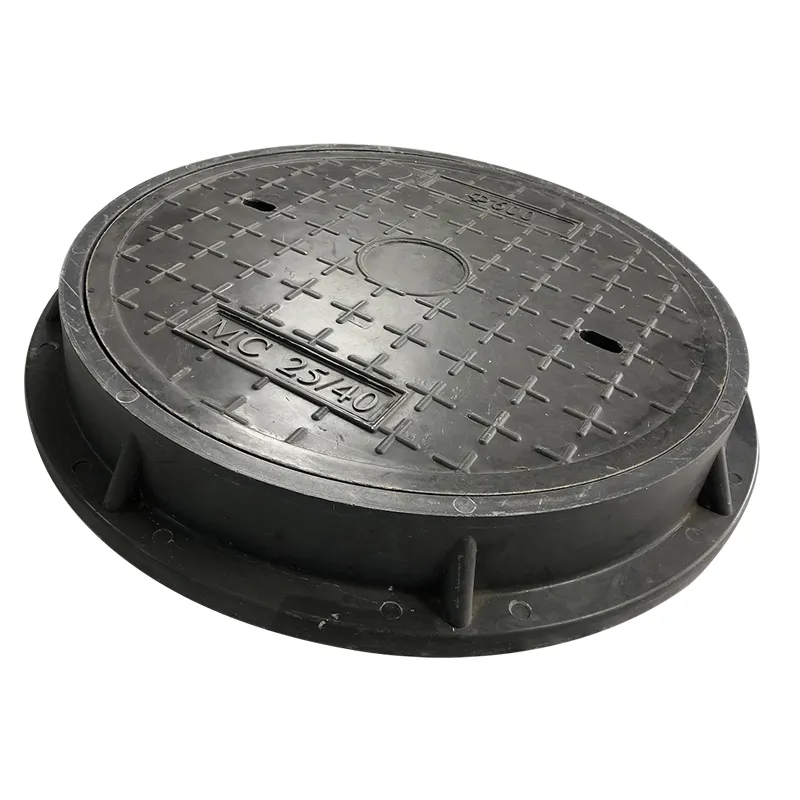
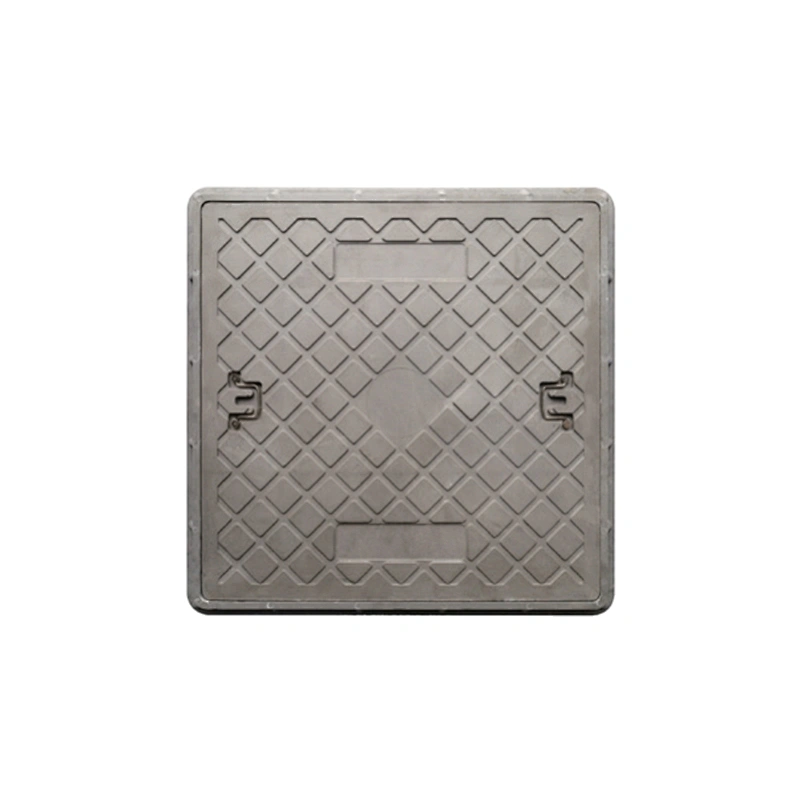
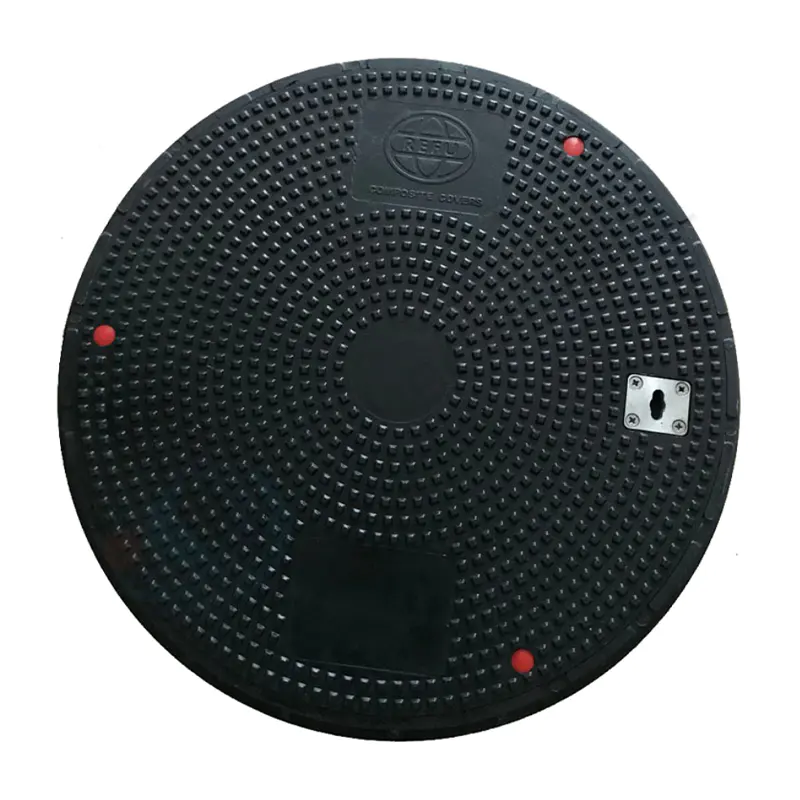
A composite manhole cover is an access cover manufactured from fiber-reinforced polymer (FRP) or sheet molding compound (SMC) materials. These covers consist of thermosetting resins reinforced with glass fibers, often combined with fillers and additives for UV resistance, fire retardancy, and enhanced mechanical strength.
Composite manhole covers are used in a wide range of applications including:
- Municipal roadways and highways (D400 rated)
- Residential driveways and pedestrian areas (B125, C250)
- Parking lots and commercial forecourts
- Airport runways and seaport facilities (E600, F900)
- Utility access points for telecom, water, electricity, and gas
Key benefits of composite manhole covers include their lightweight nature, corrosion resistance, non-conductive properties, and anti-theft design (scrap value of composite is near zero, eliminating theft incentives). They are also available in custom colors to blend with surrounding pavement, making them popular in urban landscape projects.
So why are composite manhole covers considered lightweight? The glass fiber and resin matrix has a density of approximately 1.8–2.0 g/cm³ — roughly one-quarter the density of cast iron (7.2 g/cm³). Combined with optimized ribbed structural designs that distribute loads efficiently, composite covers achieve D400 load ratings at a fraction of the weight of equivalent cast iron or concrete covers.
Composite Manhole Cover Weight by Size and Load Rating
Below is a comprehensive composite manhole cover weight chart showing standard sizes and their corresponding weights across common EN124 load ratings. Actual weights may vary slightly by manufacturer depending on specific material formulation and rib design.
| Size (mm) | Shape | Load Rating | Composite Weight (kg) | Application |
|---|---|---|---|---|
| 600 × 600 | Square | B125 | 12–15 | Footpaths, pedestrian areas |
| 600 × 600 | Square | C250 | 16–20 | Residential driveways, parking |
| 600 × 600 | Square | D400 | 22–28 | Roadways, highways |
| 750 × 750 | Square | B125 | 18–22 | Footpaths, pedestrian areas |
| 750 × 750 | Square | C250 | 24–30 | Residential driveways, parking |
| 750 × 750 | Square | D400 | 32–40 | Roadways, highways |
| Ø600 (round) | Round | D400 | 20–26 | Roadways, highways |
| Ø600 (round) | Round | E600 | 28–35 | Industrial zones, heavy traffic |
| Ø800 (round) | Round | D400 | 35–45 | Major roadways, highways |
| 900 × 900 | Square | D400 | 45–55 | Highway access points |
The maximum weight limit of a D400 rated composite manhole cover is determined not by the cover itself but by the EN124 standard it must satisfy — 400 kN (approximately 40 tonnes) proof load. Even a 22 kg composite D400 cover is certified to withstand this load through its structural ribbing and material strength. For comparison, a D400 concrete cover of the same size often weighs 80–100 kg.
Composite Manhole Cover vs Cast Iron Weight Comparison
The most striking difference between composite and cast iron manhole covers is weight. A composite manhole cover weight is typically 60–70% less than an equivalent cast iron cover. This dramatic reduction stems from the fundamental material density difference: composite materials (1.8–2.0 g/cm³) versus cast iron (7.2 g/cm³).
When comparing composite manhole cover vs cast iron, weight is the most immediately obvious differentiator — a single worker can easily carry a composite cover that would require two people or a hoist in cast iron.
| Size / Rating | Composite Weight (kg) | Cast Iron Weight (kg) | Weight Savings |
|---|---|---|---|
| 600×600 B125 | 12–15 | 40–50 | 65–70% |
| 600×600 C250 | 16–20 | 50–65 | 63–69% |
| 600×600 D400 | 22–28 | 65–85 | 62–67% |
| 750×750 D400 | 32–40 | 90–120 | 64–67% |
| Ø600 round D400 | 20–26 | 55–75 | 60–65% |
| Ø800 round D400 | 35–45 | 100–140 | 60–68% |
The composite manhole cover vs cast iron weight comparison is not just about numbers — it affects every downstream cost from shipping to installation. Are composite manhole covers stronger than cast iron? In terms of load-to-weight ratio, composites outperform cast iron significantly. A 22 kg composite D400 cover and an 80 kg cast iron D400 cover both withstand the same 400 kN proof load. However, cast iron is more brittle under impact — composite covers absorb impact energy better due to their fiber reinforcement. Composite covers also do not rust, spall, or develop potholes around the edges, which extends their service life.
Are composite manhole covers lighter than concrete covers? Yes, by an even greater margin. Concrete covers for the same D400 rating typically weigh 2–3 times more than cast iron and 5–8 times more than composite. A D400 concrete cover for 600×600 can weigh 80–100 kg, making installation a multi-person or machine-assisted operation.
How Composite Manhole Cover Weight Affects Transportation Costs
The composite manhole cover weight reduction has a direct and measurable impact on international shipping costs. Since ocean freight is calculated by volume (CBM) or weight (whichever is higher), lighter covers maximize container utilization.
Consider a standard 20-foot container with 28 CBM usable volume:
| Metric | Composite (D400 600×600, ~25 kg) | Cast Iron (D400 600×600, ~75 kg) |
|---|---|---|
| Covers per pallet | 40 | 20 |
| Pallets per container | 20 | 20 |
| Total covers per container | 800 | 400 |
| Total payload weight | 20,000 kg | 30,000 kg (exceeds limit) |
| Container utilization | Volume-limited, weight OK | Weight-limited, underfilled |
With cast iron covers, a 20-foot container can only hold approximately 250–300 units before hitting the 22-ton payload limit. With composite covers, you can fill the entire container with up to 800 covers — roughly 2–3 times more units per shipment. This translates to significantly lower per-unit shipping costs.
For bulk buyers and wholesalers, this weight advantage means:
- Lower freight cost per unit — typically saving 40–60% on container shipping
- Reduced handling equipment costs at warehouses
- Ability to consolidate more SKUs in a single shipment
- Lower carbon footprint per cover shipped
Installation Advantages of Lightweight Composite Manhole Covers
Lightweight composite manhole covers offer significant installation advantages over their cast iron counterparts. When a single cover weighs 12–28 kg instead of 50–140 kg, the entire installation workflow changes:
Manual handling. A 600×600 D400 composite cover at 22–28 kg can be carried and placed by one worker. The equivalent cast iron cover at 65–85 kg requires two workers or mechanical lifting equipment. For projects with 50–200 covers, this translates to substantial labor savings.
Tool requirements. Composite covers can be installed using basic hand tools — no need for hoists, cranes, or special lifting frames. The lightweight nature also reduces the risk of workplace injuries: back strain, crushed fingers, and dropped loads are significantly less likely.
Installation speed. Field studies show that installing a composite cover takes roughly half the time of installing a cast iron cover of equivalent size and rating. For a contractor installing 20 covers per day, switching to composite can increase daily output to 35–40 covers.
Frame compatibility. Composite covers typically use the same frame dimensions as cast iron covers, making them suitable for retrofit projects. The existing cast iron frame can often be reused, and the lighter composite insert simply drops into place. This is especially valuable for municipal maintenance projects where traffic disruption must be minimized.
Which is easier to install — composite or cast iron? Composite covers are universally easier to install due to their lower weight, corrosion resistance (no rust-jamming in the frame), and compatibility with standard installation practices. For projects in pedestrian and residential zones (B125, C250), the weight difference is even more pronounced, with composite covers as light as 12 kg.
Composite Manhole Cover Load Ratings — EN124 Classification
Composite manhole covers must meet the same EN124 load rating standards as cast iron and concrete covers. Understanding composite manhole cover load rating classifications is essential for selecting the right product for your application. EN124 classifies covers into six classes based on the maximum proof load they must withstand:
| EN124 Class | Proof Load | Typical Application | Composite Cover Weight Range |
|---|---|---|---|
| A15 | 15 kN (1.5 t) | Footpaths, cycle paths | 6–10 kg |
| B125 | 125 kN (12.5 t) | Pedestrian zones, car parks | 10–18 kg |
| C250 | 250 kN (25 t) | Residential driveways, curbside | 16–25 kg |
| D400 | 400 kN (40 t) | Roadways, highways, parking lots | 22–45 kg |
| E600 | 600 kN (60 t) | Industrial zones, docks | 28–55 kg |
| F900 | 900 kN (90 t) | Airport runways, seaports | 40–80 kg |
The composite manhole cover load rating classification explained above shows that even the highest-rated composite covers (F900, 90 tonnes proof load) weigh only 40–80 kg — a fraction of what cast iron or concrete would require. Do composite manhole covers meet EN124 load rating standards? Yes — reputable manufacturers conduct third-party load testing and provide certification verifying that their composite covers meet or exceed EN124 requirements. Always request EN124 certification documents when sourcing composite covers.
What load rating do I need for a parking lot? For standard parking lots and vehicle accessways, C250 (250 kN) is typically sufficient. For parking lot entrances and main access roads that experience bus or truck traffic, D400 (400 kN) is recommended.
Composite vs cast iron load rating comparison: Both materials can achieve identical EN124 ratings. The difference is purely in the weight required to reach those ratings. Cast iron achieves D400 through sheer mass; composite achieves it through optimized structural geometry and high-strength fiber reinforcement.
To choose the right load rating, consider the maximum vehicle that will pass over the cover. Use A15 for pedestrian-only areas, B125 for occasional car access, C250 for regular vehicle traffic up to 25 tonnes, D400 for truck routes and highways, E600 for heavy industrial zones, and F900 for airports.
Composite vs Cast Iron: Cost, Lifespan and Which to Choose
When deciding between composite and cast iron manhole covers, weight is only one factor. Here is a full comparison covering cost, lifespan, and overall value.
Cost comparison. Composite manhole covers are generally priced competitively with cast iron covers at the point of purchase, and often cheaper when total cost of ownership is considered. While cast iron may have a lower per-unit purchase price in some markets, the composite manhole cover for sale price includes significant savings in shipping, handling, and installation labor. Additionally, composite covers have zero scrap value, eliminating theft — a major cost factor in cast iron covers, which are frequently stolen and sold for scrap metal.
Lifespan and durability. Cast iron covers rust over time, especially in coastal or chemical environments. Rust causes the cover to bind in the frame, leading to noise, difficult removal, and eventual structural failure. Composite covers are inherently corrosion-resistant and will not rust. They also resist UV degradation when properly formulated. Expected service life for composite covers is 30+ years — comparable to or exceeding cast iron in corrosive environments.
Which is better? For most modern infrastructure projects, composite manhole covers offer a better overall value proposition. They are lighter, easier to install, safer to handle, cheaper to ship, corrosion-resistant, and theft-proof. Cast iron remains preferred in some applications where impact resistance is critical (e.g., mining, extreme heavy-load scenarios) or where local specifications mandate traditional materials. However, composite technology has advanced to the point where it is the recommended choice for the majority of municipal, commercial, and residential applications.
Composite manhole cover pros: Lightweight (60–70% lighter), no theft value, no rust, easy installation, lower shipping cost, non-conductive, customizable colors, quieter under traffic.
Cast iron pros: Very high impact resistance, well-known specification, wide availability, some installers prefer traditional material.
Where to Buy Composite Manhole Covers
If you are looking to purchase composite manhole covers for sale, here is what you need to know about sizes, pricing, certification, and sourcing.
Available sizes. Standard composite manhole covers are available in square sizes from 300×300 mm up to 1200×1200 mm, and round diameters from Ø500 mm to Ø1000 mm. The most commonly stocked sizes are 600×600 mm square and Ø600 mm round for D400 applications. Custom sizes are available from most manufacturers but typically require minimum order quantities of 50–100 units.
Pricing. A standard composite manhole cover for sale price ranges from approximately $25–$60 for B125 pedestrian-grade covers, $35–$90 for C250 driveway-grade covers, and $45–$150 for D400 road-grade covers depending on size, load rating, certification, and color. Wholesale pricing for volume orders (500+ units) typically reduces per-unit cost by 15–30%.
Certification. Always verify EN124 certification before purchasing. Reputable suppliers provide third-party test reports and certification documents. Ask specifically for load test certificates and material composition data.
Where to buy. Composite manhole covers are available through:
- Direct from manufacturers — best pricing, ideal for volume orders and custom specifications
- Wholesale distributors — good for mixed orders and regional delivery
- Online B2B platforms — suitable for small quantities and price comparison
For bulk buyers looking to buy composite manhole covers wholesale for resale, direct factory sourcing is recommended. Many manufacturers offer private labeling, custom colors, and customized packaging for distributors. Contact our sales team for a quote on wholesale composite manhole covers with EN124 certification and competitive FOB/CIF pricing.
Conclusion
Understanding composite manhole cover weight is essential for making informed procurement decisions in construction and infrastructure projects. Composite covers weigh 60–70% less than cast iron equivalents, translating to lower shipping costs (2–3× more units per container), faster and safer installation (one-person handling), and reduced total cost of ownership over their 30+ year service life.
The weight advantage does not compromise strength — composite covers meet the same EN124 load ratings (A15 through F900) as cast iron or concrete. Combined with corrosion resistance, anti-theft properties, and design flexibility, composite manhole covers represent the modern standard for utility access applications worldwide.
Whether you need standard sizes for a municipal roadway project or custom dimensions for a specialized application, choosing lightweight composite manhole covers delivers measurable economic and operational benefits from the factory floor to the installation site.