Introduction
When sourcing access covers for infrastructure projects, the fiberglass manhole cover price is one of the first factors procurement managers evaluate. Unlike traditional cast iron or concrete alternatives, composite manhole covers made from fiberglass-reinforced plastic (FRP) offer a unique balance of strength, weight, and corrosion resistance — but how much do they actually cost?
In this comprehensive pricing guide, we break down costs by load rating (EN124), standard dimensions, material composition, and order quantity. Whether you are comparing fiberglass vs cast iron costs, evaluating wholesale options, or looking for a D400-rated cover for roadway use, this article provides the data you need to make an informed purchasing decision. We also cover heavy-duty grades, bulk discount structures, and typical FOB reference prices from reputable FRP manhole cover manufacturers.
Fiberglass Manhole Cover Price Overview — What Affects the Cost?
Several variables influence the final cost of composite manhole covers in the global market. Understanding these factors helps buyers compare quotes accurately and avoid unexpected cost variations.
Material Composition and Manufacturing Process
Fiberglass manhole covers are manufactured using Sheet Molding Compound (SMC) or Bulk Molding Compound (BMC), with varying glass-fiber content and resin formulations. Higher glass-fiber ratios improve strength but increase raw material costs. Premium-grade SMC covers with UV stabilizers and fire-retardant additives command a 10–20% premium over standard grades.
Load Rating (EN124 Classification)
The EN124 standard defines load classes from A15 (pedestrian use, 15 kN) to F900 (airport runways, 900 kN). Higher load ratings require thicker walls, more reinforcement layers, and additional structural engineering, which directly increases the unit cost. A D400-rated cover (greater than 400 kN load capacity) typically costs 30–50% more than a C250-rated cover of the same size.
Size and Clear Opening Dimensions
Standard sizes such as 600x600 mm, 750x750 mm, and 600x900 mm represent the most cost-effective options due to mold standardization. Custom dimensions or non-rectangular shapes require dedicated tooling and command higher per-unit pricing. Larger clear openings consume more material and require thicker cross-sections, raising both material and shipping costs.
Surface Finish and Anti-Theft Features
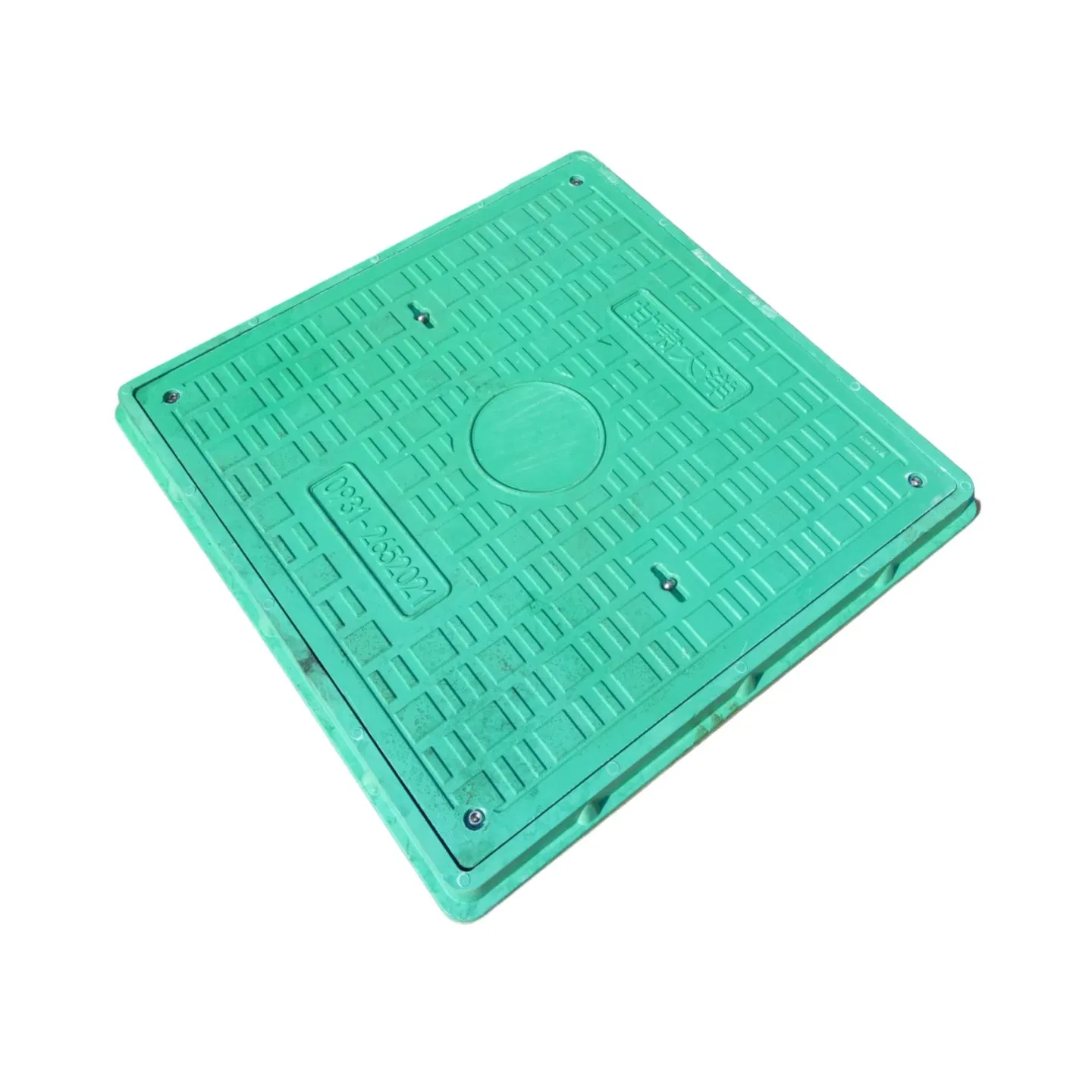
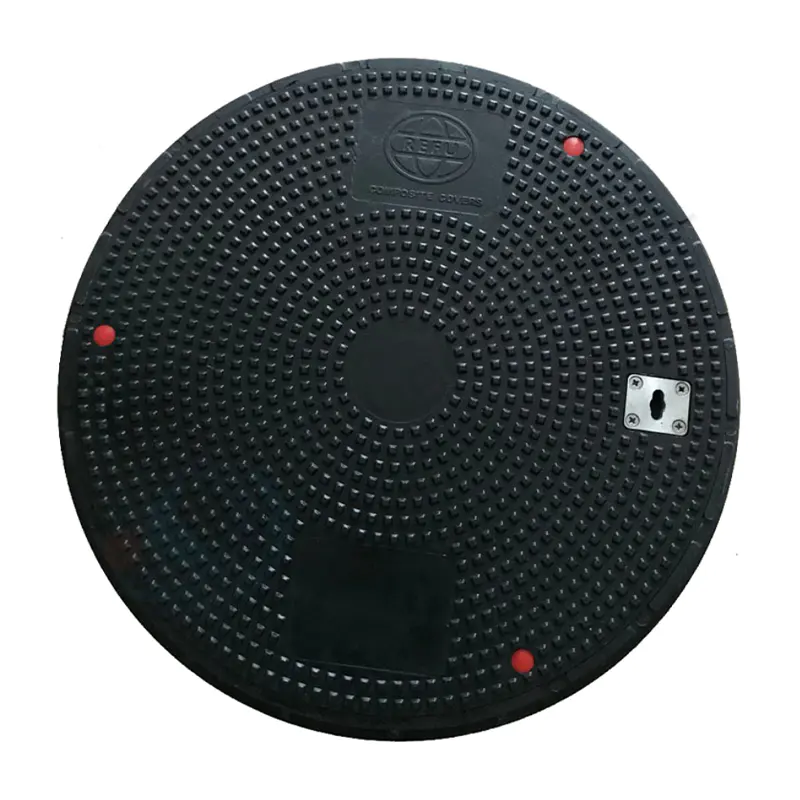
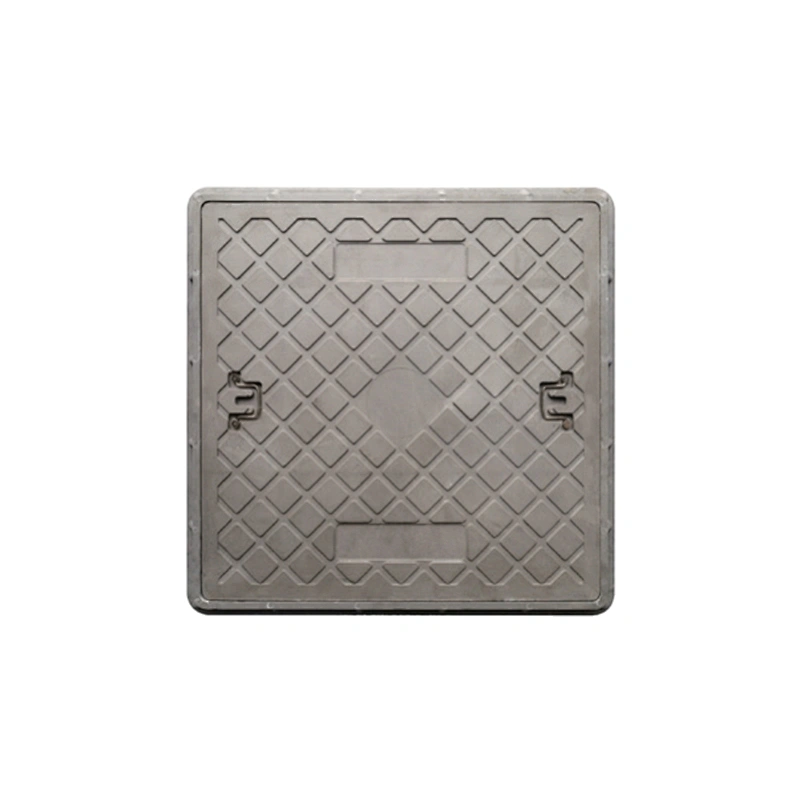
Covers with diamond-patterned slip-resistant surfaces, color-pigmented resin throughout (rather than painted), and locking or bolted-down mechanisms increase production complexity and cost. Anti-theft designs and tamper-proof fasteners add –8 per unit depending on the mechanism.
Order Quantity and Supply Chain
As with most industrial products, volume drives the unit price downward. A single pallet order (10–20 pieces) will see a higher per-unit cost compared to container-load quantities (500–1,200 pieces depending on size). Sea freight from major manufacturing hubs in Asia also influences landed cost, particularly for heavy covers requiring more container space.
Fiberglass vs Cast Iron Price Comparison
A common question among procurement teams is whether fiberglass manhole covers are cheaper than cast iron. The short answer is yes — in most cases, fiberglass composite covers offer a fiberglass manhole cover price vs cast iron savings of 20–40% for equivalent load ratings. However, the total cost of ownership tells a more complete story.
Upfront Purchase Price
| Load Rating | Cast Iron Price (FOB, USD) | Fiberglass Price (FOB, USD) | Savings |
|---|---|---|---|
| C250 (600×600 mm) | $38–52 | $22–35 | ~30% |
| D400 (600×600 mm) | $55–80 | $35–55 | ~35% |
| E600 (600×600 mm) | $85–120 | $50–80 | ~35% |
Total Cost of Ownership
Beyond initial purchase, fiberglass covers save on logistics (60–70% lighter than cast iron), installation labor (can be installed by one person without heavy equipment), and theft replacement (fiberglass has negligible scrap value, unlike cast iron which is frequently stolen for metal recycling). Over a 5-year lifecycle, fiberglass covers can reduce total ownership cost by 40–55% compared to cast iron.
Which Is Stronger?
Regarding the common question heavy duty fiberglass manhole cover vs cast iron which is stronger, both materials can achieve the same EN124 load ratings when properly engineered. Cast iron has higher absolute compressive strength, but fiberglass composites offer superior impact resistance, better load distribution through their ribbed structural design, and zero susceptibility to brittle fracture in cold climates. For most municipal and industrial applications, a D400-rated fiberglass cover provides equivalent load-bearing performance to its cast iron counterpart.
Fiberglass Manhole Cover Price by Load Rating (EN124)
EN124 is the harmonized European standard for manhole cover load ratings, adopted globally by many infrastructure projects. The fiberglass manhole cover load rating directly correlates with its price. Below is a detailed breakdown by EN124 class.
A15 — Pedestrian Areas (15 kN)
Designed for sidewalks, gardens, and pedestrian zones. These are the most economical options, with prices ranging from –25 per unit (600x600 mm). A15 covers are lightweight (8–12 kg) and suitable for areas with zero vehicular traffic.
B125 — Footpaths and Cycle Lanes (125 kN)
Rated for occasional light vehicle overrun. Prices range from –28 per unit. These covers are often used in residential driveways and park pathways where emergency vehicle access is required.
C250 — Car Parks and Forecourts (250 kN)
The C250-rated covers typically fall between –35 per unit. A common question is: Is a fiberglass manhole cover with C250 rating suitable for car parks? Yes — C250 is specifically designed for car parks, slow-moving vehicle traffic, and paved forecourts. For passenger vehicle parking lots, C250 provides adequate strength at an economical price point. These covers weigh approximately 12–18 kg depending on size.
D400 — Roadways and Highways (400 kN)
The D400 rated tier is the most frequently requested pricing tier for commercial buyers. The average fiberglass manhole cover price for D400 rated products ranges from –55 per unit (600x600 mm) and –70 per unit (750x750 mm). D400 fiberglass covers weigh 18–25 kg, compared to 45–60 kg for an equivalent cast iron cover.
Can fiberglass manhole covers achieve a D400 load rating? Absolutely — modern SMC composite technology reliably produces D400-rated covers that pass the full EN124 test protocol, including the 400 kN (40-ton) static load test and the 250-cycle durability test. Many fiberglass covers are now certified to D400 by accredited third-party testing laboratories.
E600 — Industrial Docks and Heavy Traffic (600 kN)
For ports, logistics yards, and industrial zones. Price range: –80 per unit. These covers incorporate additional reinforcement ribs and thicker wall sections.
F900 — Airports (900 kN)
Specialized covers for aircraft runways and taxiways. Prices exceed –180 per unit and require customized engineering.
For reference, fiberglass covers are available across all EN124 classes from A15 through F900, making them suitable for virtually any application. The load rating comparison between fiberglass and steel shows that FRP composites can match steel covers in load capacity while being significantly lighter and corrosion-free.
Heavy Duty Fiberglass Manhole Cover — Price, Load Rating & Applications
For infrastructure projects requiring maximum load-bearing capacity, the heavy duty fiberglass manhole cover is the product category of choice. These covers are engineered to meet D400, E600, and F900 EN124 classifications.
How Much Weight Can a Heavy Duty Fiberglass Manhole Cover Support?
The load capacity depends on the EN124 class: D400 covers support 40 metric tons (400 kN), E600 supports 60 tons, and F900 supports 90 tons. These ratings represent the static test load — the maximum weight the cover must withstand during testing. In practice, heavy-duty fiberglass covers have a safety margin of 2.5–3x the rated load before structural failure.
What Load Rating Does a Heavy Duty Fiberglass Manhole Cover Have?
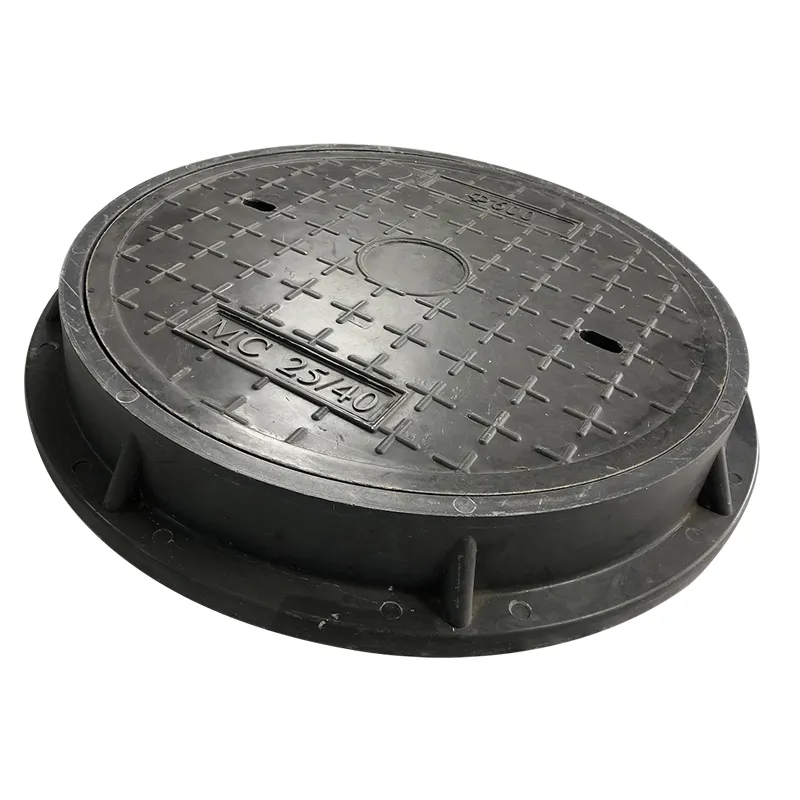
Heavy-duty fiberglass covers are typically rated D400 or above. The heavy duty fiberglass manhole cover load rating is embossed on the cover surface and certified through third-party testing per EN124:2015. Many manufacturers also offer load-test certificates that can be shared with consulting engineers and project specifiers.
What Applications Require a Heavy Duty Fiberglass Manhole Cover?
- Roadways and highways — D400 rated covers for carriageways subject to high-speed traffic.
- Port and container terminals — E600 covers for areas with heavy forklift and container traffic.
- Airport aprons and runways — F900 covers meeting the strictest aviation standards.
- Industrial factory floors — D400–E600 covers for internal logistics routes.
- Mining and heavy equipment zones — customized heavy-duty covers for extreme loads.
How to Install a Heavy Duty Fiberglass Manhole Cover
Installation is straightforward and requires no specialized equipment due to the cover's light weight. The process includes: (1) preparing the frame bed with mortar or epoxy grout, (2) setting the frame to the correct elevation and slope, (3) allowing the bedding material to cure, (4) placing the fiberglass cover into the frame, and (5) securing with anti-theft bolts if specified. One worker can typically handle a D400 fiberglass cover without mechanical assistance — a significant advantage over cast iron alternatives.
Heavy Duty Fiberglass Manhole Cover Price Range
A heavy-duty D400-rated unit starts at approximately per unit (600x600 mm) and increases with size and load class. E600 covers range from –80, while F900 covers start at and can exceed for large openings. Despite the higher per-unit cost compared to standard-duty covers, heavy-duty fiberglass remains more economical than cast iron equivalents at every load tier.
Fiberglass Manhole Cover Price by Size — Standard Dimensions & Cost
The clear opening dimension is a primary cost driver. Below are typical pricing ranges for standard sizes at D400 load rating — the most commonly specified class for roadway use.
Standard Square Covers (D400 Rated)
| Size (mm) | Clear Opening (mm) | Approx. Weight (kg) | Price Range (FOB USD) |
|---|---|---|---|
| 600 x 600 | 500 x 500 | 18–22 | –55 |
| 750 x 750 | 600 x 600 | 25–32 | –70 |
| 900 x 900 | 750 x 750 | 35–45 | –95 |
| 600 x 900 | 500 x 750 | 28–36 | –75 |
| 1000 x 1000 | 850 x 850 | 45–55 | –130 |
Round Covers (D400 Rated)
Round fiberglass covers are also available and typically cost 5–10% less than square equivalents of the same clear opening area, due to more efficient material distribution in compression.
| Diameter (mm) | Clear Opening (mm) | Price Range (FOB USD) |
|---|---|---|
| 600 | 500 | –50 |
| 750 | 630 | –65 |
| 900 | 750 | –90 |
Custom Dimensions
Non-standard sizes require new mold fabrication (–2,500 one-time tooling cost) and typically carry a 15–25% price premium over standard equivalents. For large-scale projects with 500+ units, the tooling cost is often absorbed into the unit price or amortized across the order.
Wholesale & Bulk Pricing for Fiberglass Manhole Covers
For importers, distributors, and large-scale contractors, understanding wholesale pricing tiers is essential. The question where to buy fiberglass manhole covers at wholesale price is best answered by working directly with manufacturers rather than intermediaries.
Typical Wholesale Pricing Tiers (D400, 600x600 mm)
| Order Quantity | Price per Unit (FOB USD) | Discount vs. Retail |
|---|---|---|
| 1–50 units (sample / small lot) | –55 | — |
| 50–200 units (pallet orders) | –48 | ~10–15% |
| 200–500 units (LCL shipment) | –42 | ~20–25% |
| 500–1,200 units (full 20' container) | –38 | ~30–40% |
| 1,200+ units (multiple containers / annual contract) | –35 | ~40–50% |
FOB Reference Prices by Destination
FOB (Free On Board) pricing from major manufacturing bases in China typically includes the following breakdown for a D400 600x600 mm cover at container-load quantities:
- Unit price (FOB): –38
- Plywood palletizing: .50–2.50 per cover
- Ocean freight (estimated): ,500–3,500 per 20' container depending on destination port
- Landed cost estimate (US West Coast): –48 per unit
- Landed cost estimate (Europe, CIF main port): –50 per unit
Tips for Getting the Best Wholesale Price
- Request quotes from at least 3–5 manufacturers to establish a market baseline.
- Combine multiple sizes in one container to improve fill rate and reduce per-unit freight.
- Ask about OEM branding options — many manufacturers offer private labeling at no extra cost for container orders.
- Verify EN124 certification documentation before placing bulk orders.
- Consider annual supply agreements for ongoing projects to lock in pricing.
Fiberglass vs Concrete Manhole Cover — Cost Comparison
Another frequent comparison is fiberglass covers versus concrete — which is more affordable? The answer depends on whether you evaluate upfront cost or total lifecycle value.
Upfront Price Comparison
Concrete manhole covers are generally the cheapest option at first glance, with prices ranging from –20 per unit for standard sizes. However, this low purchase price comes with significant trade-offs that many buyers discover after installation.
| Factor | Fiberglass (FRP) | Concrete |
|---|---|---|
| Purchase price (600x600, D400) | –55 | –20 |
| Weight (kg) | 18–25 | 45–70 |
| Installation labor | 1 person | 2–3 people or equipment |
| Corrosion resistance | Excellent | Poor — spalls in 3–5 years |
| Lifespan | 25–30 years | 8–15 years |
| Maintenance cost | Negligible | Moderate — crack repairs |
| Theft risk | Low (no scrap value) | Low |
Lifecycle Cost Analysis
While the initial purchase cost comparison shows concrete at roughly half the upfront price, the 25-year lifecycle cost tells a different story. Fiberglass manhole cover price vs concrete analysis reveals that fiberglass covers require virtually no maintenance, will not spall or crack from freeze-thaw cycles, and do not corrode when exposed to wastewater gases (H2S). Concrete covers in sewer environments typically begin deteriorating within 3–7 years due to biogenic sulfide corrosion, requiring replacement that erases any initial savings.
When you factor in installation labor (concrete covers often require a small crane or team lifting), transportation (more weight = higher freight), and replacement frequency, fiberglass covers deliver 30–50% lower total cost of ownership over a 25-year project horizon.
How to Choose the Right Fiberglass Manhole Cover for Your Budget
Selecting the right fiberglass manhole cover involves balancing performance requirements against budget constraints. Here is a decision framework for buyers.
Step 1: Determine the Required Load Rating
How to choose the right load rating for a fiberglass manhole cover? Start by identifying the installation location:
- Pedestrian-only zones (sidewalks, parks): A15 or B125 — lowest cost option.
- Car parks, driveways, residential roads: C250 — offers the best balance of cost and strength for passenger vehicle traffic.
- Public roadways, highways, loading bays: D400 — the most common specification for municipal and commercial projects.
- Industrial zones, ports, airports: E600 or F900 — maximum load capacity for specialized applications.
Step 2: Select the Right Size
Use the smallest clear opening that meets access requirements. Standard sizes (600x600 mm, 750x750 mm) are significantly more affordable than custom dimensions. If your project allows, design access chambers around standard cover sizes to minimize costs.
Step 3: Evaluate Total Cost of Ownership
Consider these lifecycle factors beyond the purchase price:
- Logistics: A 20' container holds approximately 600 D400 600x600 fiberglass covers vs. only 200 cast iron covers of the same rating, due to weight limits. This reduces per-unit freight cost by up to 60%.
- Installation: Factor in labor savings from lighter weight — no crane, no heavy lifting team.
- Durability: Fiberglass covers do not rust, corrode, or deteriorate in wastewater environments, avoiding replacement costs every 5–10 years.
- Theft prevention: Zero scrap value means fiberglass covers are rarely stolen, eliminating recurring replacement expenses common with cast iron in many regions.
Step 4: Compare FOB Quotes
When evaluating supplier quotes, ensure all prices are on a like-for-like basis: same EN124 rating, same size, same surface finish, and same frame compatibility. Request a specification sheet and load-test certificate with each quote to verify that a competitive price does not come at the expense of quality or certification.
Conclusion
The pricing landscape for composite access covers offers options for every budget and application. From affordable A15 pedestrian covers starting under to heavy-duty F900 airport-grade units exceeding , fiberglass composites provide a cost-effective alternative to traditional materials across the entire spectrum.
Key takeaways for buyers:
- Fiberglass covers cost 20–40% less than cast iron at equivalent load ratings, with additional savings from lighter weight and lower theft risk.
- D400-rated fiberglass covers for roadway use range from –55 per unit (600x600 mm, FOB), making them the most popular choice for municipal projects.
- Wholesale pricing at container quantities (500+ units) can reduce per-unit cost by 30–40% compared to small-lot purchases.
- While concrete covers have a lower upfront price, fiberglass delivers superior total cost of ownership over the full lifecycle due to durability, corrosion resistance, and minimal maintenance.
- Always verify EN124 certification and request load-test documentation before committing to a supplier.
For current pricing, specifications, and availability, contact our team or browse our full product range of certified fiberglass manhole covers.