Introduction
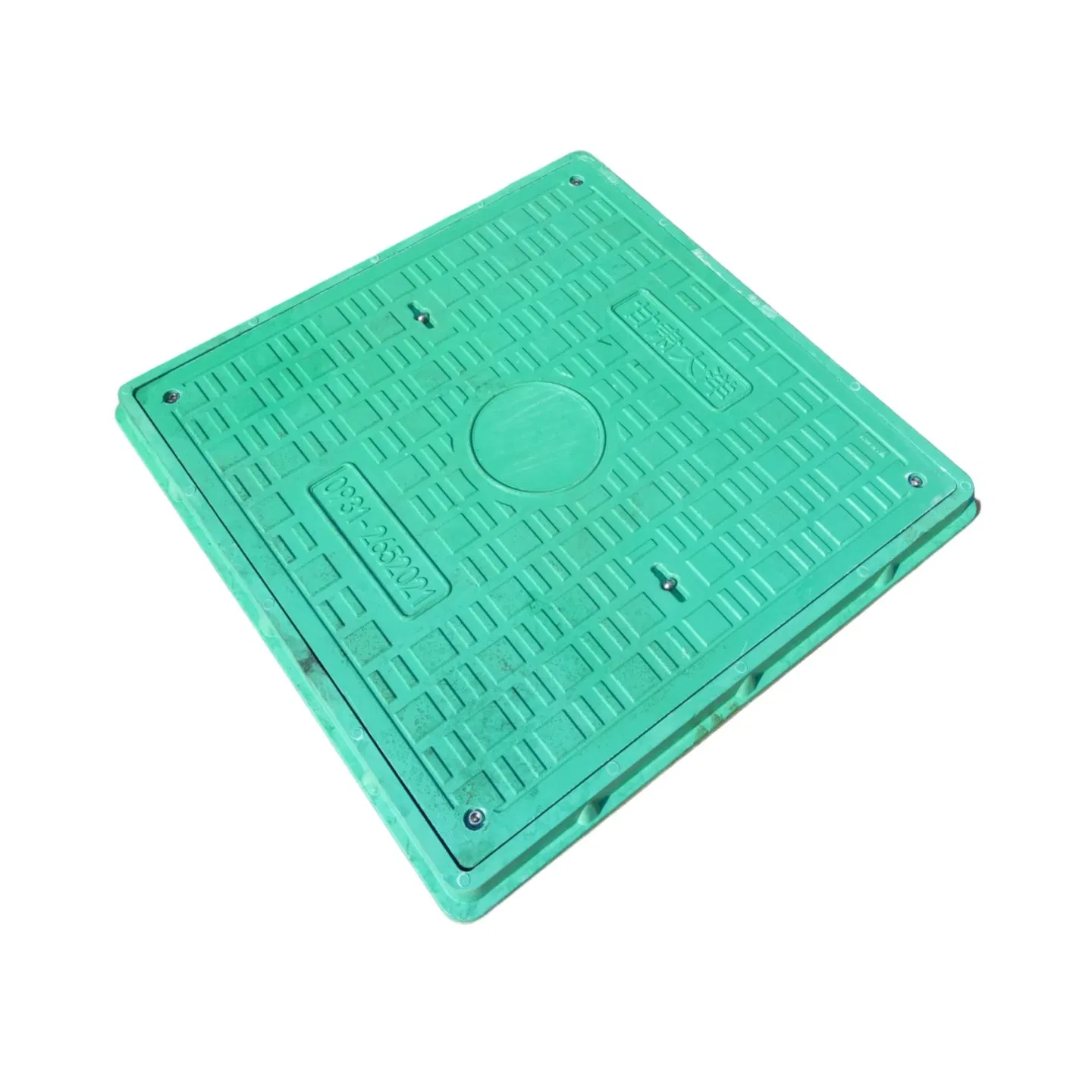
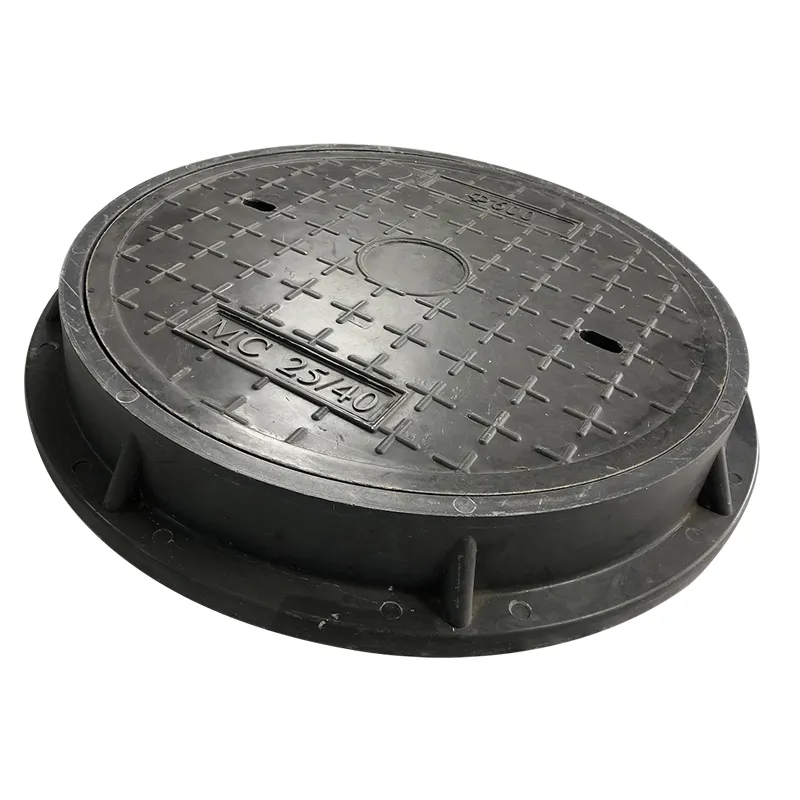
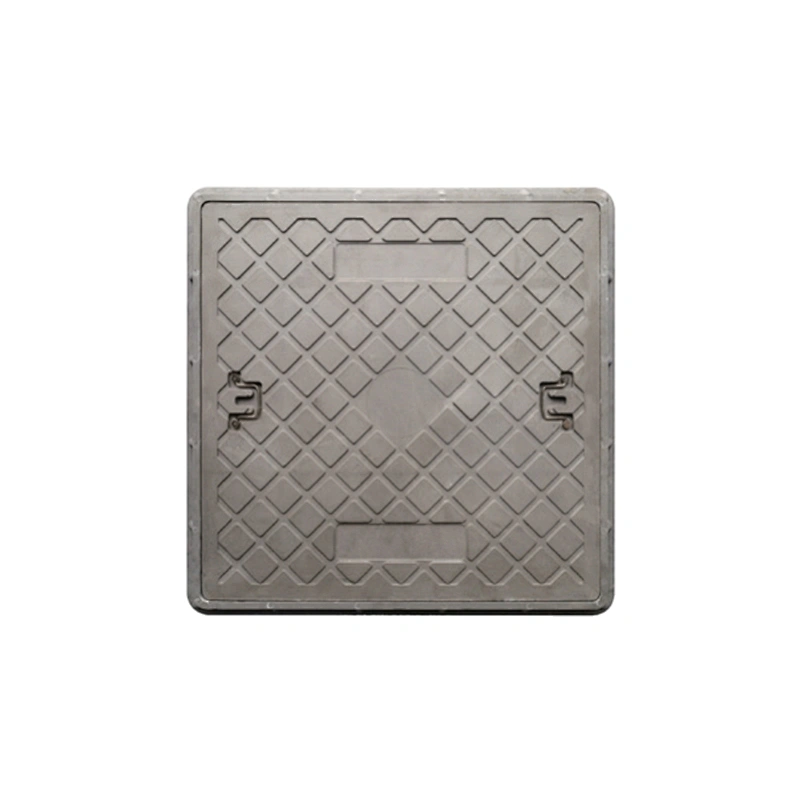
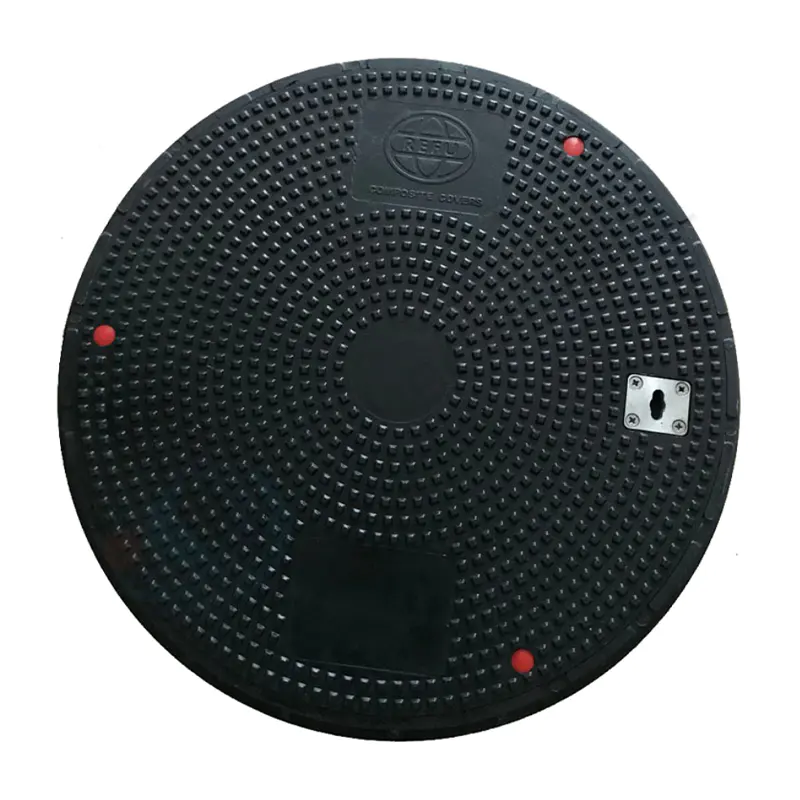
When specifying access covers for road infrastructure, the FRP manhole cover D400 standard represents the benchmark for heavy-duty traffic applications. Engineering professionals, infrastructure contractors, and municipal procurement teams rely on the EN124 D400 classification to ensure that manhole covers installed on roadways, highways, and other vehicle-trafficked areas can withstand the demanding loads of modern traffic.
This comprehensive guide covers everything you need to know about the FRP manhole cover D400 standard — from the technical definition of the D400 rating and its place within the EN124 load classification system, to load testing procedures, material advantages of FRP, installation best practices, and how to select a certified manufacturer. Whether you are comparing D400 vs C250 for a new development or verifying that your supplier meets EN124 certification requirements, this article provides the technical reference you need.
By the end, you will understand exactly what the D400 rating means, how much weight a D400 cover supports, where these covers are required by regulation, and how fiber-reinforced polymer (FRP) composites deliver the strength, durability, and lightweight handling that make them the preferred choice for modern infrastructure projects.
What Is the FRP Manhole Cover D400 Standard?
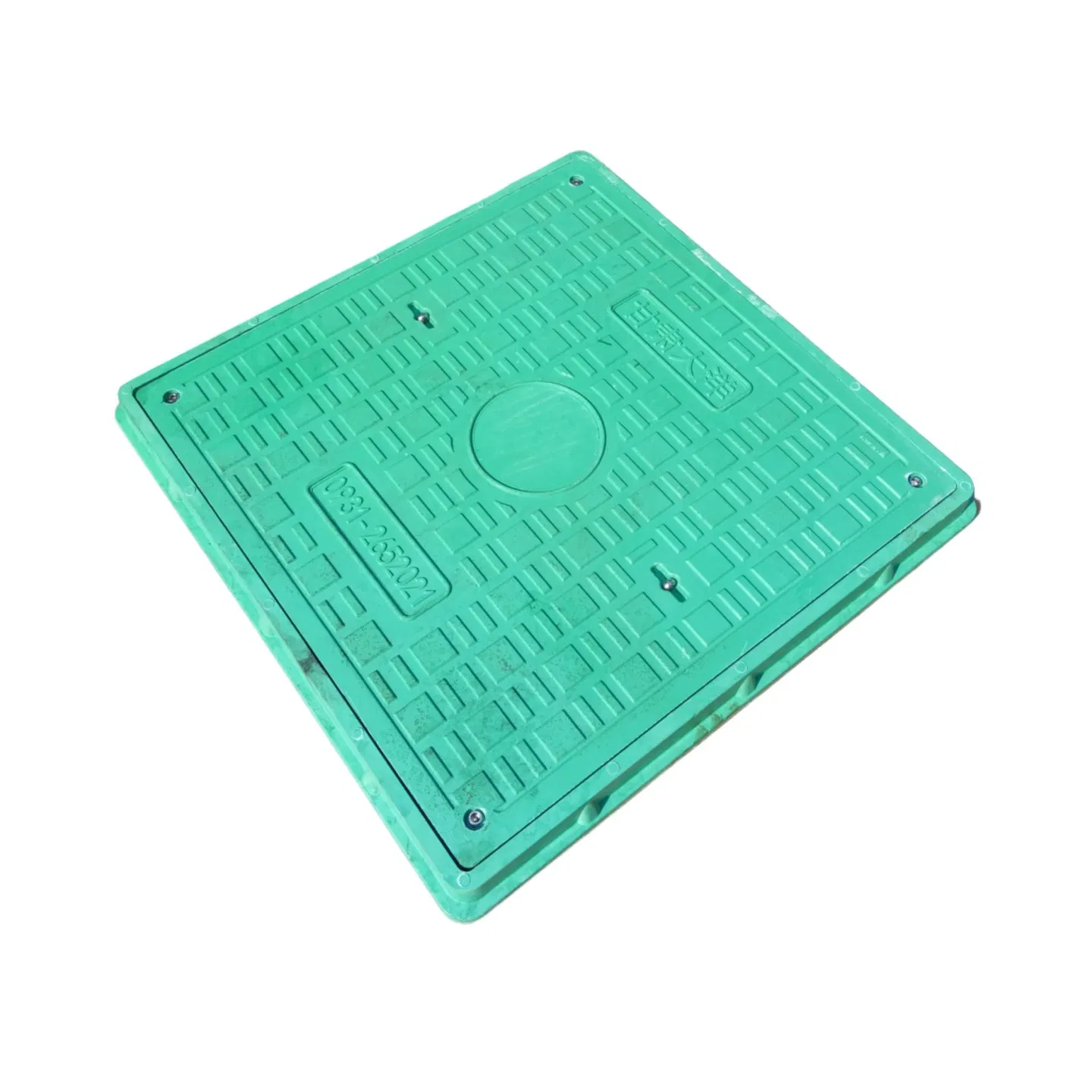
The FRP manhole cover D400 standard refers to manhole covers manufactured from fiber-reinforced polymer (FRP) composite materials that meet the D400 load classification as defined by the European standard EN124. This classification is the most commonly specified rating for covers installed in carriageways, highways, and roads where vehicle traffic is present.
Understanding the D400 Rating in EN124
The EN124 standard, formally titled "Gully tops and manhole tops for vehicular and pedestrian areas — Design requirements, type testing, marking, quality control," establishes six load rating classes for access covers: A15, B125, C250, D400, E600, and F900. Each class designates the maximum load the cover can safely withstand, measured in kilonewtons (kN).
A D400 manhole cover is designed to support a test load of 400 kN, which is equivalent to approximately 40 tonnes (roughly 88,000 lbs). This rating places it in the heavy-duty category, suitable for areas where high traffic volumes and heavy vehicles — including trucks, buses, and delivery vehicles — are expected. The D400 rating means the cover can withstand a 400 kN vertical test load applied through a rigid steel pad during type testing, without cracking, deforming beyond allowable limits, or failing.
Under the EN124 standard, D400 covers must also meet strict requirements for:
- Skid resistance: The cover surface must provide adequate traction for vehicle tires in wet and dry conditions.
- Seating and stability: The cover must sit firmly in its frame without rocking or dislodging under load.
- Durability: The cover must resist corrosion, freeze-thaw damage, and environmental degradation over its design life.
- Ventilation: If specified, the cover must allow proper airflow while maintaining structural integrity.
- Locking mechanisms: Security features to prevent unauthorized removal or theft.
Does FRP Meet the D400 Standard?
Yes, FRP manhole covers can fully meet the manhole cover EN124 load rating D400 requirements. Modern FRP composite formulations — typically using fiberglass reinforcement in a polyester, vinylester, or epoxy resin matrix — achieve the necessary mechanical strength to pass the 400 kN test load while offering significant advantages over traditional materials like cast iron or concrete.
FRP D400 covers are manufactured using compression molding or hand lay-up processes, with engineered fiber orientations and reinforcement layers that provide the structural capacity required for the D400 classification. The covers undergo the same rigorous type testing as any other D400-rated product, including the 400 kN load test, impact resistance testing, and dimensional verification by accredited laboratories.
For procurement professionals asking "Does FRP D400 manhole cover meet EN124 standard?" — the answer is yes, provided the cover has been independently tested and certified by a recognized third-party body and carries the appropriate EN124 marking on the product.
EN124 Load Rating Classification: From A15 to F900
To fully understand where the D400 manhole cover fits, it helps to see the complete EN124 load rating classification system. The standard defines six classes, each with a specific test load and typical application area:
| Class | Test Load (kN) | Equivalent Weight | Typical Application |
|---|---|---|---|
| A15 | 15 kN | 1.5 tonnes | Pedestrian areas, gardens, cycle paths |
| B125 | 125 kN | 12.5 tonnes | Footpaths, car parks, pedestrian zones with occasional vehicle access |
| C250 | 250 kN | 25 tonnes | Driveways, slow-traffic areas, residential roads |
| D400 | 400 kN | 40 tonnes | Roadways, highways, main roads, heavy traffic lanes |
| E600 | 600 kN | 60 tonnes | Industrial zones, ports, loading docks, container terminals |
| F900 | 900 kN | 90 tonnes | Airport runways, heavy industrial zones, military facilities |
The FRP manhole cover load rating directly corresponds to these EN124 classes. When an FRP cover is rated D400, it has been type-tested to withstand 400 kN without structural failure. This classification system allows engineers to select the appropriate cover based on the traffic type, vehicle weight, and expected load frequency at the installation site.
Key points about the classification system:
- A15 through B125 covers are classified for pedestrian and light vehicle use only and must not be installed in roadways carrying general traffic.
- C250 is the minimum rating for slow-traffic areas and residential roads, but it is not sufficient for main roads or highways where heavier vehicles travel at speed.
- D400 is the standard specification for all public roadways and highways in most European and international jurisdictions.
- E600 and F900 are specialized classes for extreme-load environments such as ports, airports, and industrial facilities.
When procurement teams ask "What does A15 B125 C250 D400 E600 F900 mean for FRP covers?" — it is this precise classification system that defines the load-bearing capacity and application suitability for each product grade.
D400 Load Requirements and Testing Procedures
Understanding the load requirements for D400 FRP manhole covers is essential for engineers and procurement professionals who must verify that their chosen product meets regulatory and safety standards.
Test Load Specifications for D400 Certification
The core requirement for D400 certification under EN124 is that the cover must withstand a vertical test load of 400 kN (approximately 40 tonnes) without:
- Cracking, fracturing, or any visible structural damage
- Permanent deformation exceeding the limits specified in the standard
- Separation of the cover from its frame
- Any reduction in functionality or safety performance
The test load required for D400 EN124 certification is applied using a rigid steel pad (typically 250 mm × 250 mm for square covers, or an equivalent circular pad) that simulates the contact patch of a heavy vehicle tire. The load is applied hydraulically at a controlled rate and held for a minimum duration as specified by the standard. The cover must sustain this load without failure and, upon removal of the load, must demonstrate that permanent deflection remains within acceptable tolerances (typically less than 5% of the clear opening span).
How Load Rating Testing Is Performed
How to test FRP manhole cover to D400 standard? The testing protocol follows a precise sequence defined by EN124:
- Sample preparation: The FRP manhole cover is mounted in its frame on a rigid test rig that replicates field installation conditions.
- Pre-load measurement: Initial dimensions, clearances, and seating are measured and recorded.
- Load application: The 400 kN test load is applied progressively through the steel pad at the center of the cover.
- Sustained loading: The full load is maintained for the period specified in the standard (typically 30 seconds to several minutes).
- Load removal and inspection: After removing the load, the cover is inspected for cracks, permanent deformation, and frame seating issues.
- Pass/fail determination: The cover passes only if it meets all acceptance criteria with no structural damage.
How is load rating tested for FRP manhole covers? In addition to the static load test, the EN124 standard may require additional tests depending on the product category:
- Impact resistance: A falling mass test to simulate the impact of debris or heavy objects.
- Slip resistance: Pendulum test measurements (PSRV) to verify pedestrian and vehicle safety.
- Durability testing: Environmental conditioning including freeze-thaw cycling, UV exposure, and chemical resistance.
- Fatigue testing: Repeated load cycling for covers in high-traffic applications.
Only covers that pass all applicable tests at an accredited testing laboratory can be marked with the manhole cover EN124 load rating D400 classification and carry the corresponding certification documentation. This certification is the definitive proof that a cover meets the required performance standard for road use.
D400 vs C250 vs E600: Choosing the Right Load Rating
One of the most common questions in infrastructure specification is the difference between D400 and C250 manhole covers, as well as how D400 compares to higher ratings like E600. Selecting the correct load rating is critical for safety, compliance, and cost efficiency.
D400 vs C250 Manhole Covers
The fundamental difference between C250 and D400 is the test load capacity: C250 supports 250 kN (25 tonnes) while D400 supports 400 kN (40 tonnes). This difference translates directly to application suitability:
| Factor | C250 | D400 |
|---|---|---|
| Test Load | 250 kN (25 tonnes) | 400 kN (40 tonnes) |
| Typical Use | Driveways, residential streets, slow-traffic areas | Public roads, highways, main traffic lanes |
| Vehicle Types | Cars, light vans, small delivery trucks | All vehicles including heavy trucks, buses, construction equipment |
| Traffic Speed | Low speed (< 40 km/h) | All speeds including highway traffic |
| Regulatory Requirement | Minimum for vehicle access areas | Required for public roads in most jurisdictions |
| FRP Cover Weight | Lightweight — typically 15-25 kg | Moderate — typically 25-45 kg depending on size |
For the question "Which load rating is suitable for driveway FRP manhole covers?" — a C250 rating is generally sufficient for private driveways used by passenger vehicles. However, if the driveway serves commercial vehicles, delivery trucks, or emergency apparatus, specifying D400 provides additional safety margin and future-proofing.
D400 vs E600: When to Upgrade
D400 vs E600 manhole cover — which load rating do I need? E600 covers are rated for 600 kN (60 tonnes) and are designed for extreme-load environments:
- Choose D400 for standard road applications: public highways, main roads, urban streets, roundabouts, and intersections. D400 is sufficient for virtually all normal road traffic scenarios.
- Choose E600 for industrial zones, container terminals, loading docks, ports, and areas where forklifts, heavy plant equipment, or container handling vehicles operate.
- Choose C250 for pedestrianized areas with limited vehicle access, private driveways, car parks, and residential roads where only light vehicles travel.
When selecting a load rating, consider not only current traffic conditions but also potential future changes. Upgrading from C250 to D400 during initial construction is far more cost-effective than replacing underrated covers later. Municipal specifications increasingly mandate D400 as the minimum for any surface that carries vehicular traffic, even residential roads.
Typical Applications for D400 Rated FRP Manhole Covers
Where are D400 manhole covers typically used? The D400 rating is specified wherever vehicular traffic poses a significant load risk. These covers are the standard choice for public infrastructure because they provide the strength and reliability required for continuous heavy traffic exposure.
Where are D400 rated FRP manhole covers used? The specific applications include:
- Public highways and main roads: D400 is the minimum standard for covers installed in any carriageway carrying general traffic. This includes national highways, county roads, and urban arterial routes. Are D400 manhole covers suitable for highways and main roads? Yes — they are specifically designed and certified for this purpose.
- Urban streets and intersections: High-traffic city streets, traffic circles, and crosswalks where vehicles pass regularly require D400-rated covers to handle the dynamic loads of buses, delivery trucks, and emergency vehicles.
- Highway hard shoulders and emergency lanes: Even areas with intermittent traffic exposure must meet D400 standards to accommodate heavy recovery vehicles and maintenance equipment.
- Industrial access roads: Roads leading to factories, warehouses, distribution centers, and logistics hubs where heavy goods vehicles operate daily.
- Parking garage entrances and ramps: Commercial parking structures with heavy traffic flow benefit from D400-rated covers that resist wear from repeated vehicle crossings.
- Airport service roads: Perimeter roads, fuel delivery routes, and baggage handling access areas within airport perimeters require D400 or higher ratings.
Where are D400 rated manhole covers required by regulation? In most countries that adopt EN124 or equivalent standards, D400 is the mandated minimum for:
- All public roads and highways (regardless of traffic volume)
- Roads with posted speed limits above 40 km/h
- Any location where vehicles exceeding 3.5 tonnes gross weight travel
- Infrastructure projects funded by national or regional transportation authorities
Where are D400 rated FRP manhole covers used in preference to traditional materials? FRP D400 covers are increasingly specified for infrastructure upgrade projects and new developments where installation speed, worker safety (lighter weight), corrosion resistance, and theft deterrence are priorities.
Why FRP Is the Preferred Material for D400 Manhole Covers
What materials are used for D400 manhole covers? While traditional D400 covers have historically been manufactured from ductile iron or cast iron, FRP (fiber-reinforced polymer) composite materials have emerged as a superior alternative for many applications. FRP D400 covers combine the necessary structural strength with several distinct advantages that make them increasingly popular among infrastructure specifiers.
FRP vs Traditional Materials for D400 Covers
| Property | FRP Composite | Cast Iron / Ductile Iron | Concrete / Steel-Reinforced |
|---|---|---|---|
| Weight | Lightweight (60-70% lighter than cast iron) | Heavy (50-120 kg typical) | Very heavy (80-150 kg typical) |
| Corrosion Resistance | Excellent — does not rust or corrode | Prone to corrosion over time, especially in coastal or chemical environments | Can spall and crack; steel reinforcement corrodes |
| Theft Resistance | High — low scrap value, locking options available | Low — high scrap metal value makes them theft targets | Moderate — heavy but may still be targeted |
| Installation | Easy — can be installed by one or two workers | Requires mechanical lifting equipment | Requires crane or hoist for installation |
| Chemical Resistance | Excellent — resistant to road salts, oils, fuels, wastewater | Moderate — affected by acids and aggressive chemicals | Poor — degraded by chemicals and de-icing salts |
| Service Life | 30-50+ years with minimal maintenance | 20-30 years, subject to corrosion protection | 15-25 years, subject to spalling and reinforcement corrosion |
FRP vs Concrete Manhole Cover Load Rating Comparison
When comparing FRP vs concrete manhole cover load rating, both materials can achieve D400 classification, but FRP offers significant practical advantages. Concrete covers achieving D400 rating require substantial thickness and steel reinforcement, resulting in very heavy units (often exceeding 100 kg). FRP achieves the same 400 kN load rating with a fraction of the weight through advanced fiber engineering and composite laminate design.
The lighter weight of FRP D400 covers translates directly into:
- Lower installation costs: No crane or lifting equipment needed
- Reduced worker injury risk: Manual handling is feasible with proper techniques
- Faster installation: Less time per cover means lower project labor costs
- Easier maintenance access: Utility workers can open and close covers without mechanical assistance
For B2B buyers evaluating material options, the total cost of ownership for FRP D400 covers — considering installation labor, maintenance, theft prevention, and service life — often proves lower than traditional alternatives despite potentially higher unit material cost.
How to Select and Install D400 FRP Manhole Covers
How to choose the right D400 manhole cover for road projects? Selecting the appropriate D400 FRP manhole cover requires careful evaluation of several technical and project-specific factors:
- EN124 Certification: Verify that the cover carries valid EN124 D400 certification from an accredited testing body. Request the type-test certificate and confirm it covers the specific product model and size you intend to purchase.
- Clear opening size: Match the cover dimensions to the chamber or shaft opening. Standard sizes range from 300 mm x 300 mm up to 1000 mm x 1000 mm and beyond, with round covers typically specified in diameters from 500 mm to 800 mm.
- Load rating verification: Confirm the D400 rating specifically — not just "heavy duty" marketing claims. The product marking should clearly show "D400" and "EN124" on the cover surface.
- Skid resistance: For road applications, the cover surface must provide adequate slip resistance as specified by local highway authority standards.
- Locking mechanism: Consider security requirements. D400 covers for public roads typically include locking bolts, tamper-resistant fasteners, or key-operated locks to prevent unauthorized access and theft.
- Load distribution: Ensure the cover and frame assembly is designed with proper bearing surfaces to transfer traffic loads evenly to the surrounding structure.
- Environmental conditions: For coastal areas, chemical plants, or cold climates, FRP natural corrosion resistance and freeze-thaw durability provide significant advantages over metal alternatives.
- Compliance with local standards: While EN124 is widely adopted, verify that the cover also meets any additional local or national requirements.
How to Install a D400 Manhole Cover Correctly
How to install a D400 manhole cover correctly? Proper installation is critical to ensure the cover performs as designed. Even a certified D400 cover can fail if incorrectly installed:
- Prepare the bedding: The frame must be set on a firm, level bed of mortar or concrete. The supporting structure must be capable of bearing the traffic loads transmitted through the cover frame.
- Frame alignment: Ensure the frame is level and at the correct finished road height. In road applications, the cover surface should be flush with the surrounding pavement to avoid creating a tripping hazard or impact point for vehicle tires.
- Allow for curing: If using cementitious bedding materials, allow sufficient curing time before applying traffic loads — typically a minimum of 24-48 hours depending on ambient temperature and material specifications.
- Seat the cover: Place the cover into the frame and verify proper seating. The cover should sit evenly without rocking, with uniform clearance around all edges.
- Secure locking mechanism: Engage all locking bolts or fasteners according to the manufacturer torque specifications.
- Final inspection: Check that the cover is flush with the road surface, all locking hardware is secure, and the assembly meets project specification requirements.
How to choose a D400 rated FRP manhole cover for your specific project — engage directly with manufacturers who can provide product data sheets, type-test certificates, and installation guidance tailored to your application environment.
Cost Considerations for D400 Manhole Covers
How much does a D400 manhole cover cost? The cost of a D400 rated manhole cover varies significantly based on material, size, certification, and manufacturer. For FRP D400 manhole covers, typical pricing ranges from approximately $80 to $350 per unit for standard sizes (600 mm x 600 mm to 750 mm x 750 mm), with larger or custom sizes commanding higher prices.
Factors that influence D400 manhole cover pricing:
- Material: FRP covers are generally priced between cast iron (lower) and ductile iron (comparable), but the total installed cost often favors FRP when labor, handling, and lifetime maintenance are factored in.
- Size and shape: Larger clear openings require more material and reinforcement to achieve D400 rating, increasing cost proportionally. Square covers are generally more economical than custom shapes.
- Certification status: EN124-certified products from accredited manufacturers command a premium over uncertified alternatives, but this certification is essential for regulatory compliance and liability protection.
- Locking mechanisms: Covers with integrated security features (key locks, tamper-proof bolts, hinge systems) cost more than basic drop-in designs.
- Volume and bulk pricing: Large infrastructure projects with hundreds or thousands of units typically receive significant volume discounts, often 15-30% below retail pricing.
- Surface finish and customization: Custom colors, logos, or textured finishes for branding or slip resistance add to unit cost.
For accurate FRP manhole cover cost estimation, request quotes from multiple EN124-certified manufacturers with detailed specifications including size, quantity, delivery terms, and warranty conditions. Remember that the lowest unit price may not represent the best value when considering certification validity, product quality, and post-sale support.
Selecting a Reliable D400 Manhole Cover Manufacturer
Who are the top D400 manhole cover manufacturers? The global market includes numerous manufacturers producing EN124 D400 certified covers in FRP composite materials. Leading manufacturers are typically those with established quality management systems, accredited testing facilities, and a track record of supplying infrastructure projects.
How to choose a reliable D400 manhole cover manufacturer? Whether you are procuring for a municipal project, infrastructure development, or wholesale distribution, use these evaluation criteria:
- EN124 certification verification: Ask the manufacturer for their EN124 type-test certificate issued by an accredited laboratory. Verify the certificate number, covered product range, and expiry date. How to verify a D400 manhole cover manufacturer is EN124 certified? Cross-reference the certificate with the issuing body database, check that the certificate specifically covers the D400 load rating, and confirm the product model matches your requirements.
- What certifications should a D400 manhole cover manufacturer have? Beyond EN124, look for ISO 9001 (quality management), ISO 14001 (environmental management), and product-specific certifications such as CE marking (European conformity), ASTM compliance (North America), or GOST certification (CIS markets).
- Production capacity: Assess whether the manufacturer can meet your volume requirements within project timelines. Request details on monthly production capacity, lead times, and previous project references.
- Quality control processes: Reputable manufacturers conduct in-process quality checks, batch testing, and maintain traceability records for every production run.
- Material quality: FRP composite quality varies significantly between manufacturers. Ask about resin type (polyester, vinylester, or epoxy), glass fiber content percentage, and UV stabilization additives.
- Warranty and after-sales support: A reliable manufacturer stands behind their products with a written warranty (typically 5-10 years for FRP D400 covers) and provides technical support for installation and maintenance.
Manufacturer vs Supplier: What Is the Difference?
D400 manhole cover manufacturer vs supplier — what is the difference? A manufacturer designs and produces the covers, controlling the entire production process, quality assurance, and certification. A supplier or distributor resells products from various manufacturers, often offering convenience in consolidating multiple product lines from a single source. For critical infrastructure projects, buying directly from a certified manufacturer provides greater traceability, direct technical support, and typically better pricing for bulk orders.
Which D400 manhole cover manufacturer offers the best quality? Quality is determined by certification validity, material specifications, manufacturing consistency, and real-world performance on installed projects. Request references from previous clients in similar applications, inspect sample products for finish quality, and compare technical data sheets to make an informed decision.
How to choose a reliable D400 manhole cover manufacturer summary checklist:
- Request and verify EN124 D400 type-test certificate
- Confirm ISO 9001 and relevant product certifications
- Evaluate production capacity and lead times
- Inspect sample products for manufacturing quality
- Check client references and project track record
- Review warranty terms and post-sale support
- Compare total cost of ownership, not just unit price
Conclusion
The FRP manhole cover D400 standard represents the benchmark specification for heavy-duty access covers in road infrastructure. Understanding the D400 classification — its 400 kN (40-tonne) load capacity, its position within the EN124 rating system, and its suitability for highways, main roads, and high-traffic areas — is essential for B2B buyers, infrastructure contractors, and municipal procurement professionals.
Key takeaways from this guide:
- D400 rated covers support a test load of 400 kN (40 tonnes) and are the minimum standard for public roadways under EN124.
- FRP composite materials achieve full D400 certification while offering significant advantages over cast iron and concrete: lighter weight, corrosion resistance, theft deterrence, and lower total cost of ownership.
- D400 vs C250: C250 (25 tonnes) is suitable for driveways and residential streets, while D400 (40 tonnes) is required for roads carrying general traffic including heavy vehicles.
- Proper installation is critical — even the best-certified D400 cover will underperform if the frame bedding and alignment are not executed correctly.
- Manufacturer selection should prioritize validated EN124 certification, quality management systems, and proven project experience over price alone.
Whether you are specifying covers for a new highway project, upgrading existing infrastructure, or sourcing products for distribution, the FRP manhole cover D400 standard provides the performance, safety, and compliance you need. Work with certified manufacturers, verify test documentation, and consider the full lifecycle costs to make the best procurement decision for your project.
For detailed product specifications, load test certificates, and pricing for D400 rated FRP manhole covers, contact our engineering team. We supply EN124-certified FRP manhole covers to infrastructure projects worldwide, with custom sizing, branding, and locking options available.