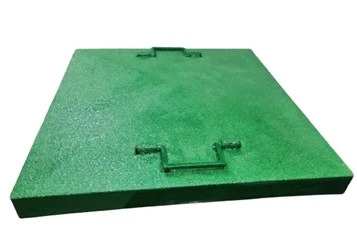
Introduction — Understanding FRP Manhole Cover Load Rating Basics
Selecting the correct FRP manhole cover load rating is one of the most critical engineering decisions when specifying access covers for municipal, commercial, and industrial infrastructure projects. Manhole covers must withstand the traffic loads, environmental conditions, and safety requirements of their installation site — and getting the rating wrong can lead to catastrophic failure, liability, and costly replacements.
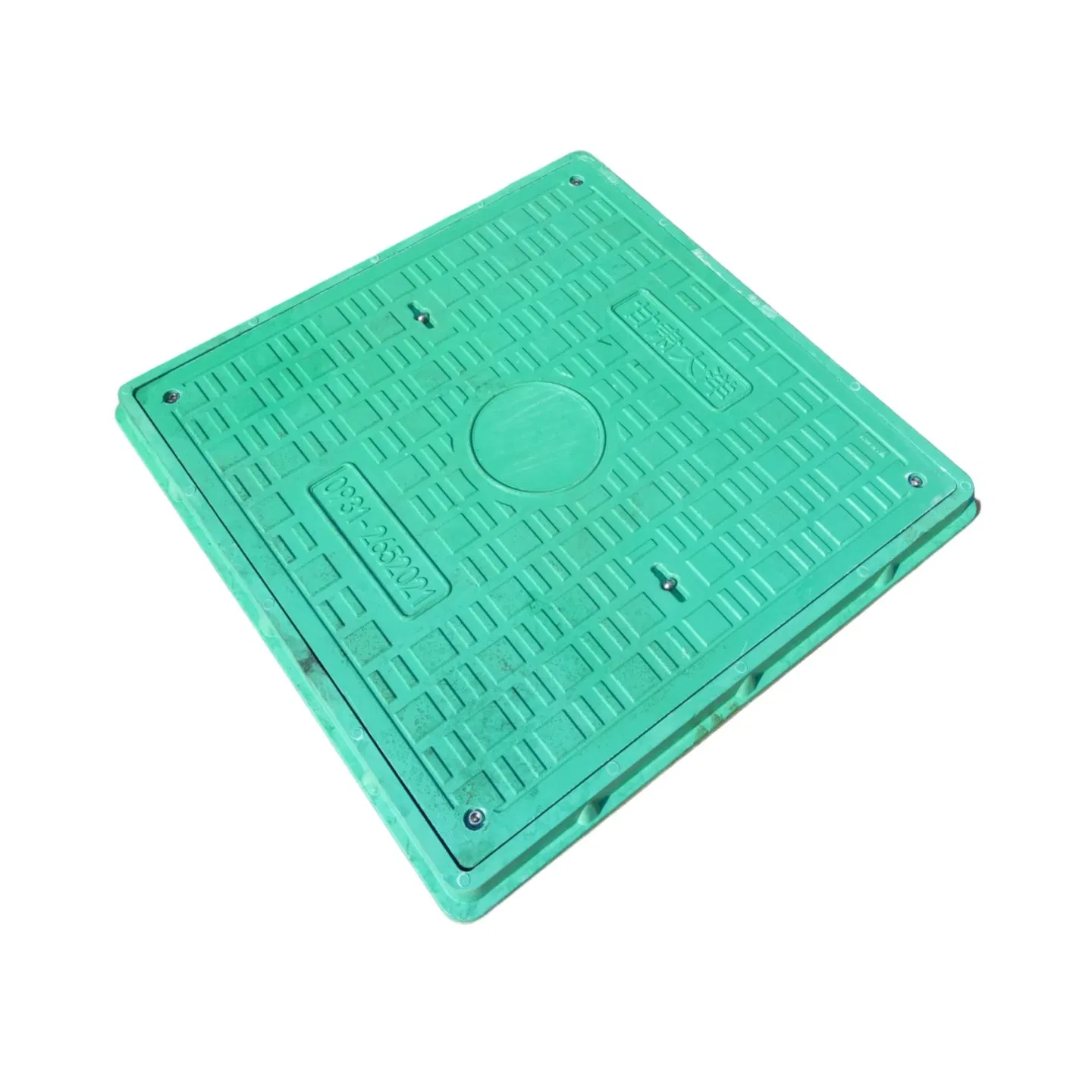
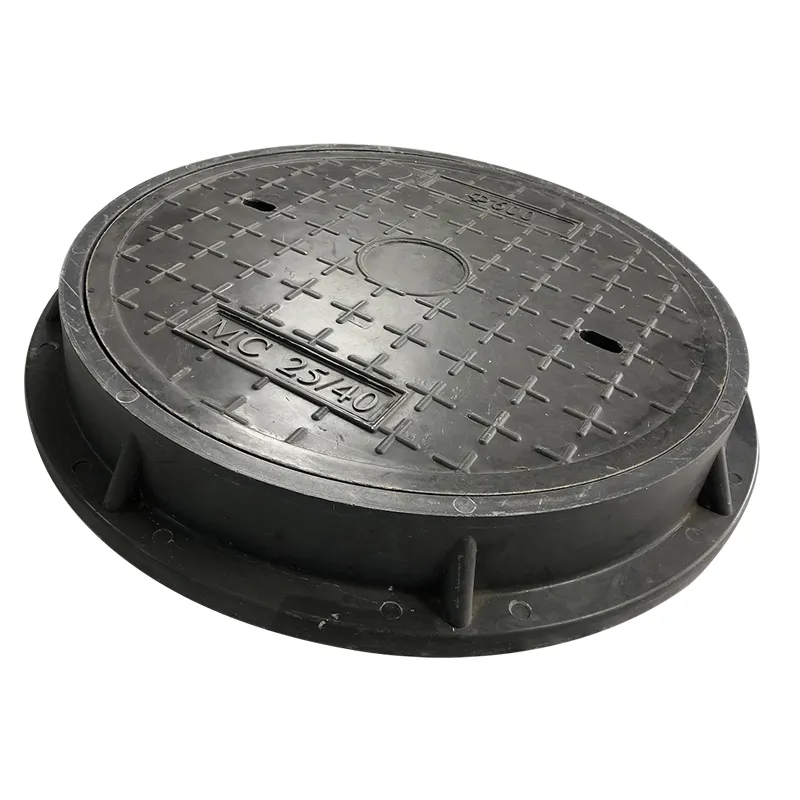
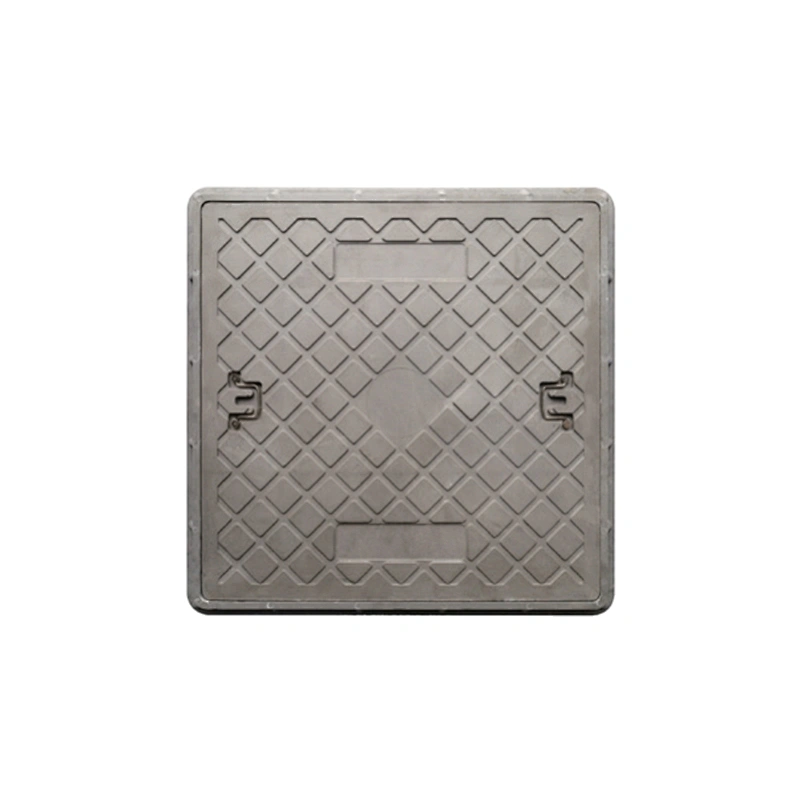
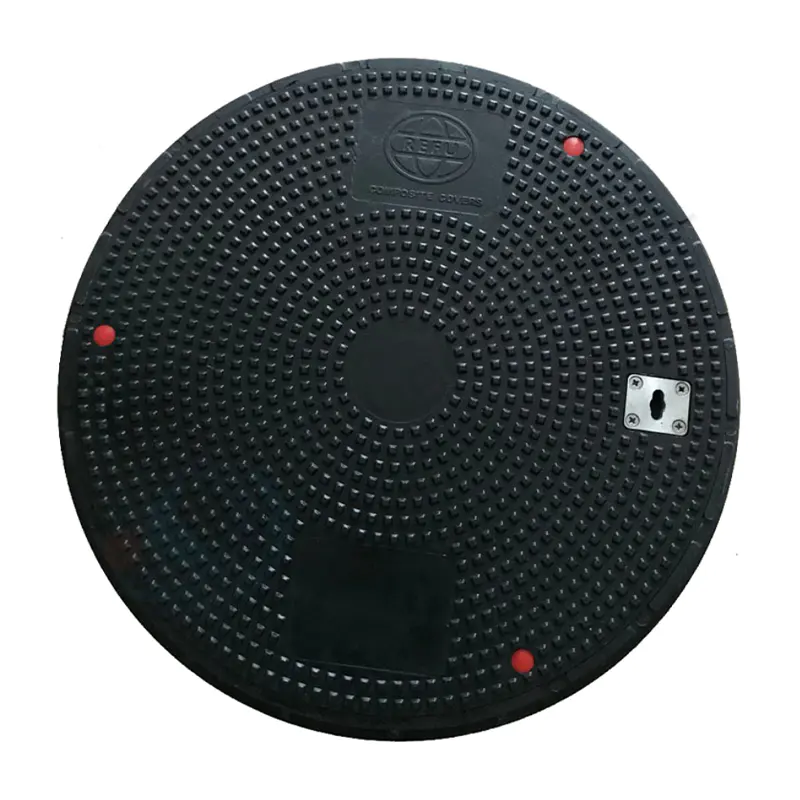
Fiber-reinforced polymer (FRP) manhole covers have become a popular alternative to traditional cast iron and concrete covers because of their lightweight construction, corrosion resistance, and high strength-to-weight ratio. However, understanding how FRP manhole cover load ratings align with international standards is essential for engineers, specifiers, and B2B buyers who need to make informed procurement decisions.
This comprehensive guide explains the EN124 standard, breaks down each load classification from A15 to F900, examines how FRP performs at each rating level, and provides practical guidance for choosing the right manhole cover load rating EN124 classification for your specific project requirements.
What Is the EN124 Standard for Manhole Cover Load Ratings?
The EN124 standard is the European specification that defines load ratings, dimensional requirements, testing procedures, and performance criteria for manhole covers and gully gratings installed in areas subject to pedestrian and vehicular traffic. Formally titled EN 124:1994 "Gully tops and manhole tops for vehicular and pedestrian areas," this standard was replaced by EN 124:2015, which introduced stricter testing protocols and clearer classification guidelines.
Why EN124 Matters for Manhole Cover Safety
EN124 load rating is important for manhole cover safety because it establishes a uniform, internationally recognized system for classifying covers by their load-bearing capacity. Without this standard, specifiers would have no reliable way to compare products from different manufacturers or ensure that a cover installed in a highway can safely support the weight of heavy goods vehicles. The standard mandates:
- Test load verification — Every cover must pass a proof load test at 1.5× its rated class load
- Dimensional interchangeability — Covers and frames from different manufacturers are compatible within the same class
- Safety factors — Built-in margins account for dynamic loads, fatigue, and installation variables
- Marking requirements — Each cover is permanently marked with its EN124 class for clear identification
The standard categorizes covers into six classes — A15, B125, C250, D400, E600, and F900 — where the number indicates the minimum ultimate load in kilonewtons (kN) that the cover must withstand. For reference, 1 kN equals approximately 102 kilograms of static load. Understanding these classifications is essential for anyone evaluating manhole cover load rating EN124 specifications for their projects.
EN124 Classification: A15, B125, C250, D400, E600, and F900 Explained
The EN124 standard defines six load rating classes, each designed for specific traffic environments. Understanding what A15, B125, C250, D400, E600, and F900 mean for FRP covers is the foundation of proper specification. Below is a detailed breakdown of each FRP manhole cover load rating class, its test load, and typical applications.
| Class | Test Load (kN) | Equivalent Weight (tonnes) | Primary Applications |
|---|---|---|---|
| A15 | 15 kN | ~1.5 tonnes | Pedestrian areas, gardens, cycle paths |
| B125 | 125 kN | ~12.5 tonnes | Residential driveways, footpaths, car parks |
| C250 | 250 kN | ~25 tonnes | Sidewalks, city streets, slow traffic zones |
| D400 | 400 kN | ~40 tonnes | Highways, main roads, hard shoulders |
| E600 | 600 kN | ~60 tonnes | Ports, docks, industrial loading areas |
| F900 | 900 kN | ~90 tonnes | Airports, military zones, heavy industrial |
A15 Light Duty — Pedestrian Areas and Gardens
A15 rated covers are designed for areas used exclusively by pedestrians and cyclists. With a test load of 15 kN (~1.5 tonnes), they are suitable for gardens, parks, pedestrian precincts, and cycle paths where vehicular traffic is strictly prohibited. FRP manhole covers at this rating are extremely lightweight — typically 60-70% lighter than equivalent concrete covers — making them ideal for quick installation in landscaping projects.
B125 Medium Duty — Residential Driveways and Footpaths
B125 covers withstand 125 kN (~12.5 tonnes) and are the minimum rating required for residential driveways and footpaths accessible to cars and light vehicles. This is the most common manhole cover load rating EN124 class for suburban applications. B125 FRP covers offer excellent corrosion resistance for environments exposed to lawn chemicals, fertilizers, and moisture.
C250 Heavy Duty — Sidewalks and Car Parks
With a 250 kN (~25 tonnes) capacity, C250 rated covers are installed in sidewalks, pedestrian zones with occasional vehicle access, and car park entrances. This class is often specified for city center pavements where delivery vehicles may drive onto the sidewalk. C250 represents the threshold where FRP covers begin to incorporate additional structural reinforcements to meet the higher load demands.
D400 Extra Heavy Duty — Highways and Main Roads
The D400 classification requires a test load of 400 kN (~40 tonnes), making it the standard rating for public highways, main roads, and hard shoulders. D400 rated manhole covers are mandatory on roads where heavy goods vehicles and buses operate. The FRP manhole cover D400 standard has become increasingly popular as manufacturers have developed advanced composite formulations that achieve the required structural integrity while maintaining the weight advantages of FRP.
E600 and F900 — Ports, Airports, and Industrial Zones
E600 (600 kN / ~60 tonnes) and F900 (900 kN / ~90 tonnes) are specialized ratings for extreme load environments. E600 covers are used in ports, dockyards, and industrial loading areas subjected to container traffic and heavy forklifts. F900 is the highest EN124 classification, required for airport runways, taxiways, military vehicle routes, and heavy industrial zones where covers must withstand massive static and dynamic loads. While FRP technology continues to advance, most FRP manhole covers at these ratings incorporate hybrid designs with structural cores or reinforced geometries to achieve the required performance.
How Much Weight Can a D400 Rated Manhole Cover Handle?
A D400 rated manhole cover is designed to withstand a minimum ultimate load of 400 kilonewtons (kN), which translates to approximately 40 metric tonnes of static weight. In practical terms, this means a D400 cover can support vehicles weighing up to 40 tonnes under normal operating conditions, with an additional safety margin built into the certification testing.
The EN124 standard requires every D400 cover to pass a proof load test at 400 kN applied through a rigid 250 mm × 250 mm steel pad at the center of the cover. The test verifies that the cover suffers no structural damage, permanent deformation exceeding 5% of the clear opening, or any visible cracking. For FRP manhole covers specifically, the D400 rating confirms that the composite material and structural design can handle the heaviest vehicles found on public roads — including fully loaded semi-trailer trucks, buses, and construction vehicles.
It is important to note that the rated load represents static testing conditions. Real-world factors such as dynamic impact loads, tire pressure concentration, and fatigue from repeated traffic cycles are accounted for in the 1.5× safety factor built into the EN124 certification process. A D400 cover is proof-tested at 400 kN, but its design and construction must sustain this load without failure and meet additional performance criteria for long-term durability.
Understanding the D400 FRP Manhole Cover Standard
The FRP manhole cover D400 standard refers to fiber-reinforced polymer manhole covers that have been designed, manufactured, and tested to meet the EN124 D400 classification. Understanding what the D400 rating means specifically for FRP covers requires examining both the EN124 requirements and how FRP materials achieve compliance.
What Does D400 Rating Mean for FRP Manhole Covers?
For FRP manhole covers, the D400 rating confirms that the composite structure can support the 400 kN test load specified by EN124 while maintaining the inherent benefits of FRP — namely corrosion resistance, lightweight handling, and non-conductive properties. FRP D400 manhole covers meet EN124 standard requirements through advanced composite engineering, including optimized fiber orientation, high-strength resin formulations, and structural reinforcement geometries built into the cover design.
A manhole cover EN124 load rating D400 FRP product must undergo the same rigorous third-party testing as any other material. The cover is subjected to a centralized load of 400 kN applied through a calibrated steel ram, measuring deflection, residual deformation, and structural integrity. Only covers that pass without cracking, delamination, or permanent deformation beyond the allowable limit receive certification.
Where Are D400 Rated FRP Manhole Covers Used?
D400 rated FRP manhole covers are specified in a wide range of infrastructure applications:
- Public highways and main roads — Carrying HGV and bus traffic in national road networks
- Hard shoulders and emergency lanes — Where occasional heavy vehicle parking occurs
- Industrial access roads — Serving warehouses, factories, and logistics centers
- Fuel station forecourts — Combining heavy vehicle traffic with corrosive fuel spill exposure
- Coastal road infrastructure — Where salt corrosion makes FRP the preferred material over steel or iron
- Water treatment facilities — Benefiting from FRP's chemical resistance and non-corrosive properties
D400 rated manhole covers are required by regulation in most jurisdictions for any public roadway where vehicles exceeding 3.5 tonnes are permitted. Engineers specifying covers for highway projects should always consult local regulations, but D400 is the universally accepted minimum for main road installations.
FRP vs Concrete Manhole Cover Load Rating Comparison
When comparing FRP and concrete manhole covers across load ratings, several key differences emerge that directly impact specification decisions. Both materials can achieve all EN124 classifications from A15 through F900, but they do so with fundamentally different engineering approaches.
| Property | FRP | Concrete |
|---|---|---|
| Weight (D400 class) | 25-35 kg | 80-120 kg |
| Corrosion resistance | Excellent — unaffected by salts, chemicals, moisture | Moderate — susceptible to chloride attack and spalling |
| Installation labor | Lower — can be installed by 1-2 workers without lifting equipment | Higher — often requires mechanical lifting for heavy classes |
| Load-to-weight ratio | Excellent — high strength with low mass | Moderate — strength achieved through mass |
| Lifecycle cost | Lower — no corrosion maintenance, longer service life | Higher — corrosion repair, earlier replacement |
| Non-conductive | Yes — inherently electrically insulating | Partially — conducts when damp/wet |
| Recyclability | Limited — composite materials are difficult to recycle | High — concrete can be crushed and reused as aggregate |
The most significant difference in an FRP vs concrete manhole cover load rating comparison is the weight-to-strength ratio. FRP achieves D400 load capacity at roughly one-third the weight of a concrete cover in the same class. This translates to substantial savings in transportation costs, installation time, and worker safety. For B2B buyers and contractors managing large infrastructure projects, these operational advantages often make FRP the preferred choice despite its higher unit material cost.
How Is Load Rating Tested for FRP Manhole Covers?
Load rating testing for FRP manhole covers follows the same EN124 procedures applied to all materials, though FRP's composite nature introduces some specific testing considerations. Understanding how load rating is tested for FRP manhole covers helps specifiers evaluate certification claims and product quality.
The EN124 Proof Load Test Procedure
Every manhole cover, regardless of material, must pass a standardized proof load test to receive EN124 certification. The procedure for testing FRP manhole covers to D400 standard involves:
- Sample preparation — The cover is installed in its frame on a rigid test rig that simulates field installation conditions
- Pre-load measurement — Initial deflection and dimensional baselines are recorded
- Load application — A hydraulic ram applies force through a 250 mm × 250 mm steel pad positioned at the cover's geometric center
- Sustained load — The test load (e.g., 400 kN for D400) is applied and held for a minimum of 30 seconds
- Deflection monitoring — Vertical deflection is measured throughout the test; maximum allowable permanent deformation is 5% of the clear opening
- Visual inspection — The cover is examined for cracks, delamination, surface damage, or any structural failure
What Is the Test Load Required for D400 EN124 Certification?
The test load required for D400 EN124 certification is 400 kN, applied as described above. However, manufacturers typically test their products at loads exceeding the class requirement to ensure a safety margin. The EN124 standard also requires that covers pass a fatigue test of 2 million load cycles at 50% of the class load for products intended for highway use. The D400 covers are further tested for:
- Residual deformation — Must not exceed 5% of the clear span after load removal
- Slip resistance — Surface must meet minimum friction coefficients per EN124 annex requirements
- Water permeability — Ventilation openings (if present) must not exceed specified dimensions
- Marking durability — Class markings must remain legible after testing
Independent third-party laboratories accredited by national standards bodies perform EN124 certification testing. Reputable FRP manufacturers provide test certificates from accredited labs, and specifiers should always request these documents as part of the procurement process.
How to Choose the Correct Load Rating for Your Project
Choosing the correct manhole cover load rating according to EN124 requires a systematic evaluation of the installation environment, traffic conditions, and regulatory requirements. Here is a practical framework for selecting the right FRP manhole cover load rating for your project.
Step 1: Classify the Installation Zone
Identify the traffic category of the installation location using the EN124 zone classification system:
- Group 1 (A15) — Areas used exclusively by pedestrians and cyclists: gardens, parks, pedestrian precincts
- Group 2 (B125) — Pedestrian areas and car parks accessible only to cars: residential driveways, private footpaths
- Group 3 (C250) — Areas with slow or standing traffic: sidewalks, city streets, car park aisles
- Group 4 (D400) — Carriageways of roads with any vehicle type: highways, main roads, hard shoulders
- Group 5 (E600) — Areas with heavy wheel loads: ports, docks, industrial loading zones
- Group 6 (F900) — Extreme load areas: airport runways, military zones, heavy industrial floors
Step 2: Consider Traffic Type and Volume
What load rating do I need for a driveway manhole cover? For a standard residential driveway accessible to cars and light vans, B125 (125 kN) is the minimum required rating. However, if the driveway serves commercial vehicles, delivery trucks, or emergency service access, C250 or even D400 may be more appropriate. For highways and main roads, D400 rated manhole covers are required by regulation in virtually all jurisdictions.
When choosing between manhole cover EN124 load rating D400 and E600, consider the specific vehicle types: D400 handles up to 40-tonne HGV traffic (standard highway vehicles), while E600 is needed for ports and industrial sites where forklifts, container handlers, and specialized heavy equipment operate. D400 is suitable for highways and main roads under normal traffic conditions, but E600 or F900 may be required if the cover is installed in road sections subjected to exceptional loads, such as access roads to quarries, construction sites, or heavy industrial plants.
Step 3: Evaluate Environmental Factors
FRP offers distinct advantages in certain environments regardless of the load rating:
- Coastal and marine environments — FRP's corrosion resistance makes it ideal for D400 applications near salt water
- Chemical processing plants — FRP withstands chemical attack that would degrade concrete or corrode metal covers
- Electrical substations and rail infrastructure — FRP's non-conductive properties provide safety in D400-rated access covers
- Food processing and pharmaceutical facilities — FRP's non-porous surface meets hygiene requirements
Step 4: Compare Material Options Within the Class
Once you have identified the required EN124 class, compare FRP against alternative materials using the criteria discussed in the FRP vs concrete comparison above. For most D400 applications, FRP offers the best balance of load performance, installation efficiency, and long-term durability.
Why EN124 Load Rating Is Critical for Manhole Cover Safety
EN124 load rating is important for manhole cover safety because it provides the engineering foundation for every cover installed in public and private infrastructure. Without this standardized classification system, the risk of cover failure — and the resulting injuries, vehicle damage, and liability — would be unacceptably high.
The critical safety functions that EN124 load ratings serve include:
- Preventing catastrophic collapse — A cover installed with an inadequate load rating can fracture or dislodge when a heavy vehicle passes over it, creating an open manhole hazard. EN124 ensures every cover is matched to its expected traffic load.
- Ensuring consistent quality — The standardized test procedures mean that a D400 cover from any certified manufacturer will perform to the same minimum standard, providing reliability across supply chains.
- Enabling material comparison — Specifiers can confidently compare FRP, concrete, ductile iron, and composite covers within the same EN124 class, knowing that the load rating is equivalent regardless of material.
- Legal and insurance compliance — Most national building codes and road authorities mandate EN124-compliant covers. Using non-certified covers can void insurance and expose project owners to legal liability in the event of an incident.
For B2B buyers, requiring EN124 certification for every FRP manhole cover load rating specification is not just best practice — it is a risk management necessity. Always verify that the manufacturer provides third-party test certificates from an accredited laboratory, and check that the certification covers the specific class required for your application. D400 rated FRP manhole covers are required by regulation in most jurisdictions for highway installations, and compliance with EN124 is the only recognized proof of suitability.
Conclusion
Understanding FRP manhole cover load ratings within the EN124 framework is essential for engineers, specifiers, and B2B buyers who need to select the right access cover for their infrastructure projects. From the light-duty A15 class for pedestrian areas to the extreme-duty F900 classification for airport runways, each rating level serves a specific purpose with clearly defined load requirements and application criteria.
FRP manhole covers offer compelling advantages across all EN124 classes — particularly their lightweight construction, corrosion resistance, and high strength-to-weight ratio. The D400 rating, which requires a 400 kN test load, represents the most commonly specified class for highway and main road applications, and FRP manufacturers have developed advanced composite designs that reliably achieve this certification.
When specifying manhole covers for your project, follow these key principles:
- Always verify EN124 certification — Require third-party test certificates from accredited laboratories
- Select the class based on actual traffic — Consider both current vehicle types and potential future load increases
- Evaluate FRP for corrosive environments — The lifecycle cost benefits of FRP are most pronounced in coastal, chemical, and wastewater applications
- Consult local regulations — Some jurisdictions have specific requirements that may exceed the EN124 minimums
By matching the correct EN124 load rating with the right FRP material specification, you ensure safe, durable, and cost-effective infrastructure that will perform reliably for decades.