Introduction to EN124 Manhole Cover Load Ratings
The European standard EN124 governs the load-bearing classification of manhole covers and gully gratings installed in traffic areas. Understanding the manhole cover EN124 load rating A15 classification is essential for engineers, contractors, and procurement professionals who specify access covers for pedestrian zones, cycle paths, and landscaped areas. This complete guide breaks down every EN124 classification from A15 to F900, with a focused deep-dive on the A15 rating — its test load, typical applications, FRP/composite specifications, and how it compares to higher ratings like B125 and C250.
EN124 replaced older national standards across Europe to create a unified system of six load classes: A15 (15 kN), B125 (125 kN), C250 (250 kN), D400 (400 kN), E600 (600 kN), and F900 (900 kN). Each class specifies a certified test load that the cover must withstand without structural failure. Choosing the correct rating is not just a matter of safety — it is a legal requirement under EN124 compliance for infrastructure projects throughout the European Union and many other regions worldwide.
In this article, we answer the most common questions about manhole cover EN124 load rating A15, including its meaning, weight capacity, suitable installation locations, how FRP composite materials enhance performance at this rating, and a side-by-side comparison with B125 and C250 classes to help you make an informed specification decision.
What Is the EN124 Load Rating A15?
The manhole cover EN124 load rating A15 is the lightest classification in the EN124 standard. It designates covers tested to withstand a static load of 15 kilonewtons (kN), which equals approximately 1.5 metric tonnes. Despite being the entry-level class, A15 serves a distinct and important role in the EN124 classification hierarchy.
Definition and Test Load for A15
EN124 A15 requires every cover bearing this classification to pass a rigorous type test under a certified load of 15 kN applied through a rigid steel pad. The test simulates the worst-case load the cover might encounter during its service life. The cover must show no crack, permanent deformation exceeding 1 mm, or any structural failure. For FRP (fiberglass reinforced plastic) and composite manhole covers, the test also verifies that the locking mechanism and cover-to-frame interface remain secure under load.
How much weight can an A15 manhole cover support? The 15 kN test load translates to roughly 1.5 tonnes of static weight. In practical terms, this is more than sufficient for pedestrian foot traffic, bicycles, lawn mowers, and light garden maintenance vehicles. It is not, however, designed to support motor vehicles of any kind.
Where Are A15 Rated Manhole Covers Used?
EN124 specifies that A15 covers are intended exclusively for areas accessible only to pedestrians and cyclists. Typical installation locations include:
- Pedestrian walkways and footpaths — municipal sidewalks, park paths, and campus walkways
- Cycle tracks and bicycle lanes — dedicated bike paths where only bicycle traffic is expected
- Gardens and lawns — residential and commercial landscaped areas where the cover sits flush with turf or planting beds
- Green belts and landscaped verges — soft-landscaped zones adjacent to roads but outside the vehicular carriageway
- Pedestrian plazas and squares — urban public spaces with foot traffic only
Can you use an A15 rated cover in a garden or lawn? Yes — this is actually one of the most common applications for A15 covers, especially lightweight FRP composite models that are easy to handle and install flush with grass or soil.
A15 FRP/Composite Manhole Cover Specifications
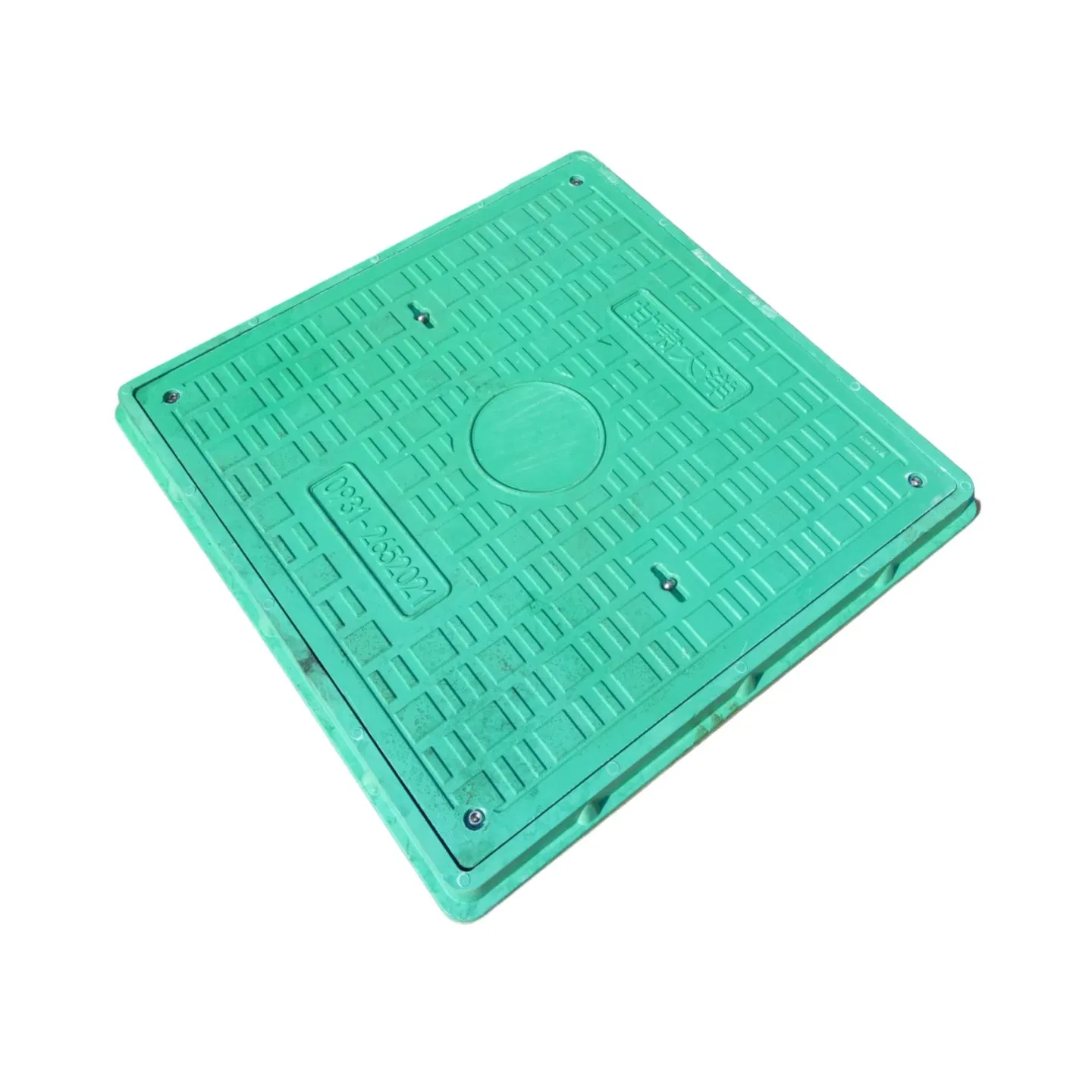
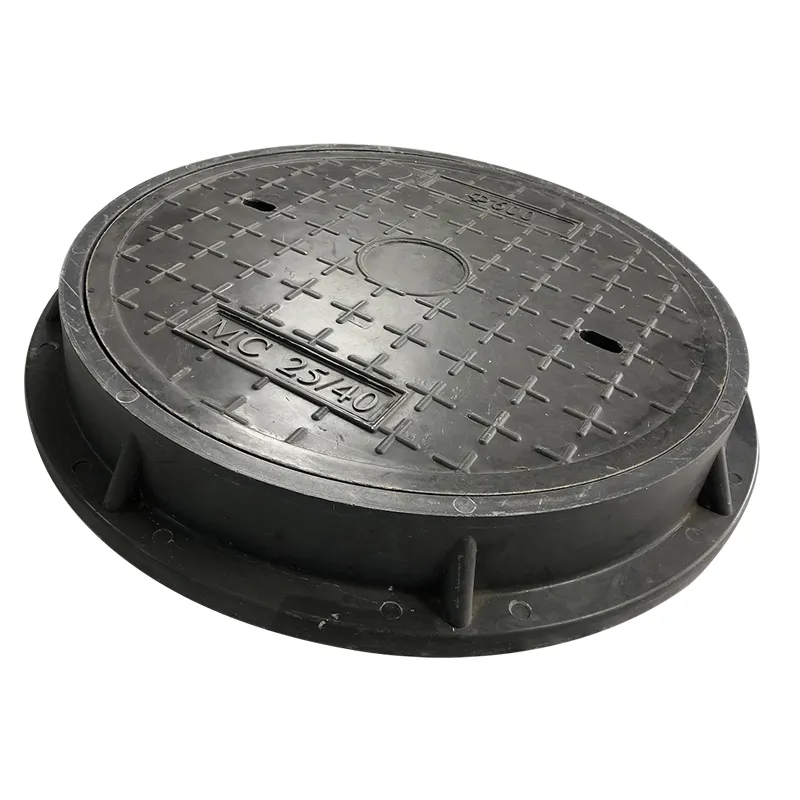
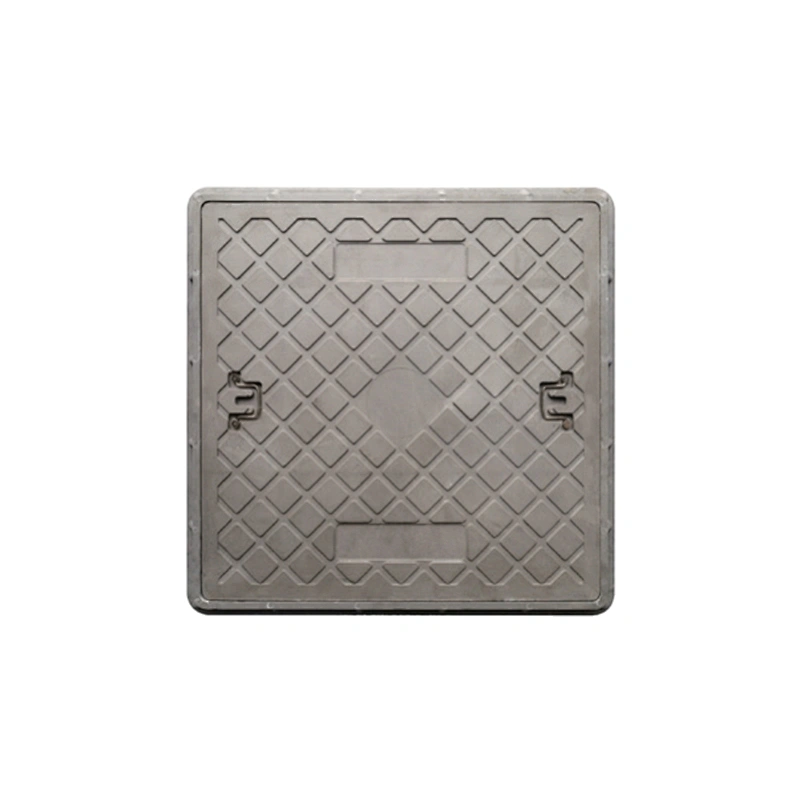
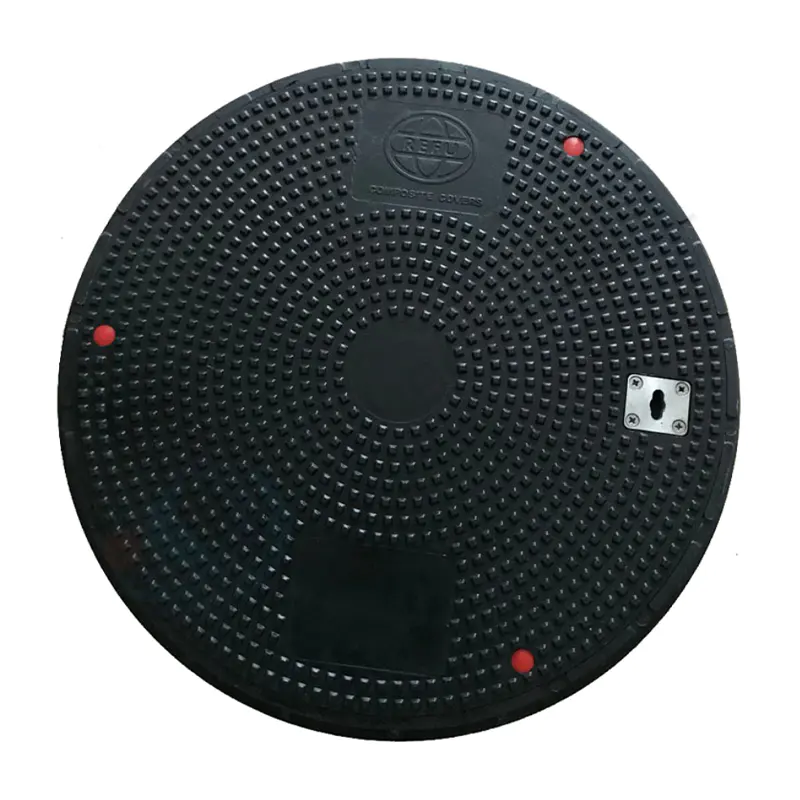
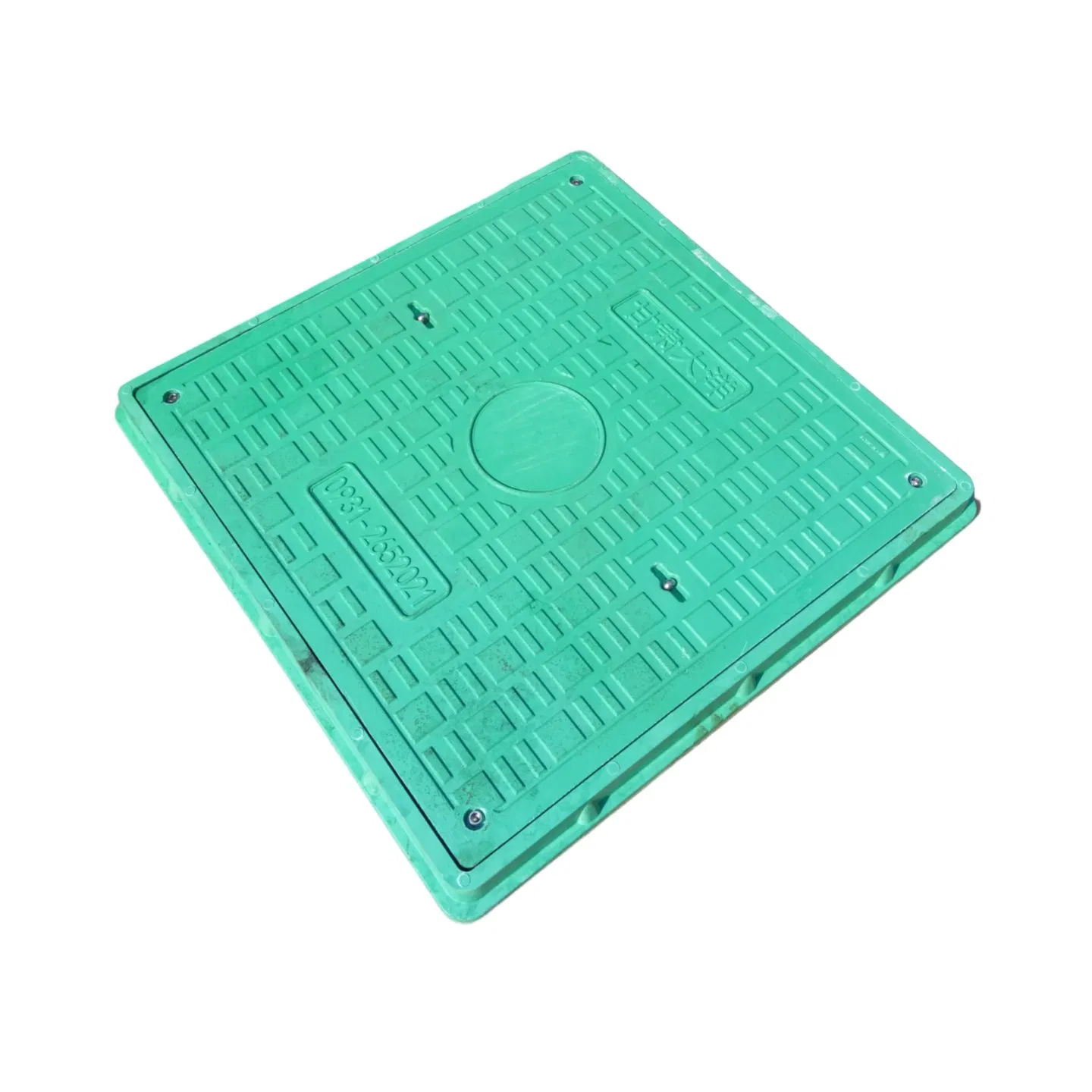
FRP and composite manhole covers are particularly well-suited to the A15 rating. Because the load requirement is relatively low, manufacturers can optimize these covers for lightness, corrosion resistance, and aesthetic integration. Typical specifications for A15 FRP manhole covers include:
| Parameter | A15 FRP Manhole Cover Typical Spec |
|---|---|
| Test Load | 15 kN (1.5 tonnes) |
| Clear Opening | 600 × 600 mm (standard square), 600 mm diameter (round) |
| Cover Weight | 12–25 kg (vs. 40–60 kg for cast iron equivalent) |
| Material | SMC (Sheet Molding Compound) / Glass-reinforced polyester |
| Anti-Theft Feature | Bolt-down locking or stainless steel key-lock system |
| Surface Finish | Anti-slip textured, UV-stabilized, color-matched to surroundings |
| Corrosion Resistance | Excellent — no rust, suitable for coastal and chemical environments |
The lightweight nature of FRP A15 covers significantly reduces installation labor costs and the risk of workplace injury. Their corrosion resistance makes them ideal for gardens, parks, and coastal pedestrian zones where cast iron covers would rust prematurely.
EN124 B125 Load Rating — Driveways and Car Parks
The EN124 B125 load rating is the next classification above A15, requiring a certified test load of 125 kN (12.5 tonnes). This is the standard rating for areas with light vehicular traffic and represents the most common upgrade specification when A15 is insufficient.
What Does EN124 B125 Mean?
EN124 B125 classifies manhole covers for installation in areas where slow-moving or stationary vehicles are expected. The 125 kN test load — roughly 12.5 tonnes — provides an 8× safety margin over A15. Where are B125 manhole covers typically installed? Common locations include private driveways, residential car parks, and pedestrian zones where occasional maintenance or emergency vehicles may drive over the cover.
B125 Test Load and Certification
What is the test load for a B125 EN124 manhole cover? The certified type test applies 125 kN through a rigid steel pad. The cover must survive this load without cracking, delaminating (in the case of composite covers), or exceeding 1 mm of permanent deflection. For FRP composite B125 covers, manufacturers often add additional ribbing or increase the material thickness compared to A15 versions.
How much weight can a B125 rated manhole cover support? The 125 kN rating means the cover can support passenger vehicles, SUVs, and even light delivery trucks in slow-speed scenarios. Are B125 manhole covers suitable for car parks? Yes — B125 is the minimum recommended rating for residential and small commercial car parks where vehicle speeds are below 40 km/h.
B125 vs C250 — Which Do I Need?
When comparing B125 vs C250 manhole cover load ratings, the key differentiator is traffic intensity. B125 suits low-traffic residential situations, while C250 (250 kN / 25 tonnes) is required for main road shoulders, slow lanes, and car parks used by heavier commercial vehicles. If your project involves occasional car traffic only, B125 is sufficient. For areas with delivery trucks, waste collection vehicles, or any commercial traffic, C250 is the safer choice.
EN124 C250 Load Rating — Side Roads and Slow Lanes
The EN124 C250 load rating covers manhole heads installed in areas accessible to slow-moving motor vehicles, including side roads, car park aisles, and the outer 0.5 meters of roads adjacent to the curb. With a certified test load of 250 kN (25 tonnes), C250 represents the transition from light-duty to medium-duty classifications.
What Does EN124 C250 Mean?
What does EN124 C250 load rating mean? It means the manhole cover has passed a type test at 250 kN — equivalent to approximately 25 tonnes of static load. Where are C250 rated manhole covers typically used? EN124 specifies C250 for areas inside the road kerbline but outside the main traffic lane: service roads, pedestrianized streets with occasional vehicle access, car park drive aisles, and the outer strip of main roads.
How Much Weight Can a C250 Manhole Cover Support?
How much weight can a C250 manhole cover support? The 250 kN test rating covers most delivery trucks, ambulances, fire engines, and waste collection vehicles in slow-speed scenarios. This is why C250 is frequently specified for supermarket car parks, hospital access roads, and residential estate roads where heavy vehicle access is occasional.
C250 vs D400 — Which Is Right for Me?
When deciding between C250 vs D400 manhole covers, consider the traffic speed and vehicle weight. C250 is designed for areas with speed limits under 40 km/h and predominantly passenger vehicle traffic. D400 (400 kN / 40 tonnes) is required for fast roads, highways, and main carriageways where vehicles travel at full speed. If the cover will be installed on a public road with unrestricted traffic, D400 is the minimum legal requirement under EN124.
Are C250 manhole covers suitable for car parks and side roads? Yes — this is exactly what C250 is designed for. Side roads, residential access roads, and car parks with regular car and van traffic are the standard application envelope for the C250 classification.
What is the test load for a C250 EN124 manhole cover? The official test applies 250 kN through a rigid steel pad. Covers must show no structural cracks, no fastener failure, and permanent set below 1 mm after the load is removed.
Heavy-Duty Ratings: D400, E600, and F900
For infrastructure subjected to high-speed traffic, heavy commercial vehicles, or extreme industrial loads, the EN124 standard provides three heavy-duty classifications: D400, E600, and F900. These ratings cover main roads, highways, industrial zones, ports, and airport runways.
D400 — Main Roads and Highways
What does manhole cover EN124 load rating D400 mean? D400 requires a certified test load of 400 kN (40 tonnes). Where are D400 rated manhole covers required by regulation? They are mandatory for all carriageways of public roads, highways, and motorways — any location where vehicles travel at normal road speeds. The 400 kN rating ensures the cover can withstand the dynamic impact of high-speed traffic, including heavy goods vehicles up to 44 tonnes gross weight.
D400 vs E600 manhole cover: which do I need? D400 is the minimum for public roads. E600 (600 kN / 60 tonnes) is required for areas with exceptional wheel loads such as industrial estates, container terminals, and ports. For standard highway applications, D400 is almost always sufficient.
E600 — Industrial Zones and Ports
What does EN124 E600 load rating mean? E600 specifies a test load of 600 kN (60 tonnes). Where are E600 rated manhole covers typically installed? These heavy-duty covers are found in industrial zones, port areas, container terminals, and logistics centers where fork-lift trucks, laden container vehicles, and heavy plant machinery operate. Are E600 manhole covers required for airport runways? Not typically — runways and taxiways require F900. However, E600 is often specified for airport service roads, cargo handling areas, and maintenance aprons.
How much weight can an E600 manhole cover support? The 600 kN test rating translates to approximately 60 tonnes static load — sufficient for laden container trucks, heavy forklifts, and mobile cranes.
F900 — Airports and Military Sites
What does EN124 F900 load rating mean? F900 is the highest classification in the EN124 standard, with a test load of 900 kN (90 tonnes). Where are F900 manhole covers typically required? F900 covers are mandatory for airport runways, taxiways, and aprons, as well as military sites, dockyards, and heavy industrial complexes where extreme loads are expected. The 900 kN rating covers the static and dynamic loads of aircraft landing gear — including wide-body jets like the Boeing 747 and Airbus A380.
Are F900 manhole covers required for airport runways and military sites? Yes. Aviation authorities and military engineering standards universally require F900-rated covers for any manhole or access pit located within runway strips, taxiway shoulders, or operational aprons. F900 vs E600: which is for port and dock areas? For general port areas, E600 is typically sufficient. F900 is reserved for the most extreme load environments: aircraft pavements, heavy military vehicle corridors, and ultra-heavy industrial floors.
How to Choose the Right EN124 Load Rating for Your Project
Selecting the correct EN124 load rating is a critical specification decision that affects safety, compliance, and long-term maintenance costs. Here is a practical decision framework based on the EN124 standard:
| If Your Installation Site Is... | Recommended Rating | Test Load |
|---|---|---|
| Pedestrian footpath, garden, lawn, cycle track | A15 | 15 kN (1.5 t) |
| Private driveway, residential car park | B125 | 125 kN (12.5 t) |
| Side road, slow lane, commercial car park | C250 | 250 kN (25 t) |
| Public road, highway, main carriageway | D400 | 400 kN (40 t) |
| Industrial zone, port, container terminal | E600 | 600 kN (60 t) |
| Airport runway, taxiway, military site | F900 | 900 kN (90 t) |
Material Considerations by Rating
At the A15 level, lightweight FRP/composite covers offer significant advantages over cast iron: they are theft-resistant (scrap value is negligible), corrosion-proof, and much easier to handle. A typical A15 FRP cover weighs only 12–25 kg compared to 40–60 kg for an equivalent cast iron cover. At higher ratings (B125 and above), composite covers remain viable but require reinforced designs with additional ribbing and thicker material sections.
Compliance and Documentation
Always verify that your chosen manhole cover carries third-party EN124 certification from an accredited testing laboratory. The cover should be permanently marked with its EN124 class, manufacturer identification, and a unique serial number for traceability. Retain the certificate of conformity for your project records — many jurisdictions require this documentation during building inspections.
Installation Best Practices
Proper installation is as important as the cover rating itself. The load rating is only valid when the cover is installed in a correctly constructed frame with adequate concrete surround and bearing surface. For FRP covers, follow the manufacturer installation instructions precisely — incorrect bedding can reduce effective load capacity by 50% or more.
Conclusion
The EN124 classification system provides a clear, internationally recognized framework for specifying manhole covers according to their installation environment. The manhole cover EN124 load rating A15 (15 kN / 1.5 tonnes) serves pedestrian zones, cycle paths, gardens, and landscaped areas reliably and cost-effectively — especially when specified in lightweight FRP or composite materials that resist corrosion and deter theft.
As you move up the classification ladder from A15 through B125, C250, D400, E600, and F900, each step doubles or triples the load-bearing capacity to match increasingly demanding traffic conditions. The key takeaway is simple: match the load rating to the worst-case vehicle that will ever cross the cover, not the typical daily traffic.
For procurement professionals and contractors working on infrastructure projects, we recommend maintaining a specification checklist:
- Confirm the traffic classification of the installation zone
- Select the minimum EN124 class required for that zone
- Choose between cast iron, ductile iron, or FRP/composite based on weight, corrosion, and security requirements
- Verify third-party EN124 certification documentation
- Follow the manufacturer installation guidelines precisely
If you need assistance selecting the right manhole cover EN124 load rating for your next project, contact our engineering team for a free specification review. We supply certified FRP and composite manhole covers across all six EN124 load classes, from A15 pedestrian covers to F900 airport-grade units.