Introduction
Choosing the right SMC manhole cover manufacturer is one of the most critical procurement decisions for infrastructure projects, municipal utilities, and construction contractors worldwide. Sheet Molding Compound (SMC) manhole covers have become the material of choice for modern access infrastructure due to their exceptional strength-to-weight ratio, corrosion resistance, and cost-effectiveness compared to traditional cast iron alternatives.
As global demand for lightweight, durable, and non-corroding access covers continues to rise, so does the number of suppliers claiming to offer premium SMC products. However, not all production facilities are created equal. The difference between a reliable partner and an unreliable supplier can mean the difference between a 30-year service life and premature product failure.
This comprehensive guide covers every aspect of evaluating and selecting a supplier for SMC access covers. From understanding the SMC compression molding process and required hydraulic press specifications to navigating EN124 certification requirements, assessing China's key manufacturing clusters in Hebei, Zhejiang, and Shandong, understanding MOQ structures, pricing factors, and sample workflows — this guide equips procurement professionals with the knowledge needed to make an informed decision.
What Is an SMC Manhole Cover Manufacturer?
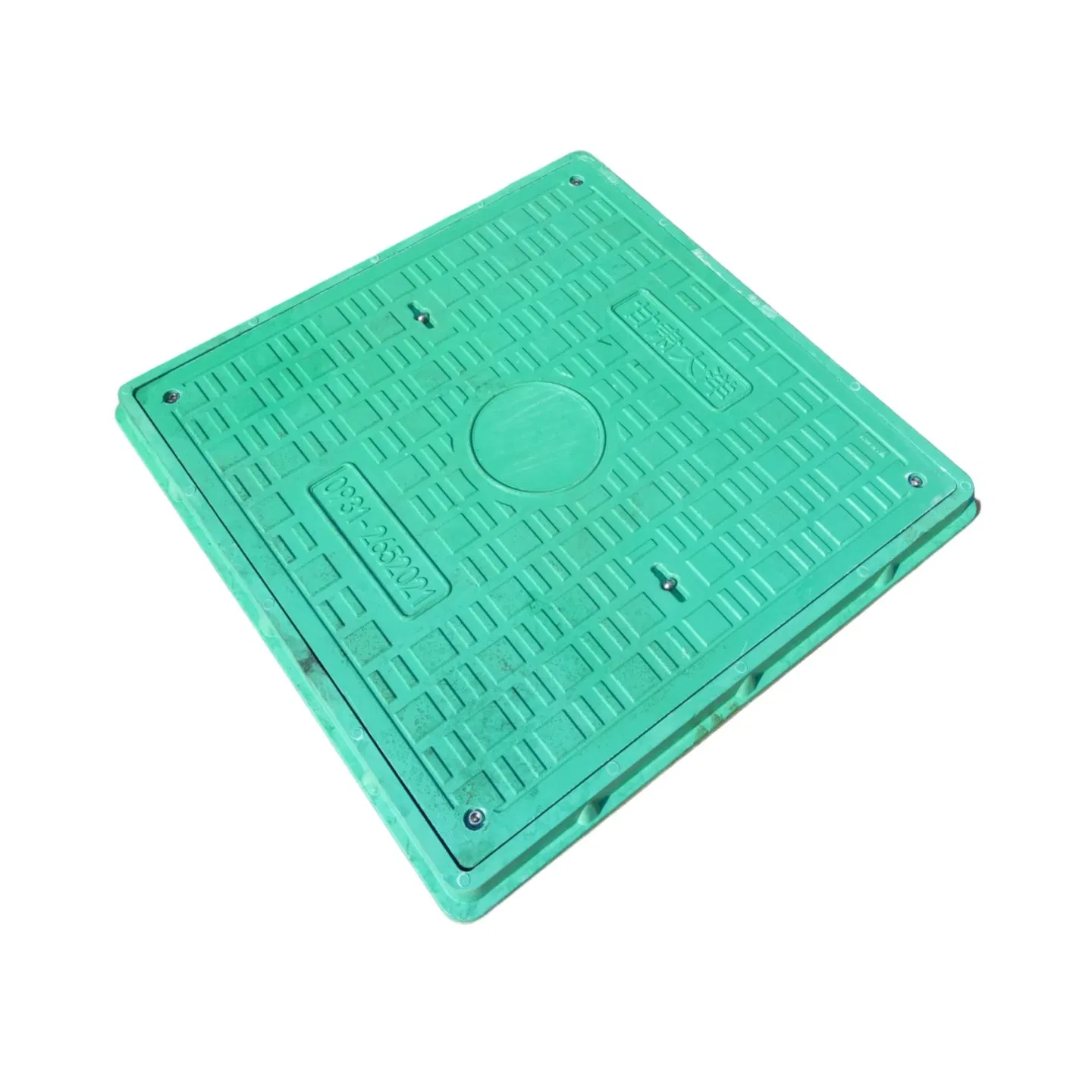
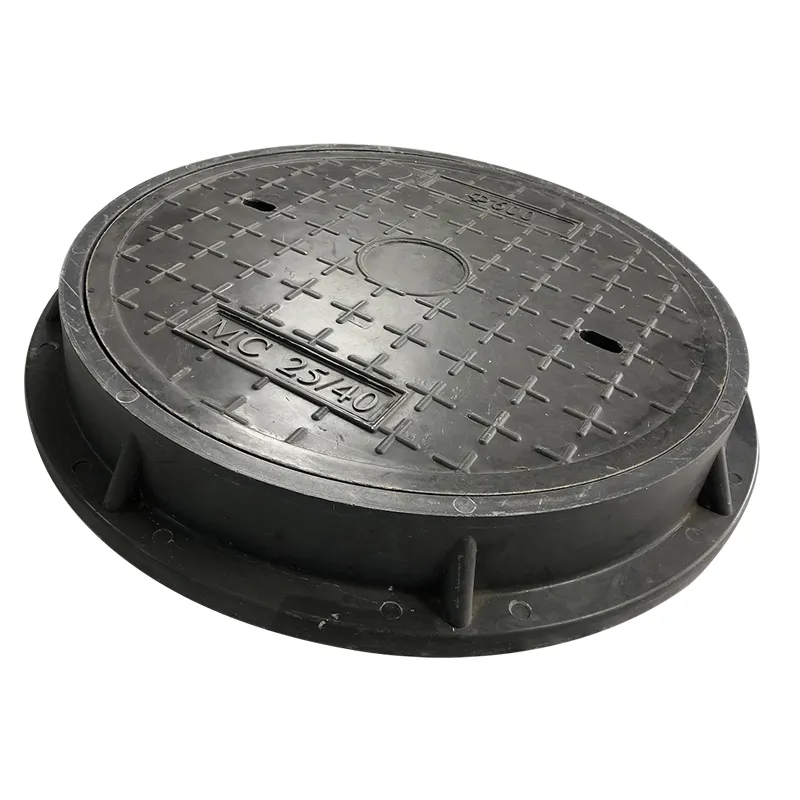
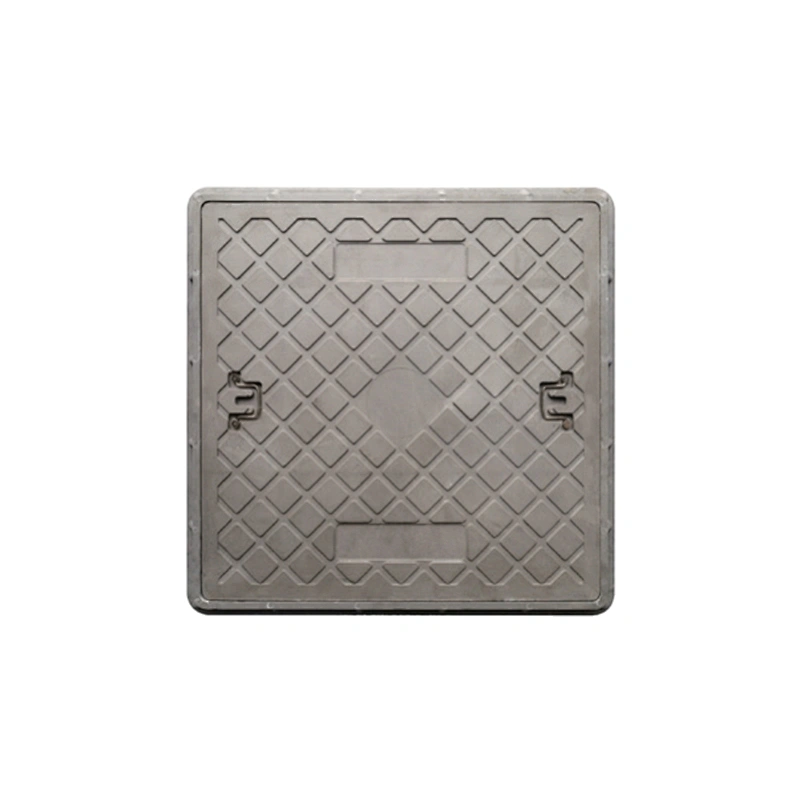
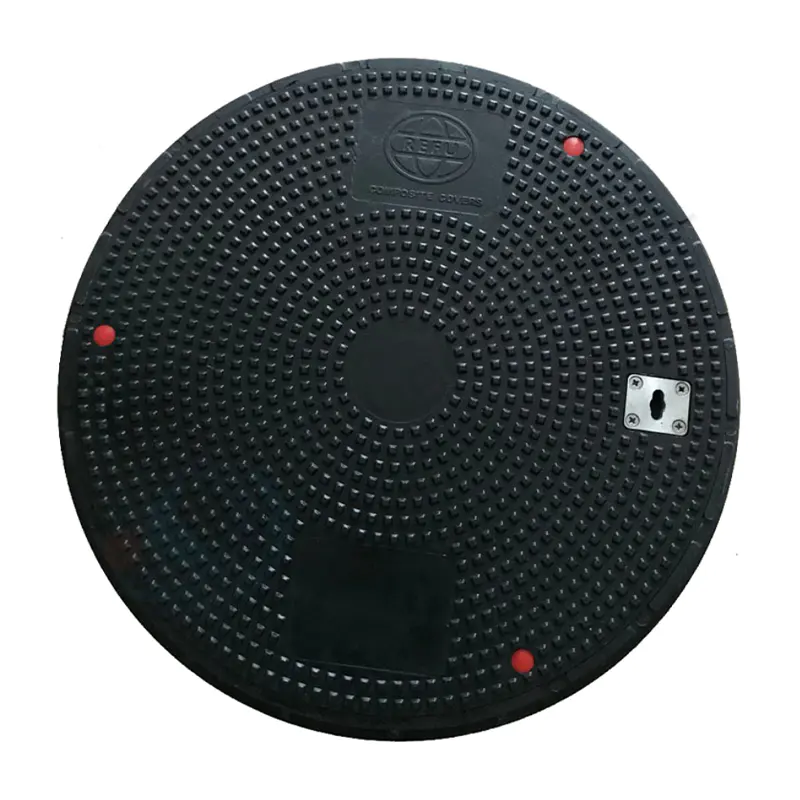
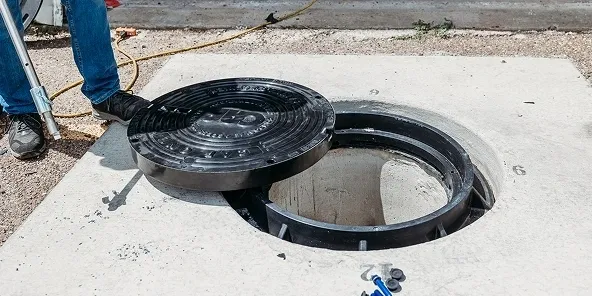
An SMC manhole cover manufacturer specializes in producing access covers using Sheet Molding Compound — a glass fiber reinforced polyester material that is compression molded under high pressure and temperature to form rigid, durable products. Unlike traditional foundries that cast iron, SMC fabricators operate with hydraulic presses, precision steel molds, and controlled curing cycles to produce manhole covers that are one-third the weight of cast iron while maintaining comparable load-bearing capacity.
SMC manhole covers are widely used in telecommunications, power distribution, water utilities, drainage systems, and municipal roads. The material offers inherent resistance to corrosion, UV degradation, and chemical attack, making it particularly suitable for harsh environments where cast iron would rust or deteriorate.
A professional supplier typically offers a range of products including round and square covers in various sizes (such as 600×600 mm, 750×750 mm, 800×800 mm, and Φ600–Φ800 mm), multiple load ratings from A15 (pedestrian use) through D400 (heavy road traffic), and customization options for logos, colors, and anti-theft locking mechanisms. Many producers also manufacture complementary FRP (Fiber Reinforced Plastic) and composite manhole covers, widening the product portfolio to address different project requirements.
Key Manufacturing Capabilities to Evaluate
When assessing potential suppliers, the production equipment and technical capabilities are paramount. The SMC compression molding process requires significant capital investment in machinery, molds, and quality control systems. Understanding these manufacturing fundamentals helps buyers distinguish between established producers and simple trading companies that outsource production.
Hydraulic Press and Molding Requirements
The core of any SMC manhole cover production line is the hydraulic compression press. These presses apply both heat and pressure to cure the SMC material into finished products. Key specifications to evaluate include:
| Parameter | Typical Requirement | Why It Matters |
|---|---|---|
| Press Tonnage | 300 – 1,500 tons | Higher tonnage enables larger covers and better material flow |
| Platen Size | ≥ 1,000 × 1,000 mm | Determines maximum product dimensions |
| Temperature Control | ±2 °C precision | Ensures consistent curing and mechanical properties |
| Cycle Time | 3 – 8 minutes per cycle | Affects production capacity and lead times |
| Pressure Uniformity | ±5% across platen | Prevents weak spots and warpage |
Reputable producers operate multiple presses to maintain production flexibility. A facility with at least 3–5 presses ranging from 300T to 1,000T can efficiently handle both standard catalog products and custom orders without disrupting production schedules.
The heating system is equally critical. SMC curing requires precise temperature profiles — typically 135–155 °C — maintained consistently across the entire platen surface. Advanced manufacturers use oil-based heating systems with PID controllers to achieve the required precision, while cheaper operations may use electric heating elements that produce hot spots and inconsistent product quality.
Tooling and Mold Capabilities
Mold quality directly determines the dimensional accuracy, surface finish, and overall quality of SMC manhole covers. A professional supplier invests in CNC-machined steel molds with hardened surfaces for extended service life. Key aspects of mold capabilities include:
- In-House Mold Design: Producers with engineering teams can develop custom mold designs for unique shapes, sizes, and anti-theft locking patterns
- Surface Finish Quality: A Ra ≤ 0.8 μm surface finish on the mold cavity produces covers with smooth, professional appearance and accurate dimensions (±1 mm tolerance)
- Multi-Cavity Molds: Advanced fabricators use multi-cavity tooling to produce multiple covers in a single press cycle, improving productivity and reducing per-unit costs
- Quick-Change Systems: Hydraulic or magnetic quick-change mold systems reduce changeover time from hours to minutes, enabling efficient small-batch production
- Heating Channel Design: Properly designed heating channels within the mold ensure uniform temperature distribution, eliminating curing defects
When evaluating a supplier, ask about their mold inventory — a comprehensive collection of standard molds (600×600, 750×750, 800×800, round Φ600, Φ700, Φ800) indicates an established producer. Also inquire about custom mold development timelines and costs, as this directly impacts project lead times for bespoke requirements.
Certifications and Quality Standards
Certifications are the most reliable indicator of a supplier's commitment to quality and compliance. Any serious producer of SMC access covers should hold internationally recognized certifications that verify their products meet safety and performance standards. For global buyers, two certification frameworks are essential: EN 124 for load ratings and ISO 9001 for quality management systems.
EN 124 Load Rating Certification
EN 124 is the European standard that specifies load classes for manhole covers and gully tops installed in areas subject to pedestrian and vehicular traffic. It is the most widely referenced certification for SMC manhole covers in international trade. A qualified producer should be able to provide EN 124 certification from accredited testing bodies such as TÜV, SGS, or Bureau Veritas.
The standard defines six load classes:
| Class | Load Capacity | Typical Application |
|---|---|---|
| A15 | 15 kN | Pedestrian areas, gardens, cycle paths |
| B125 | 125 kN | Footways, pedestrian precincts, car parks |
| C250 | 250 kN | Kerbside areas, slow-traffic zones |
| D400 | 400 kN | Carriageways, highways, heavy traffic roads |
| E600 | 600 kN | Industrial areas, docks, airfields |
| F900 | 900 kN | Airport runways, extreme heavy-load zones |
Note that the updated EN 124:2015 standard introduced more stringent testing requirements compared to the previous EN 124:1994. Ensure your supplier's certification references the current version. Some FRP manhole cover manufacturers also hold AASHTO M306 certification for the North American market, which is equally important for US and Canadian projects. When requesting certification documents, ask for the actual test report — not just the certificate — to verify the specific load test results.
ISO 9001 and Material Test Reports
Beyond product-specific certifications, the supplier's quality management system is equally important. ISO 9001:2015 certification demonstrates that the company maintains documented processes for production, quality control, corrective actions, and continuous improvement. When evaluating a producer, request their ISO certificate and verify it through the certification body's database.
Material quality is a key differentiator among suppliers. Reputable producers should provide material test reports including:
- Glass Fiber Content: Typically 25–35% by weight — higher fiber content improves mechanical strength but increases cost
- Tensile Strength: Should exceed 80 MPa for standard grades
- Flexural Strength: Minimum 150 MPa for load-bearing applications
- Impact Resistance: Charpy impact test values above 60 kJ/m²
- Water Absorption: Less than 0.5% after 24-hour immersion (ASTM D570)
- UL 94 Flammability Rating: V-0 or HB rating for safety compliance
Leading composite manhole cover manufacturers provide test reports for every production batch, and some offer third-party laboratory testing upon request. This documentation is crucial for project compliance and should be a non-negotiable requirement during supplier evaluation.
China SMC Manhole Cover Manufacturing Clusters
China has emerged as the world's largest production base for SMC manhole covers, with three major manufacturing clusters dominating the industry. Understanding the characteristics of each cluster helps buyers identify the most suitable supplier for their specific requirements. Each region offers distinct advantages in terms of raw material access, labor costs, logistics infrastructure, and industry specialization.
Hebei, Zhejiang, and Shandong Clusters
Hebei Province — centered around Hengshui City and the broader Hebei composite materials industrial zone — is the largest SMC manhole cover production cluster in China, accounting for an estimated 40–50% of national output. The region benefits from proximity to raw material suppliers (including SMC sheet producers), abundant labor, and well-established logistics networks serving the Beijing-Tianjin-Hebei economic zone. Hebei-based suppliers typically offer competitive pricing and are well-suited for large-volume procurement. Many top manufacturers in China operate from this region.
Zhejiang Province — particularly around Ningbo, Hangzhou, and Shaoxing — is known for precision manufacturing and higher-quality SMC products. Suppliers in this region tend to invest more in automated production equipment, rigorous quality control, and R&D. Zhejiang is home to many producers that serve the European and North American export markets. If product consistency, surface finish quality, and tight dimensional tolerances are priorities, Zhejiang-based suppliers are often preferred.
Shandong Province — with production concentrated in Linyi, Weifang, and Jinan — offers a balance between scale and quality. Shandong's composites industry benefits from the province's strong chemical and petrochemical sectors, providing access to high-quality raw materials. The region's excellent port infrastructure (Qingdao, Yantai) makes it particularly advantageous for export-oriented procurement. Shandong-based producers are known for their ability to handle customized orders efficiently.
MOQ, Pricing, and the Sample Process
Minimum Order Quantities (MOQ), pricing structures, and sample policies vary significantly among suppliers. Understanding these commercial terms upfront prevents misunderstandings and helps buyers identify the right partner for their project scale. Whether you are a small distributor looking for trial orders or a large contractor planning bulk procurement, knowing what to expect in negotiations is essential.
Understanding MOQ and Price Factors
Minimum Order Quantities (MOQ), pricing structures, and sample policies vary significantly among suppliers. Understanding these commercial terms upfront prevents misunderstandings and helps buyers identify the right partner for their project scale. Whether you are a small distributor looking for trial orders or a large contractor planning bulk procurement, knowing what to expect in negotiations is essential.
MOQ requirements typically range from 50 to 500 pieces per size, depending on the factory's scale and current production schedule. Key factors influencing MOQ include:
- Standard vs. Custom Sizes: Standard sizes (600×600, 750×750, 800×800 mm square, or Φ600, Φ700, Φ800 round) typically have lower MOQs (50–100 pieces). Custom sizes or designs with dedicated tooling require higher MOQs (200–500+ pieces) to amortize mold costs.
- Color and Logo Customization: Custom colors (beyond standard black or grey) or embossed logos may increase MOQ due to batch changeover requirements.
- Factory Size: Large manufacturers with high-volume production lines may set higher MOQs, while smaller factories offer more flexibility for trial orders.
Regarding pricing, supplier quotes are influenced by several factors:
| Factor | Impact on Price |
|---|---|
| Load Rating | D400-rated covers cost 20–40% more than B125 equivalents due to thicker material and longer curing cycles |
| Size | Larger covers consume more SMC material and require higher press tonnage |
| Quantity | Volume discounts typically apply at 500+ and 1,000+ piece thresholds |
| Surface Finish | Textured or non-slip surfaces add 5–15% to unit cost |
| Packaging | Export-grade plywood pallets or crates add to FOB pricing |
| Certification | EN 124 certified products command a premium over non-certified equivalents |
For the most accurate pricing, request a quote with specific quantities, target load ratings, dimensions, and delivery port (typically FOB Shanghai, Ningbo, or Qingdao). Most SMC manhole cover manufacturer representatives respond within 24–48 hours with a detailed quotation.
How the Sample Process Works
A well-structured sample process is a hallmark of a professional supplier. Here is what to expect and how to evaluate a producer's sample service:
- Sample Request and Specification Review: Submit your requirements including dimensions, load rating, color, surface pattern, and any special features (anti-theft bolts, rubber gaskets, ventilation slots). The supplier should confirm feasibility within 1–2 business days.
- Sample Production Timeline: For standard sizes with existing molds, samples are typically produced in 3–7 days. Custom molds require 15–30 days for mold fabrication plus 3–5 days for sample production.
- Sample Costs: Many suppliers offer free samples for standard products (buyer pays shipping). Custom samples usually incur mold development costs and a sample fee, which may be deducted from the first production order.
- Sample Evaluation Checklist: When you receive samples, inspect them for dimensional accuracy (±2 mm), surface finish quality, color consistency, weight compliance with specifications, load-bearing performance, and proper anti-theft locking mechanism operation.
- Third-Party Testing: The best composite manhole cover manufacturers welcome independent testing. Arrange for a certified laboratory (such as TÜV, SGS, or Intertek) to conduct load testing and material analysis on the pre-production samples before mass production begins.
A transparent sample process is a strong indicator of a supplier's confidence in their product quality. If a producer hesitates to provide samples or avoids third-party testing, consider it a red flag.
How to Evaluate Manufacturer Quality
Beyond documentation and certifications, a physical or virtual factory audit provides the most accurate assessment of a supplier's capabilities. When evaluating a producer, pay attention to the following aspects of their production environment and quality control systems.
Factory Audit and Quality Testing
A comprehensive factory audit should cover these areas:
- Raw Material Storage: SMC sheets should be stored in a temperature-controlled environment (5–25 °C) with controlled humidity. Improper storage degrades the material before molding, resulting in weaker final products. Check for first-expiry-first-out (FEFO) inventory management.
- Production Floor Organization: A well-organized factory with clear production zones (material preparation, molding, finishing, inspection, packaging) indicates systematic quality management. Look for standardized operating procedures posted at each workstation.
- Hydraulic Press Maintenance: Check the age, brand, and maintenance records of presses. Well-maintained Japanese or European presses (such as Kawaguchi, Sanyo, or Dieffenbacher) are positive indicators. Inquire about calibration frequency for temperature and pressure sensors.
- Quality Control Laboratory: The manufacturer should have an in-house QC lab equipped with universal testing machines (UTM) for tensile, flexural, and compression testing, as well as hardness testers, dimensional measurement tools, and weight scales. Verify that testing equipment has current calibration certificates.
- In-Process Inspection: Observe whether operators perform dimensional checks during production. A reliable supplier conducts inspections at three stages: raw material incoming, in-process (during molding), and final product inspection.
- Load Testing Facilities: For EN 124 compliance, the manufacturer should have a load testing rig capable of applying the required forces. Ask to see a live load test demonstration for D400 class covers.
- Packaging Area: Export-grade packaging using plywood pallets, corner protectors, strapping bands, and waterproof wrapping is essential for ocean freight. Inspect the packaging quality of finished products awaiting shipment.
If a physical visit is not feasible, request a video tour of these specific areas. Many reputable suppliers now offer virtual factory tours via video call. Alternatively, consider hiring a third-party inspection company (SGS, Bureau Veritas, or Intertek) to conduct a factory audit on your behalf. For those asking "where to find reliable FRP manhole cover manufacturers" or "how to find a reliable SMC manhole cover manufacturer", this audit process is the definitive answer.
Conclusion
Selecting the right SMC manhole cover manufacturer is a strategic decision that impacts project timelines, infrastructure longevity, and overall cost efficiency. The ideal manufacturer combines robust production capabilities (adequate hydraulic press tonnage, quality molds, controlled curing processes), recognized certifications (EN 124, ISO 9001, material test reports), and transparent commercial practices (clear MOQ policies, fair pricing, professional sample processes).
China's three major SMC production clusters — Hebei, Zhejiang, and Shandong — each offer distinct advantages. Hebei excels in scale and cost efficiency, Zhejiang leads in precision and export quality, while Shandong provides a versatile balance suitable for customized requirements. By focusing on verifiable production capabilities rather than marketing claims, and by conducting thorough factory audits or third-party inspections, procurement professionals can identify a manufacturer that delivers consistent quality and reliable partnership.
Whether you are sourcing for municipal infrastructure, telecommunications networks, or industrial projects, taking the time to evaluate the full spectrum of a manufacturer's capabilities will ensure that your SMC manhole covers meet performance expectations for decades to come.
Ready to source from a verified manufacturer? Contact our team for a factory audit report and competitive quotation, or browse our product range to find standard sizes available for immediate shipment.