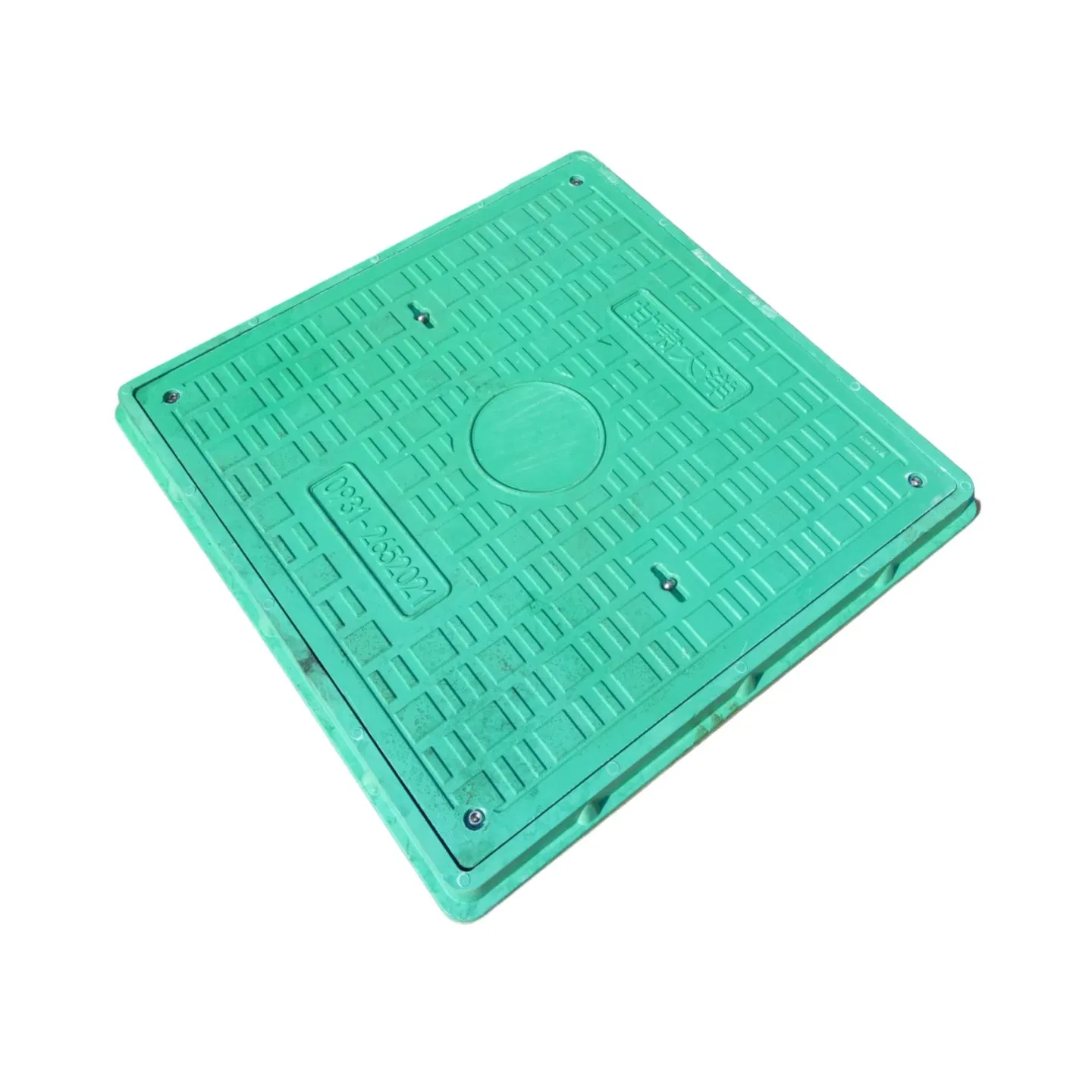
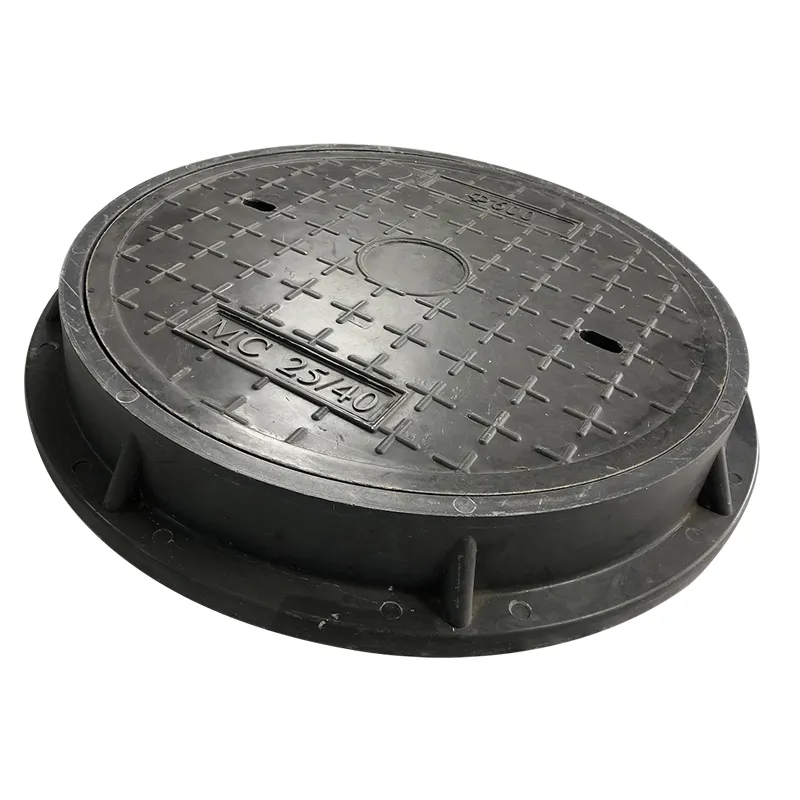
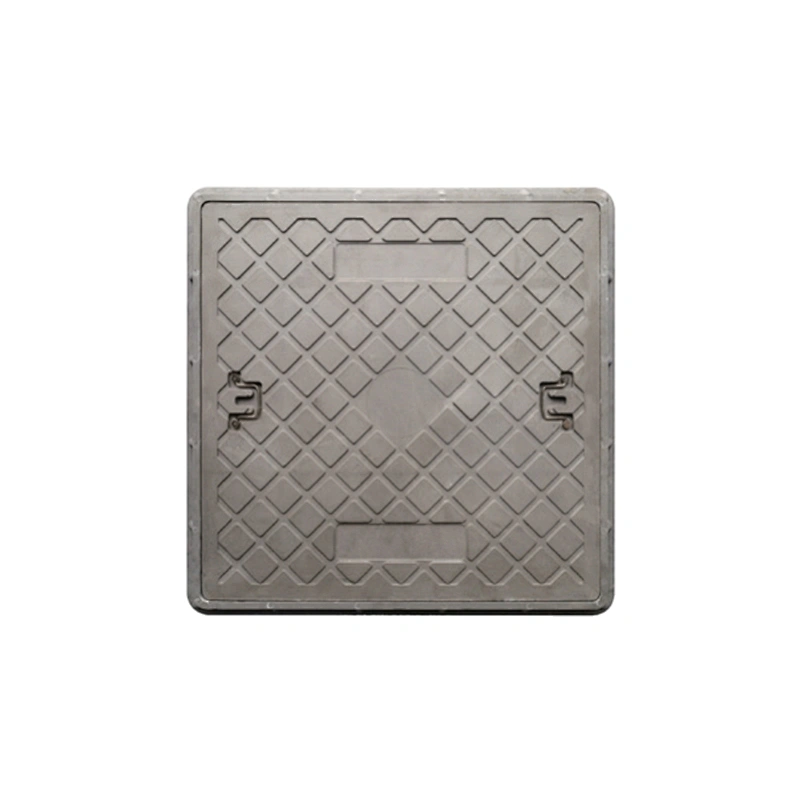
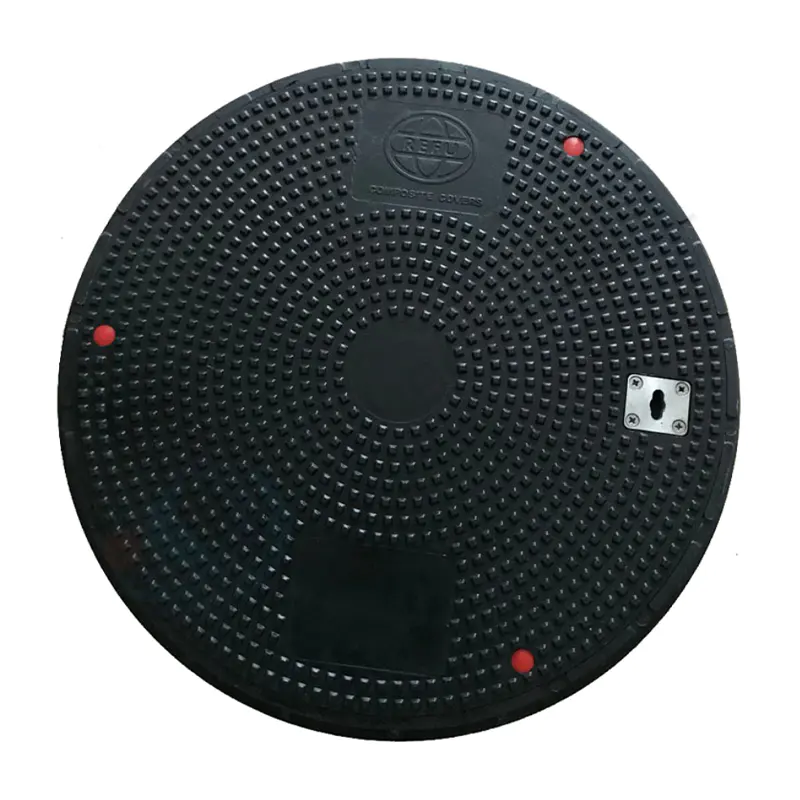
What Is an FRP Cover?
A 40-ton truck rolls over a manhole cover at a busy intersection. That cover must not crack, shift, or fail. For over a century, cast iron was the default answer. Today, FRP covers — Fiber-Reinforced Plastic manhole covers — are replacing them at an accelerating rate across global infrastructure projects.
FRP (Fiber-Reinforced Plastic) is a composite material made by embedding high-strength glass fibers in a thermosetting polymer resin matrix. In plain terms: glass fibers provide the strength, and the plastic resin binds them together into a solid structure. The result is a cover that weighs roughly 60% less than cast iron while meeting the same EN124 load rating requirements — a D400 FRP cover weighs approximately 35 kg versus 85 kg for an equivalent cast iron cover.
The most common manufacturing method for FRP covers is SMC (Sheet Molding Compound) — a compression molding process that produces parts with precise dimensions, consistent quality, and high strength-to-weight ratios. This is not a new or experimental material; FRP composites have been used in aerospace, marine, and automotive industries for decades.
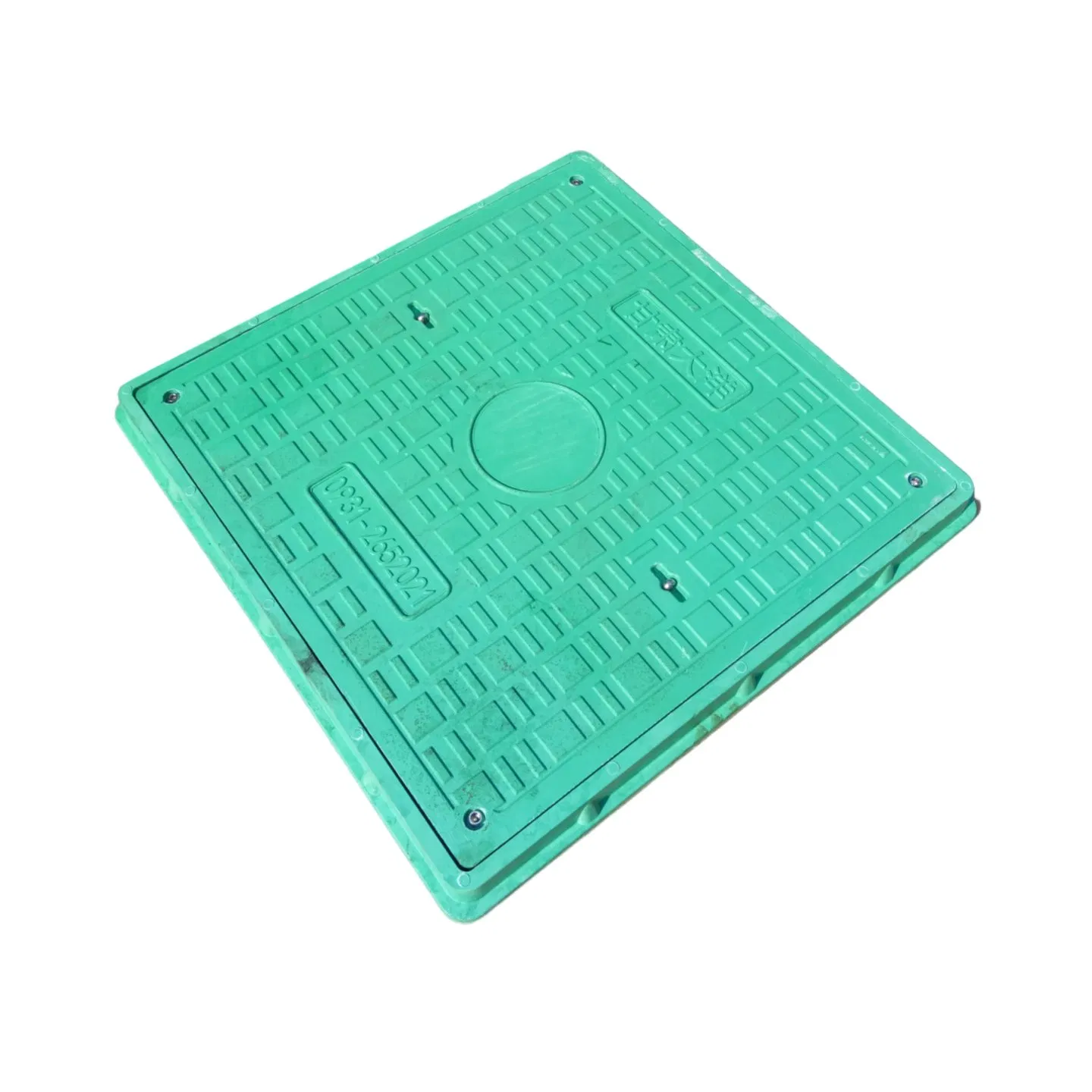
FRP Cover Terminology: FRP vs GRP vs SMC vs Composite
If you have sourced manhole covers internationally, you have almost certainly encountered confusion around terminology. A UK buyer asks for "GRP covers." A North American specifier references "fiberglass." A Chinese factory quotes "SMC composite." An Indian tender calls for "FRP." They are all referring to the same category of product — but the differences matter when you are drafting a specification or comparing quotes.
| Term | Full Name | Primary Market | What It Actually Means |
|---|---|---|---|
| FRP | Fiber-Reinforced Plastic | Global (Asia, Middle East, Americas) | The generic material category. All manhole covers made from glass fiber + polymer resin fall under FRP. |
| GRP | Glass-Reinforced Plastic | United Kingdom, Europe, Commonwealth | Identical to FRP. The British/European convention uses "glass" instead of "fiber." No technical difference. |
| SMC | Sheet Molding Compound | Manufacturing terminology (global) | Not a material — a manufacturing process. SMC is the compression molding method used to produce most FRP covers. |
| Composite | Composite Material | Global | The broadest category. "Composite manhole cover" can refer to FRP/GRP, but also to polymer concrete or resin concrete. Always verify the specific material composition. |
| Fiberglass | Fiberglass Cover | North America | Colloquial term for FRP. Technically identical. Most common in US/Canadian procurement documents. |
FRP Cover Material & Manufacturing Process
Understanding how an FRP cover is made gives you the ability to evaluate quality. Not all FRP covers are equal — the difference between a cover that lasts 5 years and one that lasts 30+ years comes down to manufacturing precision. The SMC (Sheet Molding Compound) compression molding process is the industry standard.
-
Step 1: SMC Sheet Preparation
E-glass fiber rovings chopped to 25–50 mm, sandwiched between thermosetting resin paste layers (unsaturated polyester + fillers + catalysts + UV stabilizers). Sheet matured 24–48h for optimal molding viscosity. Glass fiber content: 25%–35% by weight in quality covers.
-
Step 2: Compression Molding
SMC sheet cut to charge weight, placed in heated steel mold (140–160°C), compressed under 800–2,000 tons hydraulic pressure. Heat initiates resin cross-linking; pressure forces material into every mold cavity. Cycle: 3–8 minutes per cover.
-
Step 3: De-molding & Controlled Cooling
Cured cover ejected hot, placed on cooling rack. Controlled cooling prevents warping. At this stage: ~95% final mechanical properties achieved. Full cure continues 24h at ambient temperature.
-
Step 4: Quality Inspection & Finishing
Every cover: visual defect inspection, dimensional verification, batch EN124 load testing. Passing covers: edge-trimmed, stamped with load rating + manufacturer ID, prepared for packaging.
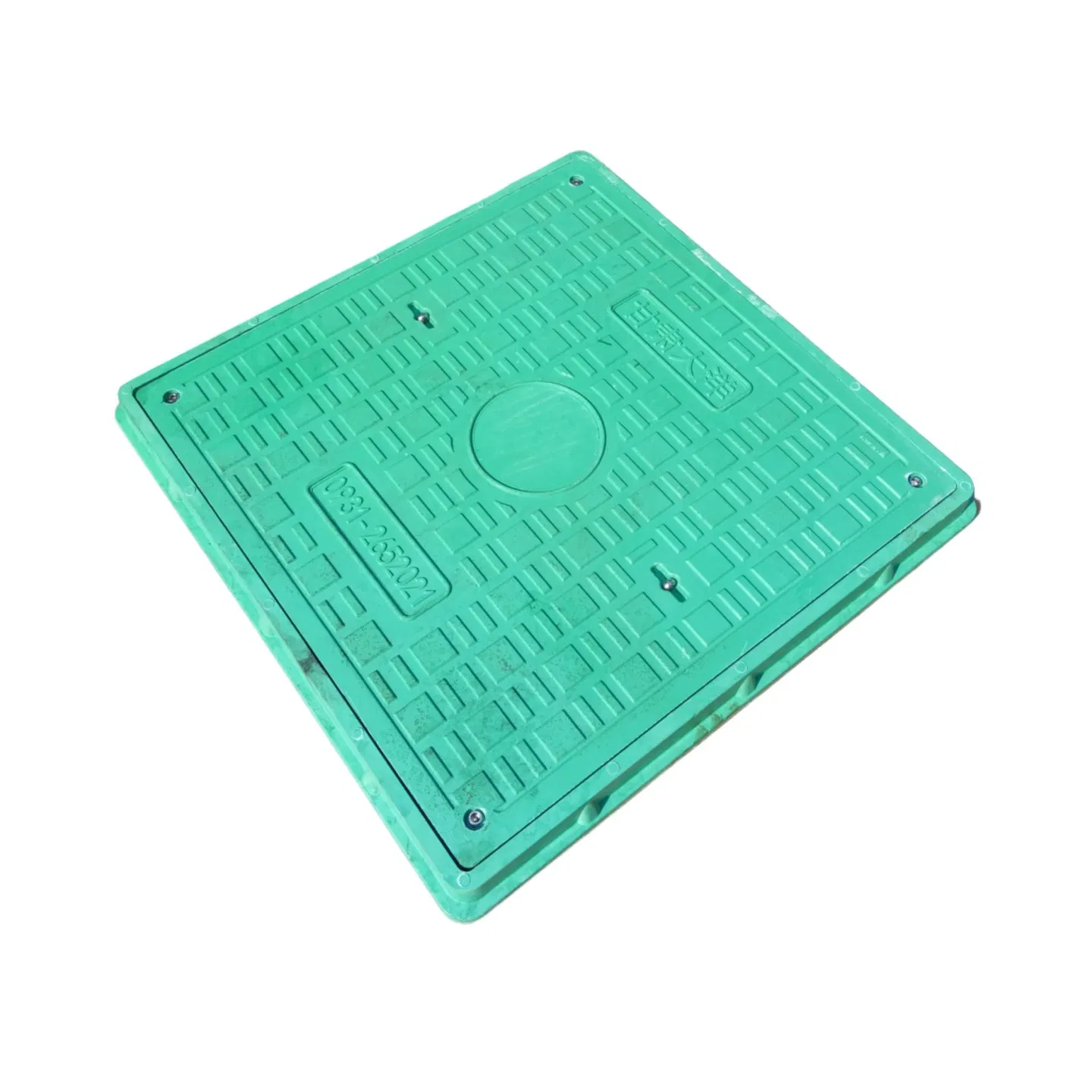
FRP Cover Load Ratings: EN124 Guide (A15 to F900)
The EN124 standard is the globally recognized classification system for manhole and access covers. Each class corresponds to a specific test load and application environment. The class you choose must match the maximum anticipated traffic load — not the average. Underspecifying creates a safety hazard and a liability risk.
| EN124 Class | Test Load (kN) | Equivalent (Tons) | Application | Typical Locations |
|---|---|---|---|---|
| A15 | 15 kN | 1.5 tons | Pedestrian & bicycle zones only | Parks, gardens, pedestrian walkways, cycling paths |
| B125 | 125 kN | 12.5 tons | Light vehicles, pedestrian areas with occasional vehicle access | Residential driveways, parking lots, sidewalks |
| C250 | 250 kN | 25 tons | Slow-moving traffic, car parks, industrial zones | Commercial parking, industrial estates, warehouse zones |
| D400 | 400 kN | 40 tons | Carriageways, roads, hard shoulders — standard for road use | Urban roads, highways, main streets, truck routes |
| E600 | 600 kN | 60 tons | Heavy industrial traffic, loading docks, high-load areas | Ports, airports, container yards, freight terminals |
| F900 | 900 kN | 90 tons | Extreme heavy loads — aircraft, heavy crawler cranes | Airport runways & taxiways, military installations |
FRP Cover Specifications & Dimensions
FRP covers are available in a wide range of shapes and sizes to match existing chamber and frame dimensions. Unlike cast iron — where custom sizes require expensive pattern-making — FRP molds are more economical to produce, making custom dimensions feasible even for moderate order quantities.
| Parameter | Specification | Notes |
|---|---|---|
| Material | Fiber-Reinforced Polymer (FRP) / SMC Composite | E-glass fiber + unsaturated polyester resin; vinyl ester option for chemical resistance |
| Manufacturing Standard | EN124:2015, BS EN 124, ISO 9001:2015 | Full compliance across all load classes A15–F900 |
| Load Ratings | A15 / B125 / C250 / D400 / E600 / F900 | Each class independently load-tested and certified |
| Available Shapes | Round, Square, Rectangular | Custom shape molds available on request |
| Size Range (Round) | 300 mm to 1,200 mm diameter | Clear opening: 300–1,100 mm; most common: 600 mm |
| Size Range (Square) | 300×300 to 1,200×1,200 mm | Common: 450×450, 600×600, 750×750, 900×600, 900×900 mm |
| Weight (600×600 D400) | ~35 kg | Compare: cast iron ~85 kg — 59% weight reduction |
| Slip Resistance | R11 / R12 rated anti-slip texture | Molded-in texture; no applied coating that wears off |
| Color | RAL color matching available | Standard: black, gray, green; custom RAL colors on request |
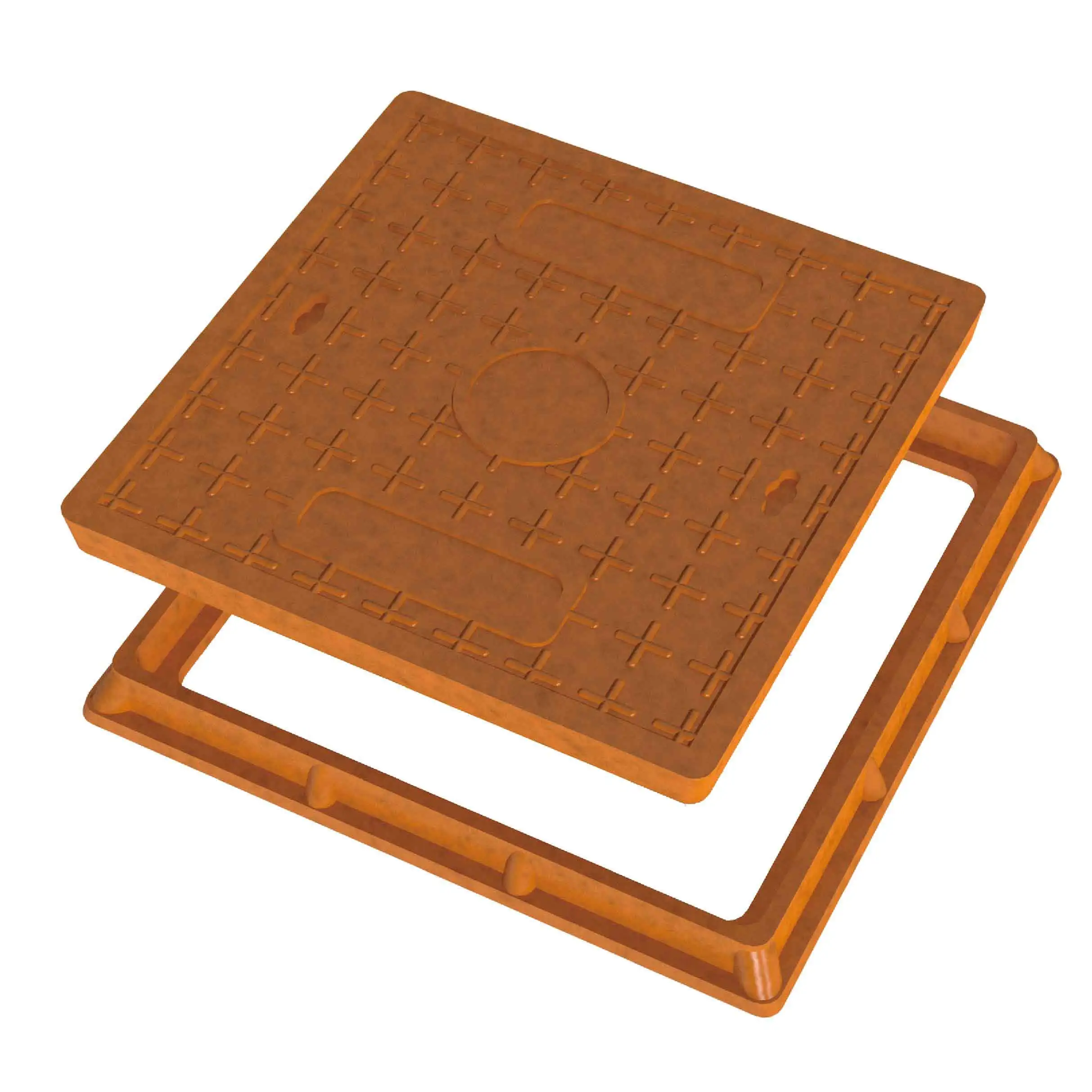
For detailed specifications on individual products, see our FRP manhole cover product page with complete technical data sheets.
FRP Cover vs Traditional Materials
The decision between FRP, cast iron, concrete, and steel affects project budgets, installation timelines, maintenance costs, and long-term asset security. Below is a data-driven comparison across nine criteria — quantitative where possible, rated where subjective.
| Criteria | FRP Composite | Cast Iron | Concrete | Steel |
|---|---|---|---|---|
| Weight (600×600 D400) | ~35 kg | ~85 kg | ~120 kg | ~55 kg |
| Installation Labor | 1 person, no lifting equipment | 2 persons + lifting gear | 2–3 persons + mechanical lift | 1–2 persons |
| Corrosion Resistance | Excellent | Rusts | Moderate | Rusts |
| Theft Risk | Zero | High | Low-Med | High |
| Expected Lifespan | 30+ years | 15–25 years | 10–20 years | 10–15 years |
| Slip Resistance | R11-R12 | Low wet | Moderate | Low wet |
| Sealing / Watertight | Excellent — molded gasket seat | Good — if maintained | Poor — porous, leaks | Moderate |
| Custom Colors | Yes — RAL matching, integral | Requires painting | Requires painting | Requires painting/galvanizing |
| Total Cost of Ownership | Lowest TCO | Maintain $ | Replace $ | Rust $ |
Key Benefits of FRP Covers
01 Lightweight Handling
A D400 FRP cover at 35 kg can be lifted and positioned by one worker without mechanical assistance. The same cover in cast iron weighs 85 kg and requires two workers plus lifting gear. For projects installing hundreds of covers, this translates into dramatically faster installation and lower labor costs.
02 Theft-Proof by Nature
FRP covers have zero scrap metal value — thieves simply ignore them. No need for locking mechanisms, welded hinges, or security patrols. Municipalities that switch from cast iron to FRP typically report a near-100% reduction in cover theft incidents.
03 Corrosion Immunity
FRP does not rust. It is unaffected by road salt, seawater, sewage gases (H₂S, methane), industrial chemicals, or acidic soil. This drives the 30+ year design lifespan. Cast iron covers in coastal environments can show significant rust within 5–7 years.
04 Electrical Insulator
FRP is non-conductive. For covers in electrical vaults, telecom manholes, or areas with underground power cables, this eliminates accidental conduction risk — a critical safety feature that cast iron and steel cannot provide. Also non-sparking for fuel-handling zones.
FRP Cover Applications by Industry
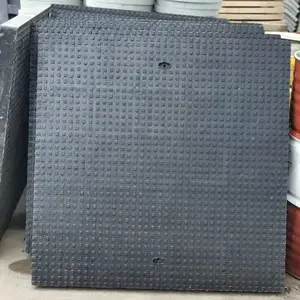
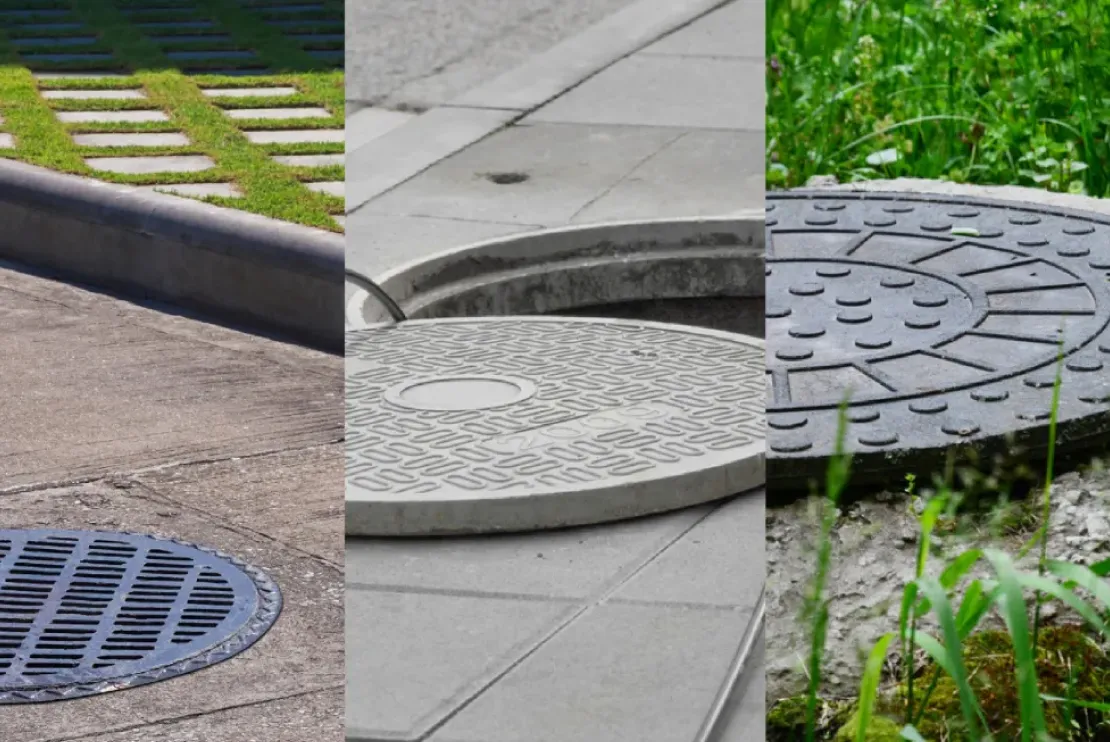
Municipal Road Infrastructure
D400 and E600 FRP covers for urban roads, highways, intersections, and bus lanes. Theft-proof covers eliminate the cost of replacing stolen cast iron — a chronic problem in many cities. EN124 certified for vehicular traffic up to 60 tons.
Residential & Commercial Development
A15, B125, and C250 covers for driveways, parking lots, landscaping, and pedestrian zones. Light enough for homeowners to access utility connections without specialized equipment. Available in green, gray, and custom RAL colors.
Industrial & Chemical Facilities
Vinyl ester resin FRP covers for chemical plants, refineries, wastewater treatment, and fertilizer facilities. Resistant to sulfuric acid, caustic soda, solvents, and hydrogen sulfide — environments where cast iron would corrode within months.
Airports, Ports & Heavy Logistics
E600 and F900 covers for aircraft taxiways, container yards, freight terminals, and crane operating areas. Tested to 600 kN and 900 kN respectively. Non-sparking property critical for fuel-handling zones.
FRP Cover Installation Guide
-
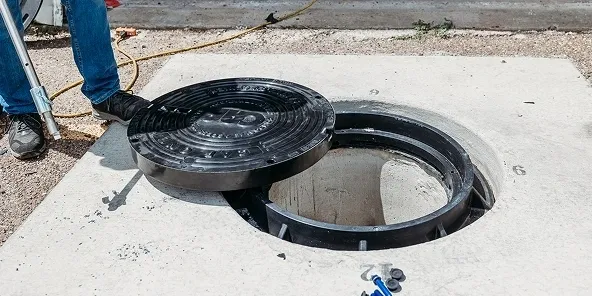
Step 1: Prepare the Concrete Bed
The chamber opening must have a level, stable concrete seating surface. For D400+, use minimum M-25 grade concrete. The seating area should extend at least 150 mm beyond the frame on all sides to distribute load into the surrounding pavement structure.
-
Step 2: Position and Level the Frame
Place the FRP frame onto the prepared bed. The top of the frame must be flush with the finished road surface — not above (trip hazard + impact stress) and not below (water-collecting depression). Verify level in both directions. For road use, embed frame in 300×200 mm concrete surround of minimum M-25 grade.
-
Step 3: Pour Concrete & Cure
Pour concrete around the frame, vibrating to eliminate air pockets. Keep the cover in place inside the frame during pouring to prevent frame distortion. Cure minimum 24 hours before any traffic — 48 hours for D400 and above.
-
Step 4: Seat the Cover & Verify
After curing, remove cover, clean any concrete residue from frame seating surface, and re-seat. Verify flush fit and no rocking. Test hinge mechanism if equipped.
-
Step 5: Final Inspection Under Load
Walk over the cover — it must not move, tilt, or make noise. For road applications, drive a heavy vehicle over the installation at low speed to verify no movement under load. Document: location, serial number, load class, date, installer.
FRP Cover Testing & Quality Standards
EN124 load testing procedure: The cover is placed in its frame on a hydraulic press. A test load equal to 1.33× the rated class value is applied through a 250 mm diameter steel pad at the geometric center. The load is held for 30 seconds. To pass, the cover must: (a) not crack or fracture, (b) exhibit permanent deformation ≤ 1/500th of the clear opening diameter, and (c) remain seated without dislodgment. For a D400 cover (400 kN rated), the test load is 533 kN.
| Test Standard | What It Measures | Pass Requirement |
|---|---|---|
| EN124:2015 | Load bearing capacity | 1.33× rated class, 30s hold, no fracture, deflection ≤ 1/500 clear opening |
| DIN 51130 | Slip resistance | Minimum R11 rating on oil-wetted surface at increasing incline |
| ISO 175 | Chemical resistance | Immersed in H₂SO₄ (30%), NaOH (10%), diesel — 7 days at 23°C, mass change ≤ 2% |
| ISO 4892 | UV weathering | Accelerated UV exposure simulating 10 years outdoor service, no significant chalking or cracking |
| ISO 11925-2 | Fire resistance | Surface flame spread test; Class 2 or better with flame-retardant additives |
FRP Cover Maintenance & Expected Lifespan
A properly manufactured and installed FRP cover should last 30+ years in normal service. FRP composite structures in marine and chemical environments have documented service lives exceeding 40 years. The absence of corrosion — the single biggest degradation mechanism for metal covers — is the primary driver.
Maintenance Checklist
- Annual visual inspection — check for surface impact damage, verify cover seating, inspect frame for concrete spalling
- Cleaning — hose down with water to remove dirt from anti-slip texture. No chemicals or abrasives needed
- Seal inspection — check gasket annually (EPDM rubber, 15–20 year lifespan, replaceable independently)
- Frame check — if metal frame used, inspect for rust in coastal or de-icing salt environments
Red Flags After < 10 Years
If an FRP cover shows cracking before 10 years, it was either: (a) manufactured with insufficient glass fiber content, (b) installed on an uneven foundation causing stress concentration, or (c) subjected to loads exceeding its design class.
How to Evaluate an FRP Cover Supplier
Not all FRP cover manufacturers are equal. The difference between a supplier who delivers consistent quality and one who ships covers that crack within two years comes down to a handful of verifiable criteria.
| Checkpoint | What to Verify | Red Flag If |
|---|---|---|
| 1. Certifications | ISO 9001:2015 + EN124 test reports for your specific load class | Self-declared certification; refusal to share test reports |
| 2. Factory Capacity | Floor area, press count, monthly output in units | Vague answers; no factory tour or video available |
| 3. Export Experience | Countries served, FOB/CIF knowledge, HS code familiarity | No international shipping experience |
| 4. Sample Policy | 1–5 unit samples before bulk order; third-party testing accepted | No samples; refuses independent lab testing |
| 5. Technical Support | Can answer detailed questions about resin type, fiber content, molding parameters | Generic responses; avoids technical detail |
FRP Cover — Company Timeline
-
Specialized FRP molding workshop in Hebei, China.2009
-
2013Full EN124 certification — European market entry.
-
Expanded to 15,000 m² with SMC lines & presses.2016
-
202030 export countries incl. USA, Germany, UAE, Singapore.
-
Advanced QC lab — load testing & material analysis.2024
FRP Cover Pricing & Procurement
FRP cover pricing depends on four variables: load rating class (higher class = thicker, more material), size (larger = more material), order quantity (volume discount tiers), and shipping terms (FOB vs CIF).
| Load Class | Common Size | Price Tier | Typical MOQ | Best For |
|---|---|---|---|---|
| A15 | 600×600 mm | $ Economy | 50 units | Parks, pedestrian zones, gardens |
| B125 | 600×600 mm | $$ Standard | 50 units | Residential driveways, light vehicle areas |
| C250 | 600×600 mm | $$ Standard | 50 units | Commercial parking, industrial estates |
| D400 | 600×600 mm | $$$ Heavy Duty | 50 units | Urban roads, highways, main streets |
| E600 | 600×600 mm | $$$$ Industrial | 30 units | Ports, airports, loading docks |
| F900 | 750×750 mm | $$$$$ Extreme | 20 units | Airport runways, heavy crane areas |
Pricing Factors to Understand
- Volume discounts typically apply at 100, 500, and 1,000+ unit tiers — significant savings at scale
- Custom sizes and colors add mold modification costs — economical for 200+ unit orders
- FOB vs CIF: FOB Tianjin/Shanghai puts shipping on the buyer. CIF gives delivered price. Difference: 8–15% of order value depending on destination
- Samples: 1–5 units at standard pricing plus courier shipping — deductible from first bulk order
For a complete breakdown by size and load rating, see our complete FRP cover price list.
Frequently Asked Questions
FRP stands for Fiber-Reinforced Plastic. An FRP cover is a manhole or access cover manufactured from FRP composite material — typically E-glass fibers embedded in a thermosetting polyester or vinyl ester resin matrix, formed by SMC (Sheet Molding Compound) compression molding. The term is used interchangeably with GRP (Glass-Reinforced Plastic) in the UK and Europe, and "fiberglass cover" in North America.
A well-manufactured FRP cover installed correctly should last 30+ years. The absence of corrosion — the primary degradation mechanism for metal covers — is the key factor. FRP covers do not rust, are immune to road salt and most chemicals, and maintain structural properties through decades of UV exposure. FRP composite structures in marine and chemical processing environments have documented service lives exceeding 40 years.
In most cases, yes. FRP covers can be manufactured to match standard cast iron cover dimensions. However, it is generally recommended to use the manufacturer's matched cover-and-frame set rather than fitting a new FRP cover into an existing cast iron frame. Mismatched cover-frame interfaces can create stress concentrations. For replacement projects, provide the existing clear opening measurement and we can manufacture covers to fit — or supply complete cover + frame sets optimized for FRP.
Yes, absolutely. FRP covers rated D400 and above (tested to 400 kN / 40-ton equivalent) are certified for use on carriageways, highways, and main roads under EN124:2015. Many European highway authorities have been specifying D400 FRP covers for over a decade. For truck-heavy arterial routes, some jurisdictions now specify E600 (600 kN / 60 tons).
A standard 600×600 mm D400 FRP cover weighs approximately 35 kg. The equivalent cast iron cover weighs approximately 85 kg — a 59% weight reduction. The weight advantage is even more dramatic at larger sizes: a 900×900 mm D400 FRP cover weighs around 60 kg versus 140+ kg for cast iron. One person can safely handle FRP covers without mechanical lifting equipment.
No. FRP covers have zero scrap metal value, making them inherently theft-proof. Unlike cast iron — a high-value target for scrap metal thieves globally — there is no secondary market for stolen FRP covers. Municipalities that switch from cast iron to FRP typically report a near-100% reduction in cover theft incidents. No locks, no welded hinges, no security hardware needed.
Standard round covers range from 300 mm to 1,200 mm diameter. Square and rectangular covers range from 300×300 mm to 1,200×1,200 mm. Most common: 450×450, 600×600, 750×750, and 900×600 mm. Custom dimensions are available — FRP molds are more economical to produce than cast iron patterns, making custom sizes feasible for orders of 200+ units.
Yes, and this is one of their strongest applications. Standard FRP covers (polyester resin) resist most environmental chemicals. For aggressive environments — sulfuric acid, sodium hydroxide, solvents, chlorine — vinyl ester resin FRP covers provide enhanced chemical resistance. Specify vinyl ester resin when ordering for chemical service.
What Our Customers Say
"We have been sourcing FRP covers from this manufacturer for over 5 years. The product quality is consistently excellent, and their lead times are unbeatable."
David K.
Procurement Director
"The weight reduction compared to cast iron is remarkable. Our installation crews can handle twice as many covers per day, dramatically reducing project costs."
Ahmed M.
Project Manager
"Excellent communication and technical support throughout the entire supply process. The team truly understands international project requirements."
Paulo L.
Infrastructure Director
Request a Factory Quote for FRP Covers
Ready to source FRP covers for your project? Here is what we need to prepare your quotation:
- Quantity: Number of covers required (trial order or recurring procurement)
- Load rating: EN124 class (A15 / B125 / C250 / D400 / E600 / F900)
- Dimensions: Clear opening size and cover outer dimensions
- Shape: Round, square, or rectangular
- Application: Road, driveway, industrial, chemical plant, etc.
- Shipping: Destination port and preferred terms (FOB or CIF)
Get Your FRP Cover Quote Today
Include your size, load rating, and quantity for a factory-direct price within 24 hours.
Request Factory Quote →Last updated: July 28, 2026. All specifications comply with EN124:2015 and ISO 9001:2015 standards. Product specifications are subject to continuous improvement; contact our engineering team for the latest technical data sheets and custom configuration options.