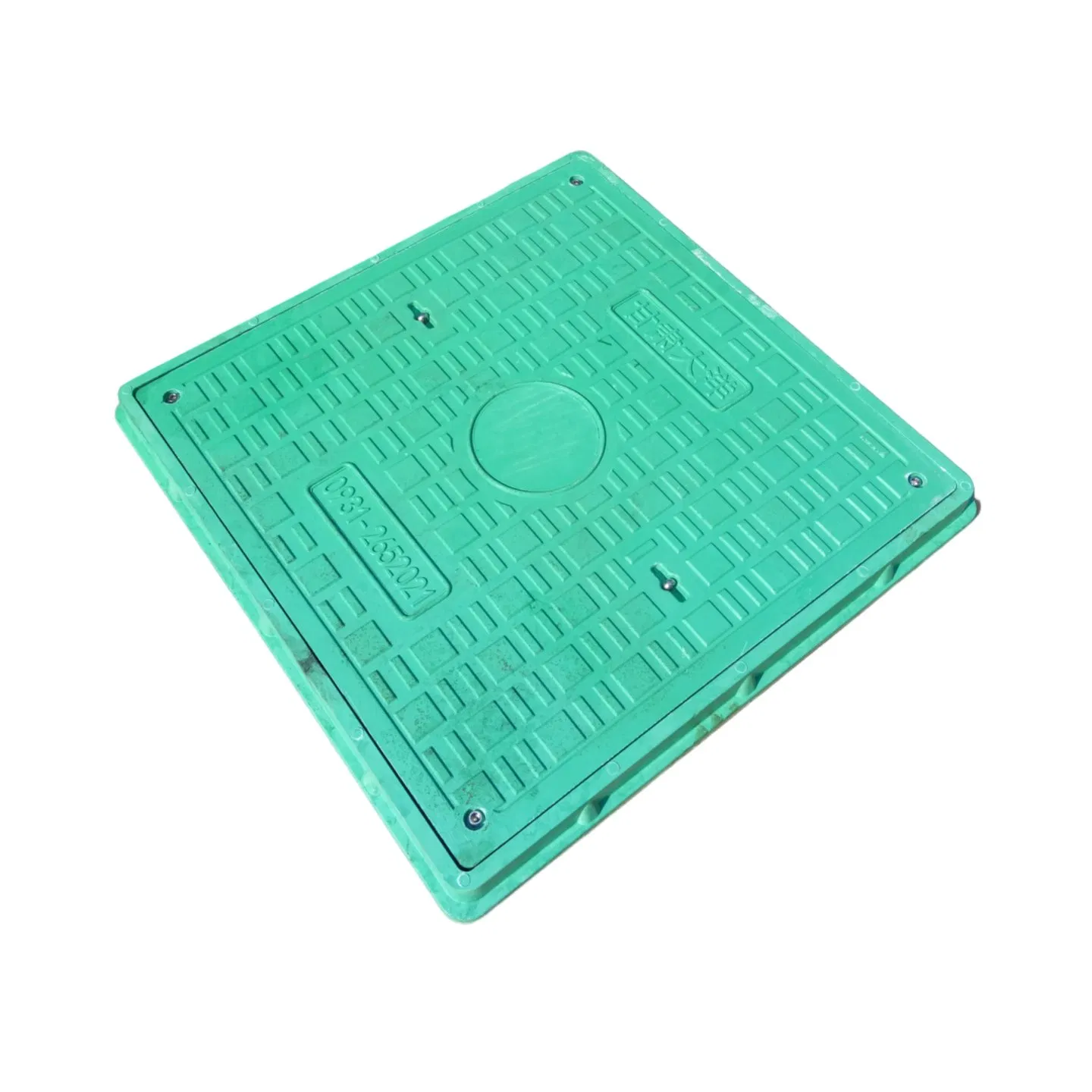
Why Your FRP Cover Manufacturer Matters
A procurement officer in Dubai receives a container of 500 FRP manhole covers. On-site inspection reveals hairline cracks in 12% of the units. The manufacturer's test certificates were self-issued — never verified by a third party. The project is delayed by six weeks. The replacement cost exceeds the original order value.
This is not a rare story. It happens when buyers choose an FRP cover manufacturer based on the lowest quote and a polished Alibaba profile. The difference between a certified manufacturer and an uncertified workshop is not visible in a product photo. It lives in the glass fiber content percentage, the hydraulic press tonnage, the batch sampling rate in the QC lab, and the validity of the EN124 test reports.
This guide gives you the evaluation framework that procurement professionals use to separate verified manufacturers from marketing claims. It includes the factory data, certifications, and production indicators you should verify — plus a real factory case study so you know what good looks like.
What to Look for in an FRP Cover Manufacturer
When you evaluate an FRP cover manufacturer, split your assessment into two categories: hard indicators (verifiable documents, measurable specs, physical assets) and soft indicators (communication quality, technical knowledge, export experience). The hard indicators are non-negotiable. The soft indicators predict what the working relationship will be like after the order is placed.
| Evaluation Criterion | What to Verify | Hard / Soft | Priority |
|---|---|---|---|
| 1. ISO 9001 Certification | Certificate validity date, issuing body (TÜV/SGS/BV — not self-declared), scope covering manhole cover manufacturing | Hard | P0 |
| 2. EN124 Test Reports | Third-party test report for your specific load class and product model. Must show: test load, deflection measurement, pass/fail result, lab accreditation | Hard | P0 |
| 3. Factory Production Capacity | Floor area (≥ 5,000 m² for serious production), number of hydraulic presses (≥ 3 for consistent output), monthly capacity in units, current order backlog | Hard | P1 |
| 4. Material Specifications | Glass fiber content (should be 25-35% by weight), resin type (polyester standard, vinyl ester for chemical resistance), fiber format (continuous strand, not chopped mat) | Hard | P1 |
| 5. QC Laboratory | In-house load testing equipment, batch sampling rate (minimum 1 per 100 units for D400+), dimensional inspection tools, material analysis capability | Hard | P1 |
| 6. Export Experience | Countries served, documentation capability (CO, Form A, Form E, etc.), FOB/CIF knowledge, container loading optimization | Soft | P1 |
| 7. Sample Policy | Willingness to provide 1-5 unit samples, acceptance of third-party testing at buyer's chosen lab, sample cost deductible from bulk order | Soft | P2 |
| 8. Communication Quality | Response time during sourcing phase, technical knowledge demonstrated in email/chat, English proficiency, willingness to provide detailed specs without hesitation | Soft | P2 |
Manufacturing Process: Quality Indicators
You do not need to be a composites engineer to evaluate an FRP cover manufacturer. But you do need to know which steps in the production process determine quality — and which shortcuts signal trouble. Here are the five manufacturing checkpoints that separate premium production from budget operations.
-
Checkpoint 1: Raw Material Storage & Handling
What to look for: Climate-controlled storage for resin (temperature-sensitive; degrades above 30°C). Glass fiber rovings stored in sealed, moisture-free conditions. Red flag: Raw materials stored outdoors or in open sheds — moisture contamination in glass fiber directly reduces composite strength by 15-30%.
-
Checkpoint 2: SMC Sheet Maturation
What to look for: Dedicated maturation room with temperature/humidity control. SMC sheets matured for 24-48 hours at controlled conditions before molding. Red flag: Sheets moved directly from compounding to press — insufficient maturation means inconsistent viscosity, leading to voids and weak spots in the finished cover.
-
Checkpoint 3: Compression Molding Parameters
What to look for: Hydraulic press capacity of 800-2,000 tons (depending on cover size). Mold temperature controlled at 140-160°C with digital monitoring. Consistent cycle time of 3-8 minutes. Red flag: Manual temperature control (operator guessing), inconsistent cycle times, presses visibly undersized for the cover dimensions.
-
Checkpoint 4: QC Sampling & Load Testing
What to look for: Dedicated QC area with hydraulic load tester. Documented batch sampling: minimum 1 cover per 100 tested to EN124 load for D400 and above. Dimensional verification with calibrated gauges. Red flag: No visible load testing equipment, or testing done only on "golden samples" at initial certification — not on production batches.
-
Checkpoint 5: Final Inspection & Traceability
What to look for: Every cover stamped with load class, manufacturer ID, production date/batch code. Visual inspection station before packaging. Red flag: No traceability markings on covers — if a batch fails in the field, you cannot isolate which production run is affected.
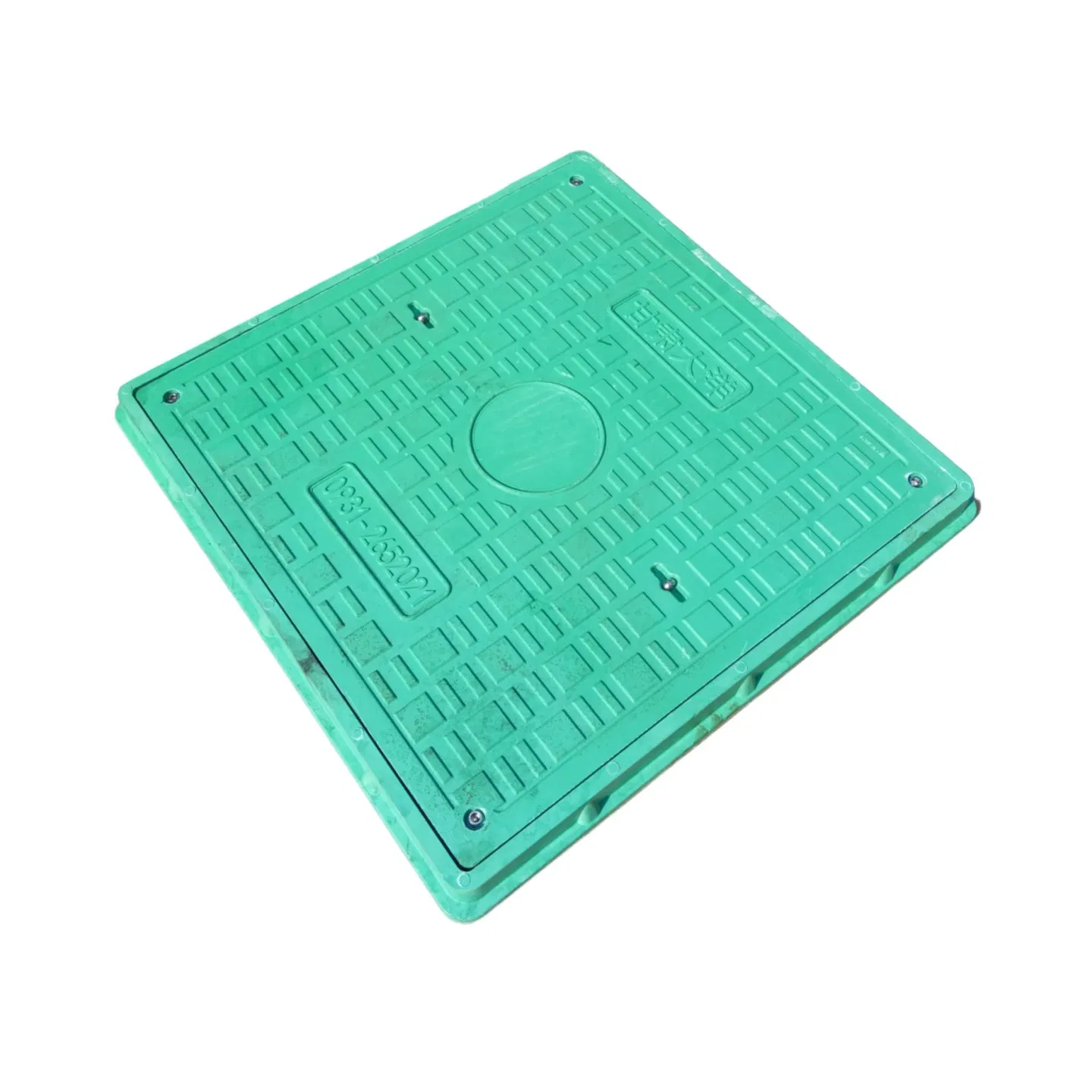
Certifications: How to Verify EN124 and ISO 9001
Every FRP cover manufacturer claims certification. Few can back it up when you ask for the actual documents. Here is exactly what to request and how to verify each one.
EN124 Load Test Report
- Request: The original third-party test report — not a certificate, not a summary. Must show the testing lab name, test date, product model tested, applied load (kN), deflection result, and pass/fail determination.
- Verify: Check the testing lab is ISO 17025 accredited. Cross-reference the lab name online. The report should be for the specific load class you are ordering, not a different class.
- Red flag: "Our products meet EN124 standards" without providing the actual report. A certificate without deflection data.
ISO 9001:2015 Certificate
- Request: The certificate with issuing body name, certificate number, validity dates, and scope statement. The scope must include "manufacturing of FRP/composite manhole covers" or equivalent.
- Verify: Check the issuing body is an IAF-accredited certification body (TÜV, SGS, Bureau Veritas, DNV, etc.). Look up the certificate number on the issuing body's online registry.
- Red flag: Certificate issued by an unknown local body with no IAF accreditation. Scope does not mention manhole covers.
CE Marking (EU Projects)
- Request: Declaration of Performance (DoP) and CE marking documentation under the Construction Products Regulation (EU) No. 305/2011.
- Verify: The DoP must reference the specific harmonized standard (EN124:2015) and the notified body that performed the assessment.
- Red flag: CE mark on the product but no DoP available. Self-declared CE without notified body involvement for D400+ covers.
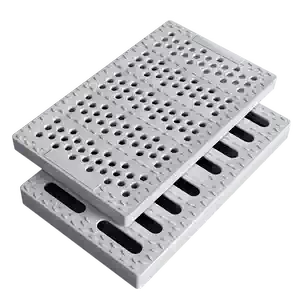
Global vs Local Sourcing: Pros and Cons
Should you source FRP covers from a specialized manufacturer in Asia or from a local supplier in your region? The answer depends on your order volume, lead time requirements, and tolerance for logistics complexity. Here is the data-driven comparison.
| Factor | Global (Asia Factory) | Local (Regional Supplier) |
|---|---|---|
| Unit Price | 30-50% lower | Higher local |
| Lead Time (500 units) | 25-35d + 15-30d ship | 14-21 days |
| Customization | Flexible 200+ | Large orders |
| QC Leverage | Verify remote | Visit feasible |
| Shipping | FCL/LCL risk | Domestic easy |
| Certification Trust | Verify yourself | Local + certs |
Red Flags: Signs of a Low-Quality Manufacturer
Some warning signs are obvious. Others are subtle — but equally dangerous. Here are seven red flags that experienced buyers watch for. Any single flag is worth investigating. Two or more: walk away.
Sample Orders and Third-Party Testing
The single most reliable way to verify an FRP cover manufacturer is to order samples and send them to an independent lab. This costs $300-$800 including courier shipping and lab fees — a small investment compared to the risk of receiving a container of defective covers.
Sample Order Protocol
- Order 2-5 units — minimum: one for visual inspection, one for destructive load testing.
- Specify production-grade samples — not "golden samples" hand-picked from a special batch.
- Request the sample invoice at standard pricing (should be deductible from the first bulk order).
- Inspect visually upon arrival: surface finish, color consistency, edge quality, stamping clarity.
- Send one sample to an ISO 17025 accredited lab (SGS, Intertek, TÜV, Bureau Veritas) for EN124 load testing at your specified class.
What the Test Report Tells You
- Pass/Fail: Did the cover withstand 1.33× the rated class load for 30 seconds without cracking?
- Deflection measurement: Permanent deformation must be ≤ 1/500th of the clear opening. If a D400 cover deflects 3mm at a 600mm opening (limit: 1.2mm), it fails — even if it did not crack.
- Failure mode: Did it crack along a rib? At the mold parting line? This reveals manufacturing weaknesses — uneven material distribution or insufficient fiber content at critical stress points.
- Compare vs manufacturer's claim: If the manufacturer claims D400 and the lab says it fails at 350 kN, the production process has a systematic problem — not a one-off defect.
FRP Cover: Factory Case Study
Here is what a verified, export-ready FRP cover manufacturer looks like — using FRP Cover as a real data point. Use this as your benchmark when evaluating other manufacturers.
Manufacturing Timeline
Factory Specifications
| Parameter | FRP Cover Factory |
|---|---|
| Certifications | ISO 9001:2015, EN124:2015 (A15-F900) |
| Floor Area | 15,000 m² |
| Production Lines | Multiple SMC + hydraulic presses (800-2,000 ton) |
| QC Lab | In-house hydraulic load tester + material analysis |
| Export Documentation | CO, Form A, Form E, Fumigation Cert, CI, PL, BL |
| Sample Policy | 1-5 units at standard pricing; third-party testing supported |
| Lead Time (500 units) | 25-35 days production + shipping |
| MOQ | 50 units standard; 20-30 for E600/F900 |
Factory Tour Checklist for Buyers
If you have the opportunity to visit a manufacturer's facility — or conduct a video tour — here is exactly what to check, in order of importance. Do not let a friendly sales team distract you from the technical checkpoint sequence.
-
1. Raw material storage area first — not the showroom.
Check: Temperature/humidity control in resin storage. Sealed packaging for glass fiber. No visible moisture or contamination. If they lead you to the finished product showroom first, redirect them to the raw material warehouse.
-
2. Production floor: count the presses that are actually running.
Parked or idle presses that "just finished a batch" do not count as capacity. Look for: digital temperature displays on molds, consistent cycle timing, operators following documented process sheets (not memory).
-
3. QC lab: ask to see today's test records.
Not the certificate on the wall — the logbook or digital record from today's production batch. Look for: actual deflection measurements (not just pass/fail), batch numbers matching what is on the production floor, sampling rate consistent with their claimed QC policy.
-
4. Finished goods warehouse: check traceability.
Covers should be stamped with load class, manufacturer ID, and production date/batch code. Packaging should protect edges and surfaces during transit. Randomly inspect 5-10 covers for surface defects and dimensional consistency.
-
5. Documentation room: verify certifications are current.
ISO 9001 certificate — check expiry date. EN124 test reports — check they match the load class you are ordering. CE marking documentation for EU-bound products. Export documentation samples — CO, Form A, packing list format.
-
6. Ask the production manager three technical questions.
(a) "What is the glass fiber content by weight in this cover?" (b) "What is the cycle time for a D400 600×600 cover on this press?" (c) "How do you handle a batch that fails QC — rework, scrap, or downgrade?" If they cannot answer immediately with specific numbers, technical competence is lacking.
Frequently Asked Questions
At minimum: ISO 9001:2015 for quality management systems and EN124:2015 third-party test reports for the specific load classes they manufacture. For European projects: CE marking with Declaration of Performance. The ISO certificate must be issued by an IAF-accredited body (TÜV, SGS, Bureau Veritas, DNV), not a self-declaration or unknown local agency. Always verify certificate numbers on the issuing body's online registry.
Request the original report PDF from the testing lab — not a scan or photocopy provided by the manufacturer. Check: (1) the lab is ISO 17025 accredited, (2) the report date is within the last 2-3 years, (3) the product model and load class match your order exactly, (4) deflection measurements are shown — not just pass/fail. The safest approach: send your own sample to an independent lab of your choosing before placing a bulk order.
Standard MOQ for FRP covers is 50 units for common sizes and load classes (A15-D400). For E600 and F900 covers, lower MOQs of 20-30 units are typical because the molds are larger and cycle times longer. Custom sizes and colors typically require 200+ units to amortize mold modification costs. Be wary of manufacturers offering very low MOQs (under 10 units) for D400+ covers — this often means they are trading companies, not actual manufacturers.
Ask for: (1) a live video tour of the production floor — not a pre-recorded promotional video, (2) the factory's business license showing "manufacturing" in the scope — not just "trading" or "import/export," (3) photos of their molds with their company name visible, (4) a sample order where you can verify the factory address on the shipping documents matches their claimed production address. Trading companies often avoid live video tours and cannot answer detailed technical questions about molding parameters.
FOB (Free on Board) is the most common starting point — the manufacturer handles inland transport and port loading, and you arrange ocean freight and insurance. CIF (Cost, Insurance, Freight) gives you a delivered price to your port — simpler for first-time importers, but typically 8-15% more than arranging freight yourself. EXW (Ex Works) is cheapest on paper but puts all logistics risk on you — only recommended if you have a trusted freight forwarder and import experience. For FRP covers, 20-foot containers typically hold 200-300 covers depending on size; 40-foot containers hold 500-700.
Yes, and you should. A legitimate manufacturer will welcome factory visits. If an in-person visit is not feasible, request a live video tour (WhatsApp/Zoom) with the production manager — not the sales representative. Use the Factory Tour Checklist in this guide as your walkthrough framework. If a manufacturer refuses both in-person visits and live video tours, consider it a red flag. FRP Cover welcomes both in-person factory visits and live video tours — contact us to schedule.
Source from a Verified FRP Cover Manufacturer
FRP Cover has been manufacturing EN124-certified composite manhole covers since 2009. Our 15,000 m² facility in Hebei, China, produces covers across all load classes from A15 to F900 — with in-house load testing, ISO 9001:2015 certified quality management, and export experience spanning 30+ countries.
"We have been sourcing FRP covers from this manufacturer for over 5 years. The product quality is consistently excellent, and their lead times are unbeatable."
David K.
Procurement Director
"The weight reduction compared to cast iron is remarkable. Our installation crews can handle twice as many covers per day, dramatically reducing project costs."
Ahmed M.
Project Manager
"Excellent communication and technical support throughout the entire supply process. The team truly understands international project requirements."
Paulo L.
Infrastructure Director
Verify Our Factory — In Person or Via Live Video Tour
Request your sample order with third-party testing. Include your required load class, size, and quantity for a factory-direct quote within 24 hours.
Last updated: July 28, 2026. FRP Cover is an ISO 9001:2015 certified manufacturer. All EN124:2015 test reports and certifications available for buyer verification upon request. For the complete FRP cover product guide, see our FRP Cover Complete Buyer's Guide.